From Titration to Mixing: Unveiling the Essential Erlenmeyer Flask Uses in Your Lab

In the vast world of laboratory glassware, some pieces stand out as true workhorses, indispensable for countless experiments. Among them, the Erlenmeyer flask, often affectionately called a conical flask, holds a special place. If you’ve spent any time in a chemistry or biology lab, you’ve undoubtedly seen this distinctive, cone-shaped vessel. But do you truly know the full spectrum of Erlenmeyer flask uses?
Today, we’re going to dive deep into the fascinating world of this humble yet mighty piece of equipment. We’ll explore why its unique design makes it superior for certain tasks, covering everything from routine mixing to precise titration experiments and even delicate microbiology work. Prepare to discover why the Erlenmeyer flask is much more than just a fancy container!
What Makes the Erlenmeyer Flask So Special?
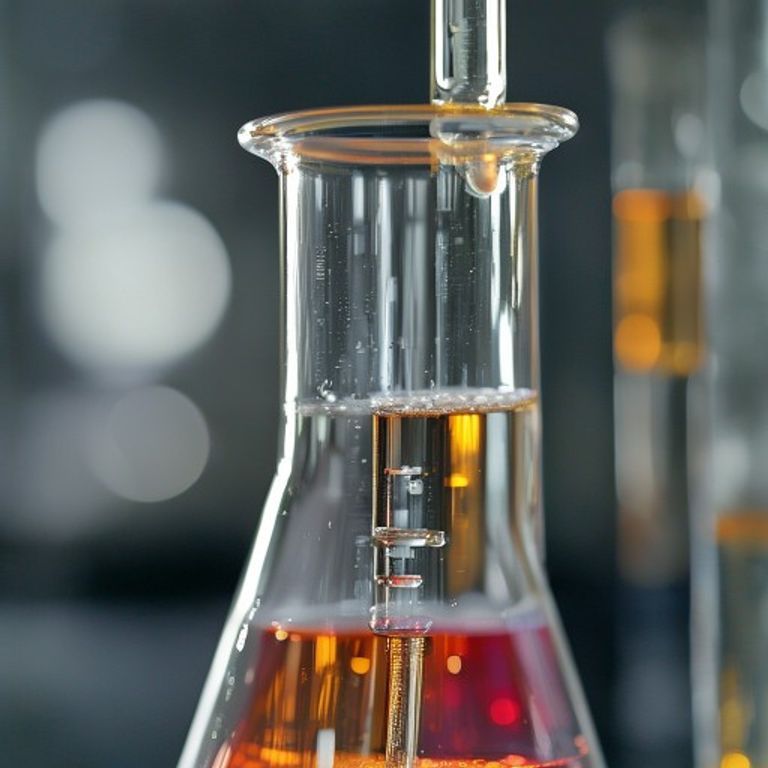
Before we jump into its applications, let’s briefly touch upon what sets the Erlenmeyer flask apart. Unlike its cylindrical cousin, the beaker, the Erlenmeyer flask boasts a flat, wide base that tapers upwards into a narrow neck. This isn’t just for aesthetics; it’s a brilliant design for practical lab work!
Imagine trying to swirl a liquid vigorously in a wide-mouthed beaker – splashes galore, right? The Erlenmeyer’s narrow neck acts like a natural splash guard, keeping your precious reagents (and your lab coat) safe. Its conical body also offers excellent stability, reducing the risk of accidental tipping. This combination of features makes it incredibly versatile, lending itself to a wide range of Erlenmeyer flask uses that we’ll explore now.
Key Erlenmeyer Flask Uses in Chemistry Labs
When we talk about Erlenmeyer flask applications in chemistry, we’re really talking about its bread and butter. This is where it shines the brightest!
1. The Star of Titration Experiments
If there’s one technique where the Erlenmeyer flask is absolutely essential, it’s titration. This analytical method involves carefully adding one solution (the titrant) to another (the analyte) to determine the concentration of the unknown. Why an Erlenmeyer flask? Its conical shape allows for efficient swirling of the solution without spilling, which is crucial for ensuring the titrant mixes completely and reacts evenly with the analyte.
The narrow neck also minimizes evaporation and prevents accidental splashes of the indicator or reactants. This allows for the precise, controlled reactions required in precision work involving pipettes, making it the go-to glassware for specific uses of Erlenmeyer flask for titration. You’ll often see chemists gently swirling the flask to observe the exact color change at the equivalence point.
2. The Perfect Vessel for Mixing and Swirling Solutions
Beyond titration, the advantages of Erlenmeyer flask for mixing solutions are undeniable. Need to dissolve a solid in a liquid, or simply homogenize a mixture? Just hold the flask by its neck and give it a good swirl. The conical shape ensures thorough mixing with minimal effort and no messy spills. Compare that to stirring a beaker, where you might need a laboratory stirring rod and still risk splashes.
This is particularly useful when you need to mix chemicals that produce gases, as the narrow neck can be easily stoppered (with a rubber stopper or cotton plug) to prevent gas escape or to contain odors, while still allowing for gentle agitation.
3. Heating Solutions Safely and Efficiently
Yes, Erlenmeyer flasks are also excellent for heating! Made from borosilicate glass (like Pyrex), they can withstand thermal shock and high temperatures. When heating solutions over a Bunsen burner, the narrow neck helps to reduce the rate of evaporation and prevents superheating, which can lead to sudden boiling (bumping). We typically use a wire gauze on a tripod stand to distribute the heat evenly across the bottom of the flask.
4. Short-Term Storage and Filtration
While not ideal for long-term storage due to their relatively small mouth, Erlenmeyer flasks are suitable for short-term storage of solutions. They can be easily stoppered to prevent contamination or evaporation. They are also often used as receiving flasks during filtration processes, where a funnel with filter paper is placed in the neck to collect the filtrate.
Erlenmeyer Flask Purposes in Microbiology Experiments
The utility of the Erlenmeyer flask isn’t limited to chemistry; it’s a star in microbiology too! One of its primary roles here is in culturing microorganisms. The flask provides a stable and sterile environment for growing bacterial or yeast cultures in liquid media. The broad base ensures a large surface area for aeration when swirled on an orbital shaker, promoting healthy cell growth.
The narrow neck is key here: it can be easily plugged with cotton or a specialized cap that allows for gas exchange (like oxygen in, carbon dioxide out) while preventing airborne contaminants from entering the sterile culture. This makes Erlenmeyer flask purposes in microbiology experiments invaluable for inoculum preparation, fermentation studies, and general microbial growth.
Why Choose an Erlenmeyer Flask Over a Beaker?
Sometimes, a simple beaker will do the job, but often, the Erlenmeyer flask offers distinct advantages:
- Reduced Splashing: The narrow neck is a game-changer for vigorous swirling or boiling.
- Better Containment: Easier to stopper or cover, minimizing evaporation and contamination.
- Stability: The conical shape provides a lower center of gravity, making it less prone to tipping.
- Controlled Heating: Reduces solvent loss and prevents bumping during heating.
Tips for Using Your Erlenmeyer Flask Safely and Effectively
To get the most out of your conical flask and ensure safety, here are a few practical tips:
- Always check for cracks or chips before use, especially if you plan to heat it.
- Never heat a completely sealed flask; pressure build-up can cause it to explode.
- When swirling, hold the flask by its neck firmly but gently.
- Clean flasks immediately after use to prevent reagents from drying and becoming difficult to remove.
- Use an appropriate stopper size; a loose stopper can lead to spills, while a too-tight stopper can be hard to remove or cause a vacuum.
Frequently Asked Questions About Erlenmeyer Flasks
Q: Can I use an Erlenmeyer flask for accurate volume measurements?
A: Not really for high precision. While they often have volume markings, these are typically approximate. For accurate volume measurements, we usually rely on measuring cylinders, volumetric flasks, or pipettes.
Q: Are Erlenmeyer flasks autoclavable?
A: Yes, most borosilicate glass Erlenmeyer flasks are autoclavable, making them ideal for sterilization in microbiology applications.
Q: Can I put an Erlenmeyer flask directly on a hot plate?
A: It’s generally not recommended to place them directly on a bare hot plate, especially at high temperatures, as direct, uneven heating can cause stress and breakage. Always use a hot plate with a stir-bar function if mixing, or a heating mantle, or use the flask with wire gauze on a stand for burner heating.
Conclusion
The Erlenmeyer flask, with its distinctive conical design, is truly a cornerstone of any functional laboratory. From the precise demands of titration to the dynamic needs of mixing and the sterile environment required for microbial cultures, its versatility is unmatched. We’ve seen how its simple yet ingenious shape offers practical advantages over other glassware, making it indispensable for chemists, biologists, and scientists across various disciplines.
So, the next time you spot an Erlenmeyer flask in the lab, you’ll know it’s not just another piece of glass. It’s a testament to thoughtful design, playing a quiet but crucial role in unlocking scientific discoveries every day. It truly is one of our lab’s unsung heroes!