


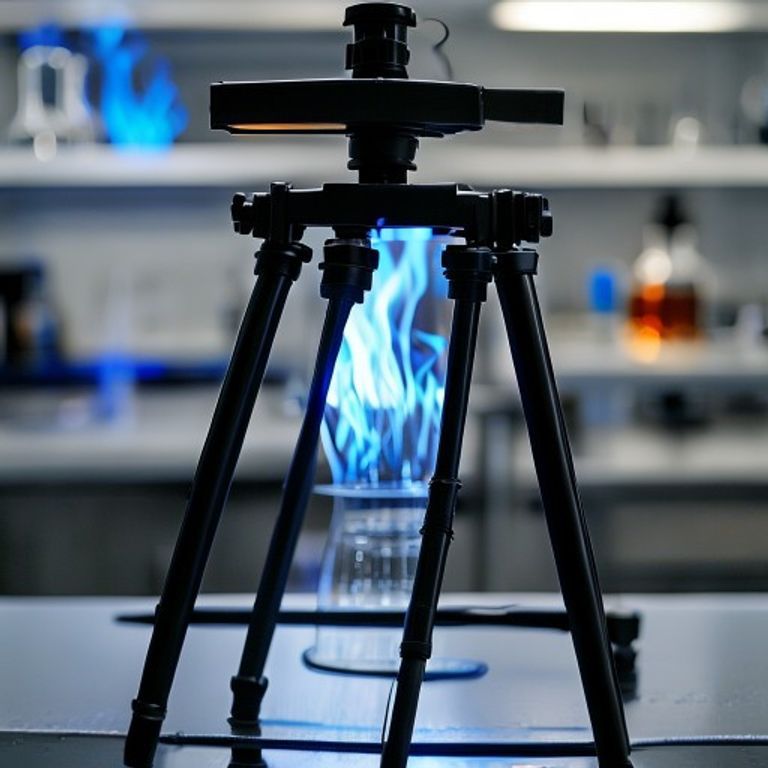
Unsung Hero of the Lab: Votre guide essentiel sur le stand de trépied

When we think about a bustling laboratory, our minds often jump to complex microscopes, bubbling flasks, or sophisticated analytical instruments. But amidst all that high-tech marvel, there’s a simple, unassuming piece of equipment that plays a crucial, often overlooked, role: the tripod stand. Imagine trying to cook without a stable stove – pretty hard, right? That’s exactly what a tripod stand provides in the lab: a rock-solid foundation for our experiments, especially when heat is involved. Today, we’re going to dive deep into why this humble stand is an indispensable part of any lab, how to use it effectively, and some vital safety tips.
What Exactly is a Tripod Stand and Why Do We Need It?
At its core, a tripod stand is just what its name suggests: a three-legged stand, typically made of iron or steel, designed to provide a stable, elevated platform. Its purpose is elegantly simple yet profoundly important. It acts as a stable base to hold glassware, heating apparatus, or other lab equipment above a heat source, most commonly a Bunsen burner. Without it, performing many chemistry experiments, especially those requiring heating, would be incredibly difficult and hazardous. Think of it as the sturdy kitchen counter for your science “cooking” – it keeps everything at the right height and prevents wobbles.
Setting Up Your Tripod Stand for Heating in the Lab
One of the primary uses of a tripod stand is to facilitate heating processes. Here’s how we typically set it up for a heating experiment:
- Positionner le trépied: Place the tripod stand on a flat, stable, and heat-resistant surface, like a lab bench. Ensure all three legs are firmly on the ground to prevent any tipping.
- Ajouter la jauge de fil : A toile métallique, usually with a ceramic center, is then placed on top of the tripod stand. This isn’t just for show; it serves two crucial functions:
- It provides an even platform for the glassware (like a beaker or flask) to sit securely.
- The ceramic center helps to distribute the heat evenly across the base of the glassware, preventing localized overheating and potential cracking.
- Place the Glassware: Carefully place the laboratory glassware, such as a beaker containing a solution we want to heat, on top of the wire gauze. We must ensure it’s centered and stable.
- Position the Heat Source: Finally, the Brûleur Bunsen is placed directly beneath the tripod stand, centered under the wire gauze and glassware. Now, we’re ready to safely apply heat!
The Purpose of a Tripod Stand in Chemistry Experiments
Beyond simply holding things up, the tripod stand serves several vital purposes that contribute to successful and safe experiments:
- Stabilité: Its three-legged design provides a stable base, preventing glassware from tipping over, especially crucial when dealing with hot or corrosive chemicals.
- Élévation: It elevates the glassware above the heat source, allowing for controlled heating and proper air circulation around the Bunsen burner flame.
- Support for Wire Gauze: It works hand-in-hand with wire gauze to ensure even heat distribution and protect glassware from direct flame impingement.
- Polyvalence: While often associated with heating, it can also support other apparatus like evaporating dishes, crucibles (often with a pipeclay triangle), or even support a funnel for filtration.
Safety Guidelines for Using a Tripod Stand in the Lab
Safety is always our top priority in the lab. Even with a seemingly simple piece of equipment, there are guidelines we should follow:
- Check for Stability: Before starting any experiment, always ensure the tripod stand is on a level surface and doesn’t wobble. A wobbly stand is an accident waiting to happen!
- Use the Correct Wire Gauze: Always use a wire gauze with a ceramic center for heating. This prevents direct flame contact and ensures even heating.
- Handle Hot Apparatus Carefully: Remember that everything on and around the tripod stand will become hot during heating. Always use appropriate heat-resistant gloves or tongs to handle hot glassware or the stand itself.
- Keep Area Clear: Ensure the area around the tripod stand is clear of flammable materials, papers, or anything that could easily catch fire.
- Ne jamais laisser sans surveillance : When an experiment involving heating is underway, we should never leave it unattended. Changes can happen quickly, and we need to be ready to react.
- Consider Your Glassware: Different types of glassware are designed for different heating applications. For example, while béchers are common for general heating, boiling flasks are better for vigorous boiling.
Conclusion
So, there we have it! The tripod stand might not be the flashiest piece of equipment in the lab, but its importance cannot be overstated. It’s the silent workhorse that provides stability, enables controlled heating, and ultimately helps us conduct our experiments safely and effectively. Next time you’re in the lab, take a moment to appreciate this unsung hero – it’s definitely pulling its weight!
FAQ
Q: Puis-je utiliser un trépied sans gaze filaire?
A: While technically possible, it’s strongly discouraged for heating. The wire gauze distributes heat evenly and prevents direct flame contact, protecting your glassware from thermal shock and potential breakage.
Q: What is the maximum temperature a tripod stand can withstand?
A: Tripod stands are typically made of iron or steel, designed to withstand the heat from standard Bunsen burner flames (which can reach up to 1500°C). The stand itself is not usually the limiting factor, but rather the glassware being heated.
Q: Can a tripod stand be used for purposes other than heating?
A: Absolutely! While heating is its most common application, it can be used as a stable support for filtration setups, to hold apparatus at a specific height for observation, or even as a simple elevated platform for mixing solutions.
Q: How do I clean a tripod stand?
A: Tripod stands are quite robust. Usually, a simple wipe down with a damp cloth is sufficient. If there are stubborn chemical residues, a mild laboratory detergent can be used, followed by rinsing and drying.







