


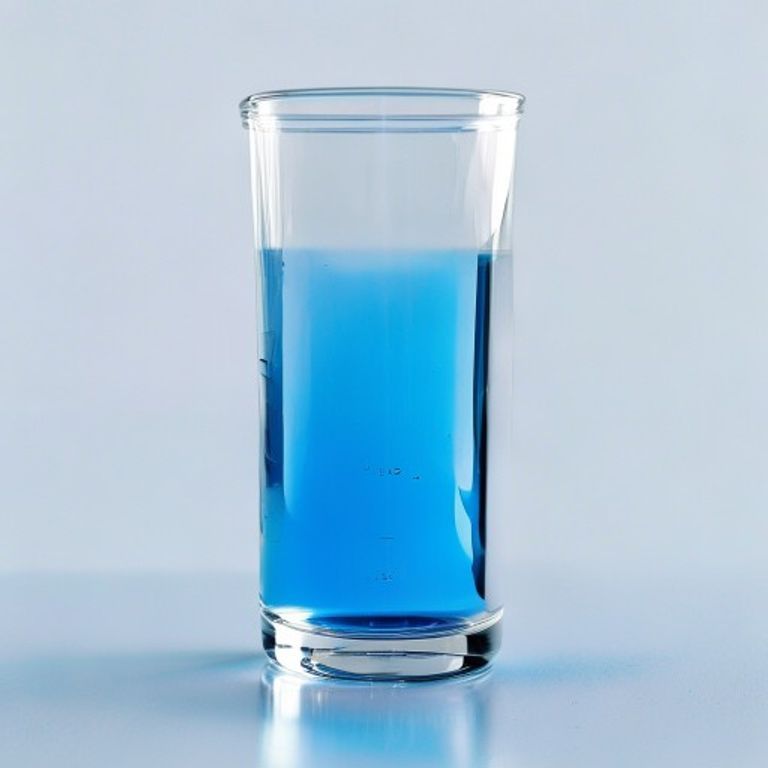
Débloquer la précision de laboratoire: Qu'est-ce qu'un cylindre diplômé et comment l'utiliser efficacement

Vous êtes déjà trouvé dans un laboratoire scientifique, regardant une collection de récipients en verre, vous demandant lequel fait quoi ? Parmi eux, on se distingue souvent par son design élégant, haut et des marques précises : le cylindre gradué. Si vous avez déjà demandé, "Qu'est-ce qu'un cylindre gradué?" alors vous êtes au bon endroit! Nous sommes ici pour démystifier ce matériel de laboratoire essentiel et explorer son utilisation essentielle du cylindre gradué et vous montrer pourquoi il est la pierre angulaire de la mesure précise du volume en chimie et au-delà.
Qu'est-ce qu'un Cylindre Diplômé ?
Pensez à un cylindre gradué comme la tasse de mesure du monde scientifique, mais de façon beaucoup plus précise. Il s'agit d'un morceau cylindrique de verrerie de laboratoire (ou parfois de plastique) avec une base plate pour la stabilité et un bec pour un écoulement facile. Ce qui le rend spécial sont les lignes précises, ou graduations, gravées sur son côté, indiquant des millilitres spécifiques (mL) de volume liquide. Contrairement à une tasse de mesure de cuisine qui pourrait vous donner « environ 1 tasse », un cylindre gradué est conçu pour vous donner des relevés de volume très précis, souvent jusqu'à 0,1 mL près, selon sa taille.
The Unsung Hero: Quel est le but d'un cylindre diplômé dans un laboratoire?
Alors, pourquoi avons-nous besoin de cet outil spécifique ? Le but premier d'un cylindre gradué est de mesurer le volume de liquides avec un haut degré de précision. Alors que d'autres récipients de laboratoire comme des béchers ou des flacons peuvent contenir des liquides, ils ne sont pas conçus pour une mesure précise. Imaginez que vous avez besoin exactement 25,5 mL de solution pour une réaction chimique pour fonctionner parfaitement. Un cylindre gradué est votre appareil pour ce genre d'exactitude. Il est crucial pour les expériences où la quantité exacte d'un liquide impacte directement les résultats, ce qui le rend indispensable pour les tâches nécessitant une mesure précise du volume.
Apprendre à connaître votre outil: parties d'un cylindre diplômé expliqué
Un cylindre gradué peut sembler simple, mais chaque partie joue un rôle :
- Le corps du cylindre: C'est la grande partie principale où le liquide est retenu. Il est généralement en verre borosilicaté pour la résistance chimique et la stabilité thermique, ou en plastique pour la sécurité dans certaines applications.
- La base : Le fond plat et large qui maintient le cylindre stable et droit sur votre banc de laboratoire. Il n'y a pas de déversements !
- La goutte (ou lèvre): Située en haut, cette petite indentation en forme de V permet un déversement facile et contrôlé des liquides, empêchant ainsi les gouttes d'eau.
- Les graduations/échelles : Ce sont les lignes gravées et les nombres le long du côté. Ils indiquent la mesure du volume en millilitres (mL). Les plus petites marques représentent souvent 0,1 mL, 0,2 mL, 0,5 mL ou 1 mL, selon la capacité totale du cylindre.
Maîtriser la précision: Comment lire un cylindre diplômé avec précision
Lire un cylindre gradué n'est pas juste au sujet de regarder les chiffres. Il y a une technique spécifique pour assurer la précision:
- Placer sur une surface plate: Toujours régler le cylindre sur un banc de niveau. Ne le tenez pas dans votre main, car cela peut conduire à des erreurs parallaxes.
- Cherchez le Meniscus : Quand un liquide est dans un récipient étroit comme un cylindre gradué, sa surface n'est pas parfaitement plate. Il forme plutôt une courbe appelée ménisque. Pour la plupart des solutions aqueuses, cette courbe descendra vers le bas (un ménisque concave).
- Le niveau des yeux est la clé : Pour éviter une erreur de parallaxe (où la lecture semble différente selon votre angle de vision), accroupissez-vous donc votre œil est parfaitement à niveau avec le fond du ménisque.
- Lisez le bas du Meniscus : For concave menisci, you always read the volume at the lowest point of the curve. If the meniscus is convex (like with mercury), you’d read the top.
- Estimation du dernier chiffre : The graduations give you specific marks, but you can usually estimate one digit beyond the smallest marking. For example, if the smallest marks are 1 mL increments, and the meniscus falls between 25 mL and 26 mL, you might estimate it as 25.5 mL.
Following these steps ensures you get the most accuracy possible from your volume measurement.
Le grand débat : Cylindre diplômé vs Béaker vs Flask
This is a common point of confusion for many starting in the lab. While they all hold liquids, their purposes are distinct, much like how a measuring spoon, a mixing bowl, and a serving dish are all kitchenware but for different jobs.
- Cylindre diplômé : Our star for today! Designed for accurate volume measurement. It’s cylindrical and has fine graduations.
- Bécher : A cylindrical glass container with a spout, often wider and shorter than a graduated cylinder. Beakers are primarily used for holding, mixing, and heating liquids, not for precise volume measurement. Think of them as robust containers for general lab work. If you want to know more about the essential chemistry beaker use, we have a whole guide for you.
- Erlenmeyer Flask (Conical Flask): This has a flat bottom, a conical body, and a narrow neck. Flasks are excellent for mixing, heating, and storing solutions, especially when you need to swirl liquids without splashing, or when you want to minimize evaporation. Their narrow neck is also ideal for stoppering. For a deep dive into the essential function of Erlenmeyer flask, check out our dedicated article.
In short, if accuracy is your goal for measuring volume, the graduated cylinder is your champion.
Impact sur le monde réel : applications d'un cylindre diplômé en chimie et au-delà
Graduated cylinders aren’t just for chemists! You’ll find them in various fields:
- Laboratoires de chimie : For preparing solutions of specific concentrations, titration experiments, and measuring reagents.
- Biology Labs: Measuring nutrient solutions for cell cultures, preparing media, or measuring liquid samples.
- Sciences de l'environnement : Measuring water samples, preparing dilutions for pollutant analysis.
- Produits pharmaceutiques: Quality control, preparing precise medicinal formulations.
- Food & Beverage Industry: Measuring ingredients, testing product consistency.
Essentially, any field that requires precise liquid volume measurement relies on this humble yet mighty tool.
Conclusion
So, there you have it! The graduated cylinder is far more than just another piece of glass in the lab. It’s a fundamental tool specifically engineered for accurate volume measurement, playing a vital role in ensuring reliable experimental results across countless scientific and industrial applications. Understanding its parts, how to read a graduated cylinder accurately, and its distinct purpose will set you up for success in any lab environment. Keep practicing, and you’ll be a pro at precise measurements in no time!
FAQ sur Cylindres diplômés
Q: Puis-je chauffer des liquides dans un cylindre gradué?
A: Generally, no. While some glass graduated cylinders are made of heat-resistant borosilicate glass, they are not designed for direct heating like beakers or flasks. Rapid temperature changes can affect their calibration accuracy, and plastic ones will melt. It’s best to transfer the liquid to a beaker or flask for heating.
Q: Les cylindres gradués en plastique sont-ils aussi précis que ceux en verre?
A: Glass graduated cylinders are typically more accurate and maintain their calibration better over time. Plastic ones (like polypropylene) are more durable and safer for certain applications (e.g., with strong bases or hydrofluoric acid) but may have slightly lower accuracy and can degrade or warp with certain chemicals or prolonged use. For the highest accuracy, glass is usually preferred.
Q: Quelles tailles les cylindres gradués entrent-ils?
A: Graduated cylinders come in a wide range of sizes, commonly from 5 mL up to 2000 mL (2 liters). Smaller cylinders (e.g., 10 mL, 25 mL, 50 mL) offer higher precision for smaller volumes, while larger ones (e.g., 500 mL, 1000 mL) are used for bulk volume measurement where absolute precision might be slightly less critical but still important.







