

Comprendre la fonction des plaques d'emplacement : conseils pratiques pour les travaux de chimie à petite échelle

Présentation
Quand je suis entré dans un laboratoire de chimie, l'humble assiette m'a attiré l'œil. C'est juste une petite plaque de plastique ou de verre peu profonde avec plusieurs puits, mais son rôle est tout sauf simple. Dans cet article, je vais vous guider dans la façon dont une plaque spot fonctionne, pourquoi il est un favori pour l'analyse de petits échantillons, et comment il se compare à d'autres outils comme les microplaques. A la fin, vous aurez une image claire et pratique de quand et comment utiliser une plaque de spot dans vos propres expériences.
Comment fonctionne une plaque de spot dans les laboratoires de chimie?
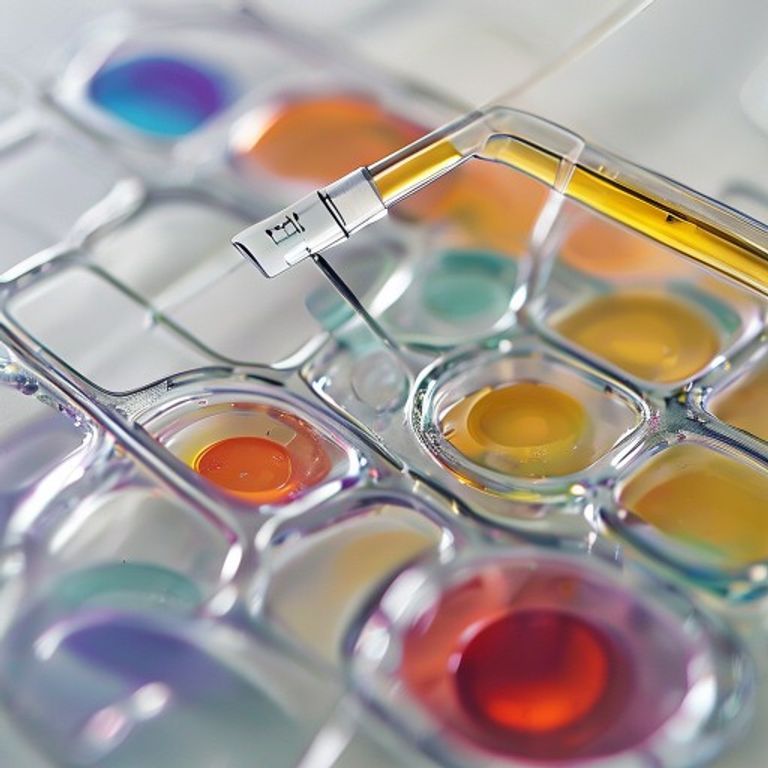
Une plaque spot est la tâche principale de tenir de minuscules gouttelettes de liquide dans des puits séparés et isolés. Pensez-y comme un parking miniature où chaque voiture (goutte-à-goutte) a son propre espace, empêchant tout « accident de circulation » (contamination croisée). La conception typique comprend 12, 24 ou 48 puits, chacun d'environ 1 à 2 mL de profondeur, en polypropylène, en polystyrène ou en verre.
- Contenant de l'échantillon: Les murs du puits agissent comme des barrières, empêchant les réactifs de se mélanger à moins de les combiner délibérément.
- Observation facile: La profondeur peu profonde vous permet de voir des changements de couleur ou des précipités sans microscope.
- Installation rapide: Vous pouvez ajouter quelques microlitres de chaque solution, tourner doucement et passer au test suivant.
Fonction de la plaque pour l'analyse de petits échantillons
Dans mon travail quotidien, j'ai souvent besoin de tester des dizaines de réactions avec seulement quelques microlitres de précieux réactifs. Les plaques de taches brillent dans ces scénarios parce que:
- Ils utilisent un volume minimal, économisant des produits chimiques coûteux.
- Les réactions multiples peuvent être lancées côte à côte, ce qui facilite la reconnaissance des motifs.
- Le nettoyage est simple—Rincez simplement avec de l'eau distillée ou un solvant compatible.
Si vous êtes à la recherche d'une manipulation plus précise du liquide, n'oubliez pas Guide des pipettes volumétriques, qui complète le travail des plaques spot en fournissant des volumes exacts.
Spot Plate vs Microplate: Quand choisir lequel?
Les plaques spot et les microplaques servent à des essais parallèles, mais elles diffèrent en termes d'échelle et d'automatisation :
- Plage de volume & #160;: Les plaques à taches manipulent 10 μL–2 mL par puits; les microplaques fonctionnent habituellement avec 1–300 μL.
- Débit : Les microplaques (96, 384, 1536 puits) sont idéales pour le criblage à haut débit avec lecteurs de plaques. Les plaques sont mieux pour les vérifications rapides et visuelles.
- Compatibilité du matériau: Les plaques à taches sont souvent présentes dans des plastiques résistants chimiquement, tandis que les microplaques peuvent avoir des revêtements optiques pour la spectroscopie.
Pour les laboratoires qui ont besoin à la fois d'une évaluation visuelle et de parcours occasionnels à haut débit, garder quelques plaques sur le banc est un geste intelligent.
Fonction de la plaque dans les expériences de titration
Les titrations ne nécessitent toujours une configuration de burette pleine grandeur. Une plaque de spot peut servir d'arène de titrage compacte, en particulier pour :
- Criblage de plusieurs acides ou bases pour trouver le meilleur indicateur.
- Effectuer des vérifications de point d'arrêt avec seulement quelques gouttes de titre.
- Documenter les changements de couleur côte à côte pour comparaison.
Parce que les puits sont peu profonds, le titre s'étend rapidement, vous donnant un signal visuel immédiat. Assurez-vous d'utiliser un matériau compatible—Le polypropylène fonctionne bien avec la plupart des acides et des bases.
Identification de l'échantillon et conservation des dossiers
L'un des avantages sous-estimés des plaques spot est la facilité d'étiquetage. Vous pouvez :
- Ecrire directement sur la plaque avec un marqueur permanent.
- Utilisez des autocollants colorés pour des repères visuels rapides.
- Prenez une photo et annotez plus tard sur un ordinateur.
Garder un registre rangé permet d'éviter les mix-ups, surtout lorsque vous jonglez avec des dizaines de réactions dans une seule assiette.
Conception, compatibilité des matériaux et procédures de nettoyage
Lors du choix d'une plaque de spot, considérez ces aspects pratiques:
- Matérielle Le polypropylène résiste à la plupart des solvants organiques; le verre est le meilleur pour les travaux à haute température.
- Profondeur du puits : Les puits plus profonds tiennent plus de volume mais peuvent masquer les repères visuels.
- Nettoyage: Rincer immédiatement après utilisation. Pour les résidus tenaces, tremper dans un détergent doux, puis rincer à l'eau distillée. Si vous travaillez avec des acides corrosifs, il est conseillé d'utiliser une plaque antiacide (souvent en verre).
Besoin de conseils sur le maintien d'autres équipements de laboratoire? Regardez Guide de sélection du condenseur de laboratoire pour le nettoyage et l'entretien des meilleures pratiques.
Conclusion
Les plaques à taches peuvent sembler simples, mais elles sont polyvalentes pour la chimie à petite échelle. De dépistage rapide et de titrage à l'identification facile des échantillons, ils économisent du temps, des réactifs et de l'espace. En comprenant leur conception, leur compatibilité matérielle et leur routine de nettoyage, vous pouvez maximiser leur utilité dans n'importe quel laboratoire. Combinez-les avec des outils de pipetage précis et un entretien adéquat de l'équipement, et vous aurez un workflow fiable pour les expériences quotidiennes.
FAQ
Q: Puis-je utiliser une plaque pour les essais enzymatiques?
R: Oui, tant que le matériau de la plaque est compatible avec les conditions de tampon et de température. Le polypropylène agit pour la plupart des réactions enzymatiques.
Q: Combien de puits dois-je choisir pour un test qualitatif typique?
R: Une plaque de 12 puits suffit habituellement pour un écran visuel rapide; passer à 24 ou 48 puits lorsque vous avez besoin de plus de répliques.
Q: Est-il sûr de réutiliser la même plaque pour différentes expériences?
R: Absolument, à condition de le nettoyer soigneusement entre les utilisations. Pour les travaux sensibles à la contamination croisée, envisager d'utiliser une plaque jetable.
Q: Quelle est la meilleure façon d'étiqueter les puits?
R : Utilisez un marqueur permanent point fin ou des autocollants colorés. Photographiez la plaque pour un enregistrement électronique.
Q: Comment se compare une plaque ponctuelle à un mortier et un pilon pour le mélange solide-liquide?
R : Ils servent des buts différents. Une plaque spot est destinée à la manipulation des liquides, tandis qu'un mortier et un pilon (voir mortier de laboratoire et bouts de pilon) est idéal pour le broyage des solides en poudres fines.