


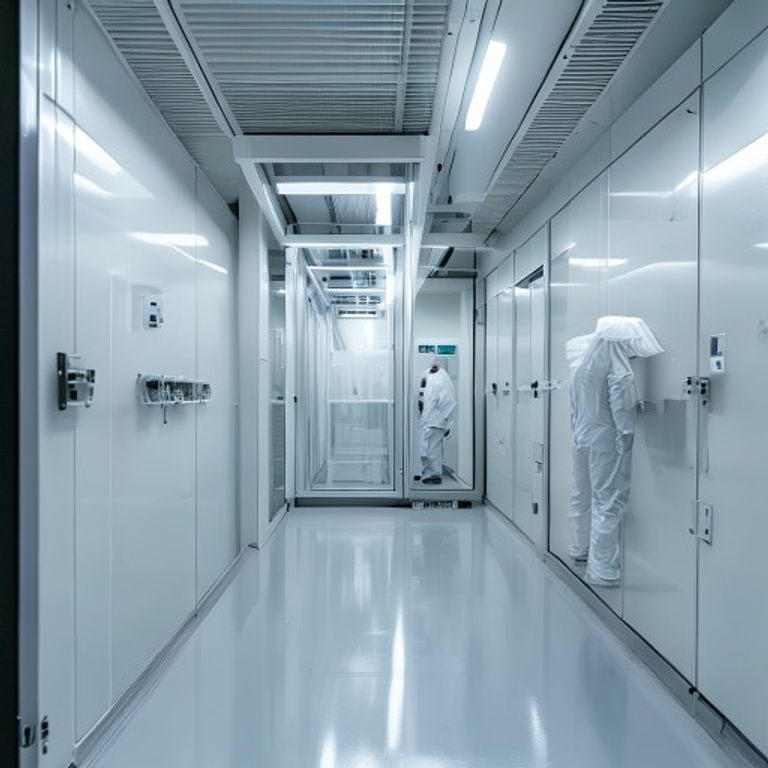
Comprendre le débit d'air laminaire : Guide pratique pour les salles propres, les laboratoires et les unités portables

Présentation
Lorsque nous entrons dans une salle propre ou un laboratoire de haute précision, l'air qui nous entoure se sent presque immobile, mais il travaille dur pour garder les contaminants à portée de main. Ce gardien invisible est débit d'air laminaire. Dans cet article Je vais vous guider à travers ce que le flux laminaire est vraiment, pourquoi il bat le flux turbulent dans des environnements stériles, et comment vous pouvez choisir le bon système—qu'il s'agisse d'une installation de salle propre à grande échelle ou d'une unité mobile pour une expérience sur banc.
Qu'est-ce que le débit d'air Laminar?
Le débit d'air laminaire (parfois appelé débit d'air unidirectionnel) signifie que l'air se déplace en couches parallèles avec un mélange minimal. Pensez-y comme une école de poissons nageant en rangées parfaites; chaque poisson (molécule d'air) suit le même chemin sans tomber dans son voisin. Cela contraste fortement avec le courant turbulent, où l'air tourbillonne et se redresse comme une rivière en mouvement rapide, en remuant des particules et en répandant la contamination.
Caractéristiques clés
- Vitesse uniforme: L'air se déplace à une vitesse constante, habituellement mesurée en pieds par minute (fpm) ou en mètres par seconde.
- Intégration du filtre HEPA: Les filtres à particules à haute efficacité (HEPA) captent 99,97% des particules ≥0,3 μm avant que l'air ne pénètre dans la zone de travail.
- Direction contrôlée: L'air circule verticalement (du plafond au plancher) ou horizontalement (de l'avant à l'arrière), créant ainsi un « rideau » propre.
Débit laminaire contre débit turbulent : une comparaison rapide
| Aspect | Débit laminaire | Flux de turbulence |
|---|---|---|
| Mouvement aérien | Couches parallèles et lisses | Tourneaux et tourbillons chaotiques |
| Contrôle des particules | Haute – les particules sont balayées | Faible – les particules peuvent recirculer |
| Utilisation typique | Salles propres, capots à flux laminaire, armoires de classe 5 ISO | Aération générale, CVC |
Comment le débit d'air laminaire réduit la contamination
Imaginez que vous peigniez un petit circuit. Toute particule de poussière perdue peut causer un court-circuit. Avec l'écoulement laminaire, l'air se comporte comme un vent doux et unidirectionnel qui pousse les particules tout droit hors de la zone de travail, comme une courroie transporteuse éloignant le sable d'une serviette de plage. Le filtre HEPA capture les particules avant même qu'elles n'atteignent le débit, assurant ainsi que l'air qui atteint votre échantillon est ultra-propre.
Conseils pratiques
- Maintenir la recommandation vitesse du flux d'air (habituellement 90 à 120 fpm pour les capots verticaux).
- Certifier régulièrement les filtres HEPA pour conserver une efficacité supérieure à 99,97 %.
- Gardez les surfaces de travail lisses et sans encombre pour éviter de perturber le flux.
Concevoir un système de débit d'air laminaire pour des salles propres
Si vous prévoyez une salle propre, commencez par Conception du débit d'air unidirectionnel. Décidez si une disposition verticale ou horizontale correspond à votre espace. Le débit vertical est courant pour les armoires de classe 5 de l'ISO car l'air balaye sur la surface de travail, tandis que le débit horizontal fonctionne bien pour les grandes salles où il existe des contraintes d'espace.
N'oubliez pas de considérer:
- différentiels de pression dans la chambre (la pression positive maintient l'air extérieur).
- Changements aériens—La plupart des salles propres ont besoin d'au moins 60 à 100 changements d'air par heure.
- Choix du matériau—des parois lisses et non poreuses réduisent l'accumulation de particules.
Unités portables de débit d'air laminaire pour laboratoires
Chaque laboratoire ne peut pas se permettre une salle propre à grande échelle, et c'est là que les unités portables brillent. Ces capots compacts sont assis sur un banc et assurent le même flux d'air unidirectionnel filtré par HEPA. Ils sont parfaits pour:
- Les travaux de microbiologie où la technique stérile est critique.
- Préparation pharmaceutique en petits lots.
- Recherche sur le terrain où un environnement propre doit voyager avec vous.
Lorsque vous choisissez un appareil portable, vérifiez la Spécifications du capot à flux laminaire—recherchez des filtres HEPA certifiés, une vitesse d'écoulement d'air réglable et un intérieur facile à nettoyer.
Exemple réel-mondial: Mise en place d'un boîtier à flux laminaire de classe 5 ISO
Le mois dernier, j'ai aidé une start-up en biotechnologie à installer une armoire à flux laminaire ISO de classe 5. Voici ce que nous avons fait:
- Sélectionne une armoire à écoulement vertical de 0,5 m/s vitesse du flux d'air.
- Intégré un préfiltre suivi d'un filtre ULPA pour une protection supplémentaire.
- Effectué un test de fumée pour visualiser le modèle de débit d'air—aucun tourbillon n'était visible, confirmant le vrai débit laminaire.
- Formé le personnel au bon fonctionnement de la caisse et comment éviter les mouvements rapides des mains qui pourraient perturber le flux.
Le résultat? Une réduction de 98 % du nombre de particules sur la surface de travail au cours de la première semaine.
Conclusion
Le flux d'air laminaire est le héros méconnu derrière des environnements stériles—des salles propres de haute technologie aux capots portables de laboratoire. En comprenant les bases—mouvement lisse, unidirectionnel, filtration HEPA et vitesse correcte—vous pouvez concevoir ou sélectionner un système qui réduit considérablement le risque de contamination. Que vous ayez besoin d'une salle propre ou d'une solution de banc, les principes demeurent les mêmes : garder l'air calme, propre et se déplacer dans une seule direction.
FAQ
Quelle est la vitesse d'écoulement d'air idéale pour un capot à flux laminaire?
Habituellement, 90 à 120 pieds par minute (fpm) pour les capots à débit vertical; les unités horizontales peuvent nécessiter des vitesses légèrement plus élevées pour surmonter la turbulence de la pièce.
Puis-je utiliser un débit laminaire portable dans une pièce non stérile?
Oui, tant que la pièce maintient une pression positive par rapport à la zone environnante et que vous maintenez les portes fermées pour limiter les courants d'air extérieurs.
À quelle fréquence les filtres HEPA doivent-ils être remplacés?
La plupart des fabricants recommandent le remplacement tous les 12-24 mois, mais vous devriez surveiller la chute de pression et le nombre de particules pour décider.
Le débit laminaire convient-il à tous les types de travaux de laboratoire?
Il est idéal pour le travail qui exige de faibles niveaux de particules (p. ex. culture cellulaire, composition aseptique). Pour les procédés qui produisent des aérosols, une armoire de biosécurité avec confinement peut être nécessaire.
Quelle est la différence entre une armoire à flux laminaire et une armoire de biosécurité?
Une armoire à flux laminaire protège le produit en fournissant de l'air pur, tandis qu'une armoire de biosécurité protège l'utilisateur et l'environnement en contenant des aérosols dangereux.







