


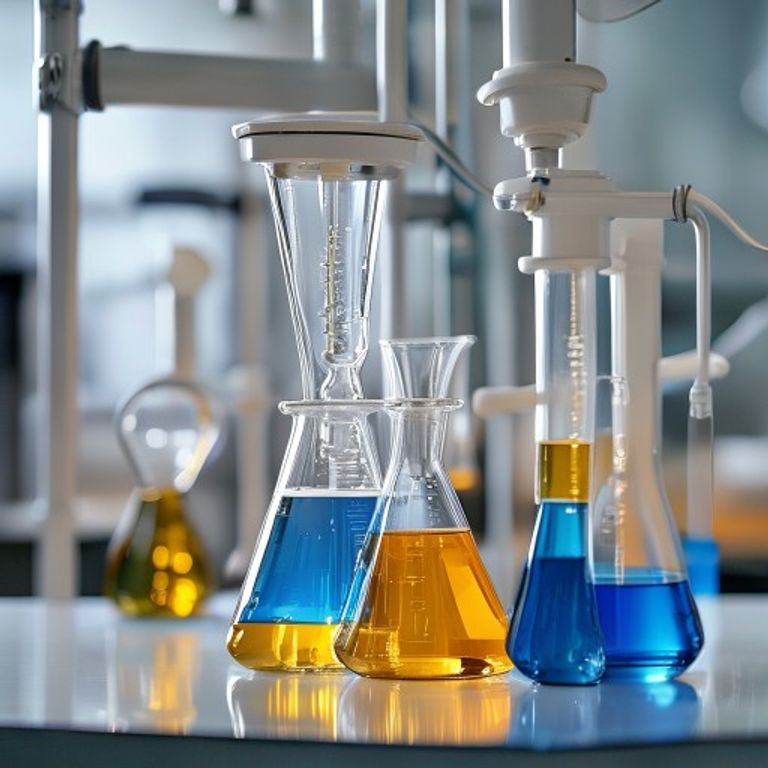
The Unsung Hero: Déballer toutes les fonctions d'entonnoir de laboratoire que vous devez connaître

Bonjour, les enthousiastes du labo ! Laissez parler des entonnoirs !
Vous êtes déjà entré dans un laboratoire et avez vu ces simples pièces de verre en forme de cône ? Oui, je parle d'entonnoirs ! Ils peuvent sembler basiques, mais croyez-moi, comprendre le vrai fonction d'entonnoir de laboratoire est crucial pour des expériences en douceur et en sécurité. Souvent négligés, ces outils humbles sont en fait les héros méconnus de la précision, de la sécurité et de l'efficacité dans tout cadre scientifique. De la chimie du lycée à la recherche avancée, vous les trouverez partout. Donc, laissez plonger profondément et explorez pourquoi cette pièce d'équipement apparemment simple est si indispensable!
Plus qu'un simple cône: la fonction d'entonnoir de laboratoire de base
À son cœur, l'utilisation principale d'un entonnoir de laboratoire est assez simple : pour nous aider à transférer des liquides ou des solides à grains fins d'un contenant à un autre sans déversement. Pensez à essayer de verser un litre d'eau dans un tube d'essai avec une petite ouverture – désordonné, non ? C'est là que notre entonnoir standard de laboratoire intervient. Il agit comme un pont, guidant la substance en douceur et empêchant les éclaboussures ou les pertes. Cela peut sembler trivial, mais en chimie, même une seule goutte peut faire une différence dans vos résultats expérimentaux ou la sécurité.
Mais attendez, il ya plus! Au-delà de la direction du flux, les entonnoirs sont essentiels pour un processus que nous appelons filtration. Si vous avez jamais brassé du café, vous avez essentiellement utilisé un entonnoir pour la filtration! Au labo, nous plaçons souvent un papier filtre dans un entonnoir, versons notre mélange à travers, et voilà! Les solides indésirables sont piégés par le papier, nous laissant avec un liquide propre. C'est une étape fondamentale pour purifier les solutions, isoler les précipités et préparer les échantillons pour une analyse plus approfondie. Nous les utilisons également pour transfert liquide quand nous devons verser des solutions dans des flacons ou des bouteilles à col étroit, en veillant à ce que chaque goutte précieuse la rende à sa destination.
Au-delà du simple Versement : différents types d'entonnoirs et leurs applications
Tout comme les clés viennent en différentes tailles, ainsi que les entonnoirs! Tous les entonnoirs ne sont pas égaux, et la compréhension de leurs conceptions uniques est la clé pour débloquer leur plein potentiel. Voyons quelques types communs et leurs rôles spécifiques :
Entonnoir standard (ou conique) : votre cheval de travail quotidien
C'est probablement ce qui vient à l'esprit quand vous entendez "funnel". Fabriqué en verre ou en plastique, sa forme conique et sa tige étroite sont parfaits pour le transfert général de liquide et la filtration gravitationnelle. Quelle est l'utilisation principale d'un entonnoir de laboratoire? Pour la plupart des tâches de routine, c'est ça ! Nous l'utilisons pour verser des réactifs, transférer des solutions après mélange, ou mettre en place des systèmes de filtration simples avec du papier filtre. Il est fiable, facile à nettoyer, et un agrafe dans chaque laboratoire.
L'entonnoir de séparation : le magicien des mélanges
C'est là que les choses deviennent intéressantes ! Un entonnoir séparé (souvent en forme de poire avec un bouchon au fond) est un morceau spécialisé de verrerie utilisés pour décantation liquides immiscibles – liquides qui ne se mélangent pas, comme l'huile et l'eau. Imaginez que vous ayez un mélange de deux liquides qui ont des densités différentes. Vous les versez dans l'entonnoir de séparation, les laissez s'installer dans des couches distinctes, puis, en ouvrant soigneusement le bouchon, vous pouvez égoutter la couche inférieure, laissant la couche supérieure derrière. Comment utiliser correctement un entonnoir séparé en chimie? Il s'agit de patience et de précision ! Nous l'utilisons largement en chimie organique pour l'extraction liquide-liquide, où nous enlevons sélectivement un composé d'une couche de solvant dans une autre.
L'entonnoir Buchner : l'alimentation par filtration
Lorsque vous avez besoin de filtrer rapidement et efficacement, surtout lorsqu'il s'agit de précipités fins ou de grands volumes, l'entonnoir Buchner est votre objectif. C'est un entonnoir robuste, typiquement en porcelaine ou en plastique avec un fond plat et perforé. Le but d'un entonnoir Buchner dans la filtration sous vide est sa conception, qui lui permet d'être utilisé avec une pompe à vide. En créant un vide sous l'entonnoir, nous pouvons tirer le liquide à travers le papier filtre beaucoup plus vite que la gravité le permettrait, faisant de la filtration une brise. Cette technique, appelée filtration sous vide, est essentielle pour isoler rapidement les produits solides.
L'entonnoir de poudre: pour les solides parmi nous
Contrairement à l'entonnoir standard avec une tige étroite, un entonnoir en poudre a une tige plus large et plus courte. Pourquoi ? Parce qu'il est spécialement conçu pour transférer des poudres et des solides granulaires. Une tige étroite serait facilement obstruée par des produits chimiques secs, entraînant des blocages frustrants. L'ouverture plus large d'un entonnoir de poudre assure un flux fluide et ininterrompu, prévenant le désordre et minimisant le risque de perdre des réactifs précieux.
Maîtriser le Pour : meilleures pratiques pour utiliser un entonnoir de laboratoire
L'utilisation d'un entonnoir peut sembler intuitive, mais il existe quelques bonnes pratiques qui peuvent améliorer considérablement vos résultats et votre sécurité :
- Choisissez la bonne taille : N'essayez pas de verser un grand volume à travers un petit entonnoir, ou vice versa. L'entonnoir doit être dimensionné de façon appropriée pour le contenant source et le contenant récepteur.
- Gardez-le propre : Assurez-vous toujours que votre entonnoir est parfaitement propre avant l'utilisation, surtout si vous faites face à des expériences sensibles. Résidu peut contaminer vos solutions.
- Le soutien est essentiel : Pour les entonnoirs plus gros ou lors du filtrage, assurez-vous que votre entonnoir est bien supporté, peut-être par un support de retort et une pince, pour l'empêcher de basculer.
- Évitez le surremplissage : Ne remplissez pas l'entonnoir au bord. Laisser un peu d'espace pour éviter les déversements, surtout lors de la filtration où le niveau de liquide peut augmenter.
- Verser lentement et de façon régulière: Contrôlez le flux. Verser trop rapidement peut provoquer des éclaboussures ou écraser le papier filtre.
- Technique de filtration appropriée : Si vous filtrez, assurez-vous que le papier filtre s'insère correctement dans l'entonnoir, et humidifiez-le avec le solvant pour le sceller aux parois de l'entonnoir avant d'ajouter votre mélange.
Pourquoi le bon entonnoir compte
Utiliser le bon type d'entonnoir pour le travail n'est pas seulement d'éviter les déversements; il est d'assurer la précision, la sécurité, et le succès de votre expérience. Un entonnoir mal choisi peut entraîner la contamination, la perte d'échantillons, des périodes expérimentales prolongées ou même des situations dangereuses en cas de déversement de produits chimiques. En comprenant les nuances de chaque fonction d'entonnoir de laboratoire, nous pouvons travailler plus efficacement et produire des résultats plus fiables.
Conclusion
Donc, la prochaine fois que vous verrez un entonnoir dans le labo, j'espère que vous le regarderez avec une nouvelle appréciation! De la tâche quotidienne de verser une solution aux extractions liquides complexes et aux filtrations rapides sous vide, les entonnoirs sont des outils vraiment indispensables. Ils simplifient notre travail, améliorent notre précision et contribuent de manière significative à la sécurité et au succès d'innombrables expériences. Rappelez-vous, même les outils les plus simples ont un rôle crucial à jouer dans le grand projet de découverte scientifique!
FAQ sur les entonnoirs de laboratoire
Q1: Quelle est l'utilisation principale d'un entonnoir de laboratoire standard?
A1 : L'utilisation principale d'un entonnoir de laboratoire standard est de faciliter le transfert de liquides ou de matières solides à grains fins d'un contenant à un autre sans déversement, en particulier dans des contenants à ouvertures étroites. Il est également largement utilisé pour la filtration par gravité en maintenant le papier filtre.
Q2: Puis-je utiliser un entonnoir pour la filtration?
A2: While standard conical funnels are suitable for gravity filtration with filter paper, specialized funnels like the Buchner funnel are designed for more efficient vacuum filtration. Powder funnels, on the other hand, are not ideal for filtration but are excellent for transferring solids.
Q3: Quelle est la différence entre un entonnoir standard et un entonnoir séparé?
A3: A standard funnel is used for general liquid transfer and gravity filtration. A separating funnel, identifiable by its stopcock at the bottom, is specifically designed for separating immiscible liquid layers based on their densities, a process known as liquid-liquid extraction or decanting.
Q4: Comment puis-je choisir l'entonnoir de bonne taille?
A4: Choose a funnel size that comfortably accommodates the volume of liquid or solid you’re transferring. The funnel’s opening should be wide enough to prevent spills from the source container, and its stem should fit appropriately into the receiving container without causing a vacuum seal.
Q5: Est-il sûr d'utiliser un entonnoir en plastique pour tous les produits chimiques?
A5: Not always. While plastic funnels are great for general use and less corrosive substances, glass funnels are generally preferred for strong acids, bases, or organic solvents, as certain plastics can degrade or react with these chemicals. Always check chemical compatibility.







