


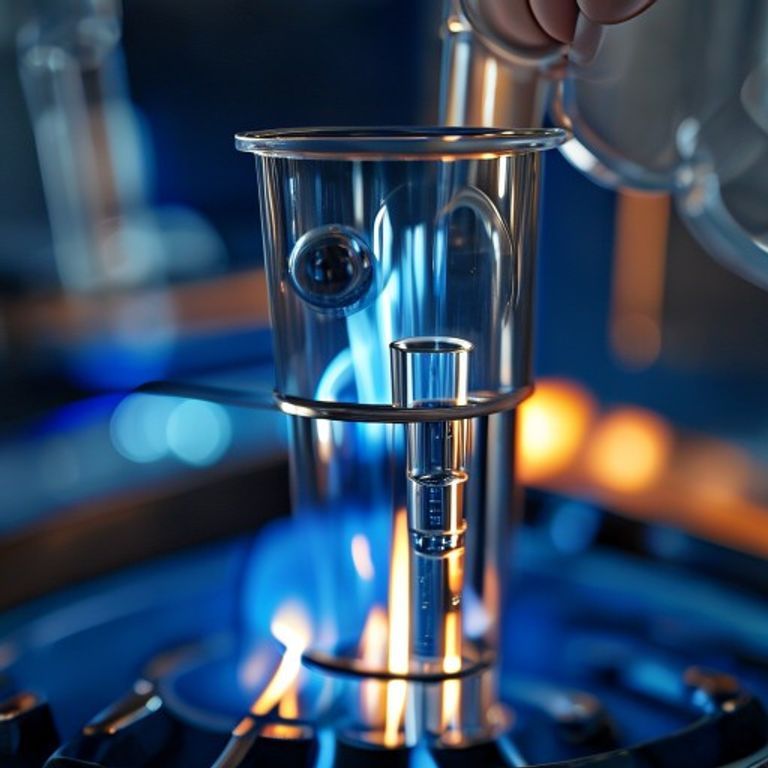
Définition du support de tube d'essai : Explication simple, utilisations et conseils de sécurité pour chaque laboratoire

Présentation
Vous vous êtes déjà demandé pourquoi nous voyons toujours une petite pince en métal tenant un tube d'essai sur un brûleur Bunsen ? Cet outil humble est le porte-tube d'essaiEt c'est plus qu'un morceau de métal. Dans cet article, je vais vous expliquer ce qu'est un porte-tube d'essai, comment il fonctionne, et pourquoi il est un must-have pour quiconque manipulant la verrerie dans le laboratoire. La langue est simple—Pensez-y comme un guide amical plutôt qu'un manuel.
Qu'est-ce qu'un porte-tube d'essai?
Un support de tube d'essai est un instrument de laboratoire conçu pour saisir un tube d'essai en toute sécurité pendant que vous le chauffez, le mélangez ou le transportez. Généralement en métal (souvent en acier inoxydable) ou en plastique résistant à la chaleur, il dispose de deux bras courts qui s'ouvrent comme une petite paire de pinces. Les bras se serrent autour du tube, gardant vos mains à l'écart du verre chaud.
Comment ça marche? (Définition et fonction)
La fonction est simple :
- Poignée : Les bras se ferment autour du tube, fournissant une main ferme.
- Appui : Le support place le tube sur une source de chaleur ou vous permet de le déplacer sans toucher le verre.
- Sécurité: En gardant vos doigts loin de la chaleur, il réduit le risque de brûlures ou de bris de verre.
Pensez-y comme une grue miniature pour votre tube d'essai—Juste assez de force pour soulever, mais assez douce pour ne pas écraser le verre.
À quoi sert un porte-tube d'essai?
Dans le travail de laboratoire quotidien, vous allez utiliser un support de tube de test pour:
- Chauffage des liquides dans un tube d'essai sur un brûleur Bunsen ou une plaque chaude.
- Mélanger ou faire tourner les échantillons sans déversement.
- Transférer un tube d'essai à chaud d'une station à une autre.
- Maintenez le tube stable pendant que vous ajoutez des réactifs avec une pipette ou une goutte.
En bref, chaque fois que vous devez garder vos mains loin d'un tube d'essai, le support entre.
Types communs de supports de tubes d'essai
Il y a quelques variations, chacune adaptée à différentes tâches:
- Support métallique standard: Design classique, idéal pour la plupart des applications de chauffage.
- Support réglable: Comprend un joint coulissant pour tubes plus grands ou des tubes d'essai avec des flacons fixés.
- Support en plastique ou en silicone: Utile lorsque vous avez besoin d'une poignée isolante pour des températures très élevées.
Conseils de sécurité lors de l'utilisation d'un support de tube d'essai
Même si le titulaire vous protège, de bonnes habitudes sont essentielles :
- Vérifiez toujours que les bras sont propres et exempts de fissures avant utilisation.
- Assurez-vous que le support est positionné de manière à ce que le tube soit stable et qu'il ne dépasse pas la pointe.
- Ne jamais saisir un tube déjà fissuré—La chaleur peut faire exploser.
- Gardez les pièces métalliques du support loin de la flamme directe pour éviter de surchauffer l'outil lui-même.
En suivant ces étapes simples, vous pouvez transformer une étape de chauffage de routine en une opération sûre et sans stress.
Pourquoi ça compte dans le laboratoire
Au-delà de la sécurité, un porte-tube d'essai améliore la précision. Lorsque vous chauffez une réaction, un tube stable signifie une distribution de température uniforme et moins de risques de déversement. C'est pourquoi de nombreux manuels de chimie énumèrent le titulaire comme faisant partie de l'essentiel matériel de laboratoire liste de contrôle.
Pour une plongée plus profonde dans la façon dont les tubes d'essai fonctionnent eux-mêmes dans les expériences, consultez notre Fonction du tube d'essai guide. Comprendre le tube et son support ensemble vous donne une image complète du travail de laboratoire sûr et efficace.
FAQ
Q: Puis-je utiliser un porte-tube pour la verrerie autre que les tubes d'essai?
R: Il est le mieux réservé aux tubes d'essai. Les plus grands flacons nécessitent des pinces ou des supports conçus pour leur taille.
Q: Quel matériau est le meilleur pour un support si je travaille avec des températures très élevées?
R: Les supports en acier inoxydable sont les plus résistants à la chaleur, mais une poignée en silicone peut ajouter une couche supplémentaire d'isolation.
Q: Ai-je besoin d'un support si je ne fais que tourner un échantillon de température ambiante?
R: Pas nécessairement, mais en utilisant on peut encore protéger vos doigts contre les éclaboussures accidentelles.
Q: Comment nettoyer un porte-tube métallique?
R: Essuyez-le avec un chiffon humide après chaque utilisation. Pour les résidus tenaces, un détergent doux et de l'eau chaude feront le tour—Séchez-le bien avant de le stocker.
Q: Est-ce qu'un porte-tube d'essai est considéré comme un "clamp de retenue"?
R: Oui, en terminologie de laboratoire, il relève de la catégorie plus large des pinces de maintien, qui sont des outils conçus pour sécuriser la verrerie.
Conclusion
Dans le monde des appareils de chimie, le porte-tube d'essai peut sembler simple, mais son impact sur la sécurité et l'efficacité est énorme. Que vous soyez un étudiant débutant ou un chercheur chevronné, garder un support fiable à la main garantit que le chauffage, le mélange et le déplacement des tubes d'essai sont à la fois sûrs et précis. Alors la prochaine fois que vous verrez cette petite pince, rappelez-vous que c'est le héros méconnu qui garde vos mains hors des ennuis.