


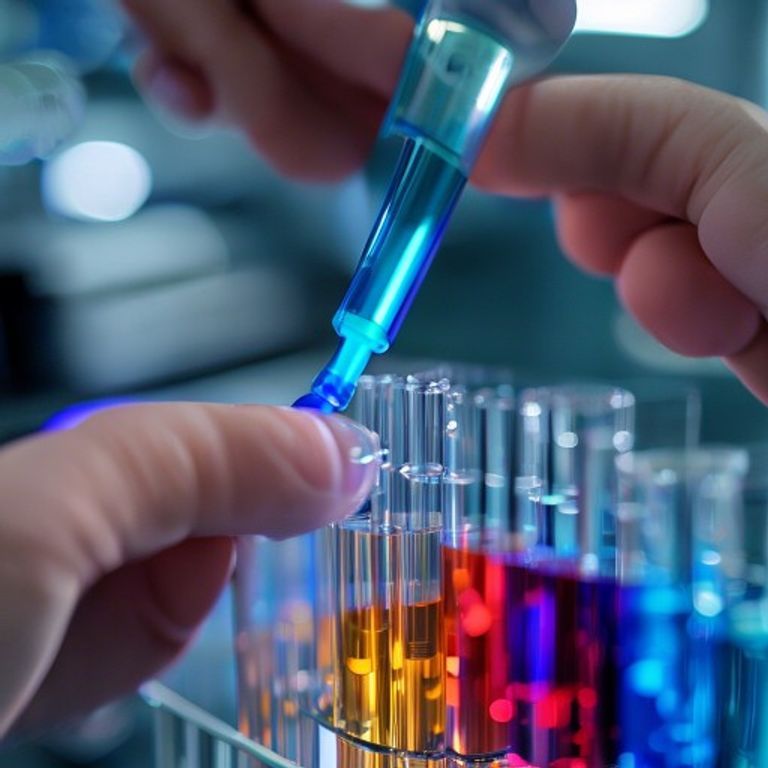
The Unsung Hero of the Lab: Maîtriser les fonctions essentielles de pipette pour des expériences sans faille

Introduction : Pourquoi chaque goutte compte
Vous avez déjà vu quelqu'un transférer méticuleusement de petites quantités de liquide d'un tube à l'autre ? Il y a des chances qu'ils utilisent une pipette. Pour beaucoup, une pipette pourrait juste ressembler à une jolie goutteuse, mais croyez-moi, son rôle dans la découverte scientifique est monumental! En tant qu'auteurs de contenu, nous pensons souvent aux mots, mais dans le laboratoire, les scientifiques pensent aux volumes – petits volumes précis. C'est là que la compréhension fonctions de pipette devient absolument crucial. Aujourd'hui, nous allons plonger profondément dans ce que ces outils de laboratoire essentiels font, comment ils fonctionnent, et pourquoi maîtriser leur utilisation peut faire ou casser vos expériences.
Imaginez essayer de faire cuire un gâteau sans tasses et cuillères de mesure précises. Vous pourriez finir avec quelque chose de comestible, mais il ne sera probablement pas le gâteau parfait que vous avez imaginé. Dans le monde de la science, en particulier dans des domaines comme la biologie, la chimie et la médecine, ce « gâteau parfait » se traduit par des données fiables, des diagnostics précis et le développement réussi de médicaments. La moindre erreur dans le transfert de liquide peut conduire à des résultats invalides, des réactifs gaspillés et des heures de travail perdues. Donc, laissez-les explorer le monde des pipettes et débloquer leur plein potentiel.
Quelles sont exactement les fonctions de pipette? L'objectif principal
Au cœur, la fonction première d'une pipette est incroyablement simple mais profondément importante : transférer avec précision et précision des volumes spécifiques de liquide. Pensez-y comme votre cuillère de mesure liquide super-précis, mais une qui peut mesurer jusqu'à une petite fraction d'une cuillère à café!
Quand on parle de Comment fonctionnent les pipettes, nous faisons généralement référence à deux actions principales:
- Aspiration: C'est quand la pipette "sucke" le liquide. Vous appuyez sur un bouton ou pressez une ampoule, créant un vide qui attire le liquide dans l'embout de pipette.
- Délivrance: C'est quand la pipette « libère » le liquide. Vous appuyez à nouveau sur le bouton (généralement jusqu'à un second arrêt) ou pressez l'ampoule, en poussant le liquide hors de la pointe.
Ces deux étapes apparemment simples sont le fondement d'innombrables expériences, de la préparation d'échantillons à l'analyse à la création de mélanges de réactions en biologie moléculaire.
Plus qu'un seul type : différents types de fonctions de pipette dans un laboratoire
Tout comme vous ne feriez pas utiliser un tournevis pour chaque travail de réparation, il n'y a pas une seule pipette qui fait tout. Les laboratoires sont équipés de différents types, chacun conçu pour fonctions pipette dans un laboratoire:
Micropipettes : les maîtres de précision
Quand la plupart des gens imaginent une pipette, ils pensent probablement à une micropipette. Ce sont les chevaux de travail pour la manipulation de très petits volumes, généralement de 0,1 microlitre (μL) à 1000 μL (1 millilitre). Utilisation des tubes d'essai, par exemple, impliquent souvent des ajouts précis de réactifs mesurés par micropipettes.
- Micropipettes monocanal: Idéal pour les travaux généraux de laboratoire, transférer des liquides un échantillon à la fois.
- Micropipettes multicanaux: Parfait pour le travail à haute performance, comme remplir 96 plaques de puits, car elles peuvent aspirer et distribuer plusieurs échantillons simultanément. Parler d'un sauveur du temps !
Comprendre les fonctions de base d'une micropipette implique de régler le volume, de fixer une pointe propre, d'aspirer soigneusement et de distribuer en douceur. Nous allons bientôt obtenir des conseils de précision!
Au-delà des micropipettes : autres types essentiels de pipettes
Alors que les micropipettes manipulent les petites choses, d'autres pipettes s'attaquent à des volumes plus importants ou à des tâches spécifiques:
- Pipettes sérologiques: Il s'agit de pipettes graduées plus longues, généralement en plastique ou en verre, utilisées pour transférer des volumes de 1 mL à 50 mL. Ils sont excellents pour préparer des milieux ou ajouter des réactifs en plus grandes quantités.
- Pipettes volumétriques (ou de transfert): Ils sont conçus pour la précision ultime dans le transfert d'un *Volume unique spécifique*. Ils ont une ampoule au milieu et une seule marque d'étalonnage. Considérez-les comme la « norme d'or » pour la livraison précise d'un volume fixe, comme la préparation de solutions standard.
- Les pipettes Pasteur : Souvent appelés « gouttes », il s'agit de simples tubes en verre ou en plastique avec une pointe étroite et une ampoule en caoutchouc. Ils sont utilisés pour les transferts non critiques ou quand vous avez juste besoin d'ajouter quelques gouttes de quelque chose, comme Utilisation des spatules sont destinés à des transferts solides. Ils ne sont pas pour la mesure précise du volume.
L'art de la précision : comment utiliser une pipette pour un transfert précis de liquides
Même la meilleure pipette est aussi bonne que la personne qui la tient. Réalisation de la précision manipulation des liquides est une compétence développée avec la pratique. Voici quelques conseils pratiques que nous avons appris au fil des ans:
- Choisissez la bonne pipette et la bonne pointe: Sélectionnez toujours une pipette dont la plage de volume est appropriée pour votre transfert souhaité. Utilisez une pointe fraîche et propre pour chaque nouveau liquide ou échantillon pour prévenir la contamination croisée.
- Prémoudre le tuyau : Aspirez et distribuez le liquide une ou deux fois dans le même contenant avant de procéder à votre transfert. Cela sature l'air dans l'extrémité avec de la vapeur, réduisant l'évaporation et assurant le volume correct est relevé sur la prochaine aspiration.
- Technique d'aspiration appropriée : Immerger le bout juste sous la surface du liquide, pas trop profond. Appuyez lentement et doucement sur le piston jusqu'au premier arrêt, aspirez, puis relâchez lentement le piston pour tirer le liquide. Les mouvements de jerky peuvent causer des bulles d'air ou des volumes inexacts.
- Évitez les bulles d'air : Les bulles d'air signifient moins de liquide. Regardez bien ! Si vous voyez des bulles, jetez le liquide et respirez.
- Technique de distribution appropriée : Placer l'extrémité contre le côté du récipient récepteur (à un angle léger). Appuyez sur le piston jusqu'au premier arrêt, puis continuez jusqu'au deuxième arrêt pour expulser tout liquide restant. Retirez l'extrémité en le faisant glisser vers le haut de la paroi du bateau tout en maintenant le piston enfoncé, puis relâchez le piston. Cela garantit une livraison maximale.
- Maintenir un rythme uniforme : Une pipette rapide entraîne souvent des erreurs. Prenez votre temps, maintenez un rythme régulier.
- L'étalonnage est la clé: Vérifiez régulièrement l'étalonnage de vos pipettes pour s'assurer qu'ils distribuent les volumes corrects. Il s'agit là d'un élément essentiel du maintien de normes élevées pour Mesure du volume dans n'importe quel laboratoire.
Pourquoi l'exactitude compte : l'impact des fonctions de pipette appropriées
Pourquoi est-ce qu'on s'en prend tant aux millilitres et aux microlitres ? Parce que dans la science, les petites déviations peuvent avoir des conséquences massives. Imaginez effectuer un test diagnostique où la concentration d'un réactif est critique. Un transfert inexact de pipette pourrait conduire à un faux positif ou faux négatif, potentiellement affectant le traitement d'un patient.
Dans la recherche, la précision dans aspiration et distribution s'assure que les expériences sont reproductibles, ce qui signifie que d'autres scientifiques peuvent obtenir les mêmes résultats s'ils suivent vos méthodes. Cette reproductibilité est l'épine dorsale de la découverte scientifique. Sans fonctions de pipette fiables, nos données ne seraient pas dignes de confiance, et le progrès scientifique s'arrêterait.
Conclusion : Autonomiser votre travail de laboratoire
Du laboratoire étudiant le plus humble au centre de recherche le plus avancé, les pipettes sont indispensables. Ce sont les héros méconnus qui facilitent d'innombrables découvertes, nous aidant à comprendre le monde au niveau microscopique. En maîtrisant les différents fonctions de pipette et en adoptant les meilleures pratiques pour un transfert précis de liquides, nous nous autorisons à mener des expériences plus fiables, à produire des données plus fiables et, en fin de compte, à contribuer avec confiance aux progrès scientifiques. Donc, la prochaine fois que vous prendrez une pipette, rappelez-vous le pouvoir que vous tenez dans vos mains – et utilisez-le sagement!
FAQ
Q1: Quelle est la différence entre la précision et la précision dans le pipetage?
A : L'exactitude renvoie à la façon dont votre mesure se rapproche de la valeur réelle (p. ex., si vous réglez votre pipette à 100 μL, est-ce qu'elle distribue réellement 100 μL?). La précision fait référence à la façon dont les mesures répétées sont rapprochées les unes des autres (p. ex., si vous distribuez 100 μL cinq fois, les cinq diffuses sont-elles très proches en volume?). Vous voulez les deux pour des résultats fiables!
Q2 : À quelle fréquence les pipettes doivent-elles être étalonnées?
A : La fréquence dépend de la fréquence d'utilisation de la pipette, du type de liquide manipulé et de la précision requise pour vos expériences. Une bonne règle générale est tous les 6-12 mois, ou plus souvent si une précision élevée est primordiale ou si la pipette a été abandonnée ou est soupçonnée d'être inexacte.
Q3: Puis-je réutiliser les conseils de pipette?
A : En général, non. Les bouts de réutilisation peuvent entraîner une contamination croisée entre les échantillons et un transfert de volume inexact en raison d'un liquide résiduel ou de dommages à l'extrémité. Utilisez toujours des bouts frais et stériles, surtout pour les expériences critiques.
Q4: Que dois-je faire si ma pipette coule du liquide?
A : Le trempage indique habituellement un problème. Il peut s'agir d'une pointe lâche ou endommagée, d'un joint défectueux dans la pipette, ou même d'une technique de pipetage incorrecte (comme l'aspiration trop rapide ou le maintien de la pipette à un angle extrême). Vérifiez d'abord votre conseil, puis envisagez d'envoyer la pipette pour l'entretien si le problème persiste.







