

Unlock Lab Success: Votre guide essentiel de la chimie Wire Gauze utilise et entretien

Dans le monde animé d'un laboratoire de chimie, avec ses gammes de verrerie, ses réactions complexes et ses mesures minutieuses, certains outils sont souvent négligés. Pourtant, ils sont absolument cruciaux pour beaucoup de nos expériences quotidiennes. Aujourd'hui, nous brillons un projecteur sur un tel héros méconnu: le gaze de fil de chimie. Vous connaissez celui-là – ce simple, sans prétention maille carré qui se trouve au sommet d'un trépied, attendant patiemment son moment pour briller.
Lorsque nous entrons dans un laboratoire, nous pourrions nous concentrer sur les produits chimiques passionnants ou les procédures complexes. Mais assez tôt, nous nous rendons compte que la chimie pratique dépend fortement de l'équipement fondamental. La gaze filaire en est un bon exemple. Il n'est pas seulement un morceau de métal; il est un composant essentiel pour assurer un chauffage sûr et efficace, une compétence que nous utilisons constamment. Dans ce guide, nous plongerons profondément dans ce qu'est la gaze filaire, son rôle vital, les différents types que nous rencontrons, comment l'utiliser comme un pro, et même comment le garder propre pour la longévité. Laissez s'assurer que nous donnons à ce laboratoire essentiel l'attention qu'il mérite!
Qu'est-ce que c'est exactement une jauge de fil de chimie?
À son cœur, une gaze de fil de chimie est une mince tôle de métal, généralement galvanisée en fer ou en acier inoxydable, tissée dans un motif de maille. Imaginez une clôture très fine et robuste pour votre équipement de laboratoire! Il est généralement carré, allant de 10 à 15 centimètres (4 à 6 pouces) de chaque côté. Son travail principal est d'agir comme une plate-forme pour la verrerie quand nous avons besoin de la chauffer directement sur une flamme, comme d'un brûleur Bunsen.
Vous remarquerez peut-être que certaines gazes en fil ont un cercle en céramique ou un tampon en fibre intégré au centre. Ce n'est pas seulement pour l'esthétique ; il joue un rôle important dans la distribution de la chaleur, dont nous discuterons un peu plus tard. Essentiellement, qu'il s'agisse de métal ordinaire ou d'un noyau en céramique, la gaze en fil sert de pont entre la source de chaleur intense et nos vases de laboratoire délicats.
Le héros unsung: but de la jauge de fil en laboratoire
Alors, pourquoi est-ce qu'on s'embête avec cet écran ? On ne peut pas mettre notre bécher directement sur la flamme ? Eh bien, pas d'habitude, et voici pourquoi but de la gaze filaire en laboratoire les réglages sont si critiques:
- Même distribution de chaleur: C'est sans doute sa fonction la plus importante. Lorsqu'un brûleur Bunsen frappe directement un bec de verre, il crée un point chaud concentré. Cela peut causer une expansion inégale du verre, entraînant une contrainte thermique et potentiellement une fissure ou une rupture. La gaze de fil étend la chaleur de la flamme sur une zone plus large, comme un diffuseur, permettant à la verrerie de chauffer plus uniformément. Cela empêche les mauvaises surprises et maintient nos expériences (et nous!) en sécurité.
- Soutien à la verrerie : Les verres comme les béchers, les flacons et les plats qui s'évaporent n'ont pas toujours de fond plat, ou ils pourraient être trop délicats pour s'asseoir directement sur un anneau métallique de trépied. La gaze de fil fournit une surface stable et plane pour ces articles de se reposer solidement pendant le chauffage. Pas de friction, pas de bascule, juste un soutien stable.
- Protection contre la flamme directe : Certaines réactions sont sensibles à la chaleur directe et intense. La gaze agit comme une barrière, modérant le transfert de chaleur et protégeant le contenu de notre verrerie contre l'incinération ou la surchauffe trop rapidement. En parlant de sources de chaleur, comprendre les divers Utilisations essentielles du brûleur Bunsen est crucial pour un travail de laboratoire efficace et sûr, car il est l'outil principal que nous jumelons avec notre gaze de fil de confiance.
Comprendre les types: Gauze de fil avec fonction centre céramique
Comme nous l'avons mentionné, toutes les gazes de fil ne sont pas égales. La distinction la plus fréquente est entre la gaze de fil simple et gaze fil avec fonction centre céramique. Disons pourquoi cette différence est importante :
- Gauze à fils simples : C'est simplement un maillage métallique. Il est excellent pour le chauffage général où la distribution de chaleur modérée est suffisante. Il permet une bonne quantité de chaleur à travers, mais le métal lui-même va obtenir très chaud et radier la chaleur.
- Gauze de fil avec centre de céramique: Cette variante dispose d'un disque en céramique blanc ou gris fusionné au centre du maillage. Le matériau céramique offre une diffusion de chaleur supérieure. Il absorbe l'impact direct de la flamme puis rayonne la chaleur plus doucement et uniformément sur le fond de la verrerie. Ceci est particulièrement utile pour:
- Prévenir la surchauffe localisée dans les réactions sensibles.
- Protéger la verrerie très fine ou délicate contre les chocs thermiques.
- Réaliser une ébullition ou une évaporation plus cohérente.
Pensez-y comme à la cuisson: parfois vous avez besoin de flamme directe, d'autres fois vous avez besoin d'un diffuseur de chaleur. Le centre céramique agit comme un diffuseur très efficace, ce qui en fait un choix pour des tâches de chauffage plus précises. Si vous cherchez à explorer encore plus au sujet de ces outils simples mais critiques, vous trouverez que utilisations essentielles de gaze filaire s'étend au-delà du simple chauffage, touchant à diverses applications de soutien et de sécurité dans le laboratoire.
Comment utiliser la jauge de fil dans les expériences de chimie (Safely!)
L'utilisation d'une gaze de fil est simple, mais le faire correctement et en toute sécurité est la clé:
- Configurez votre trépied : D'abord, placez votre trépied sur une surface résistante à la chaleur, loin des matériaux inflammables.
- Positionner la jauge de fil: Placez soigneusement la gaze de fil sur le support de trépied. Assurez-vous qu'il est à plat et stable.
- Placez votre verrerie : Réglez doucement le bécher, le flacon ou le plat d'évaporation que vous avez l'intention de chauffer au centre de la gaze de fil. Assurez-vous qu'il est stable et qu'il n'y a pas de pointe.
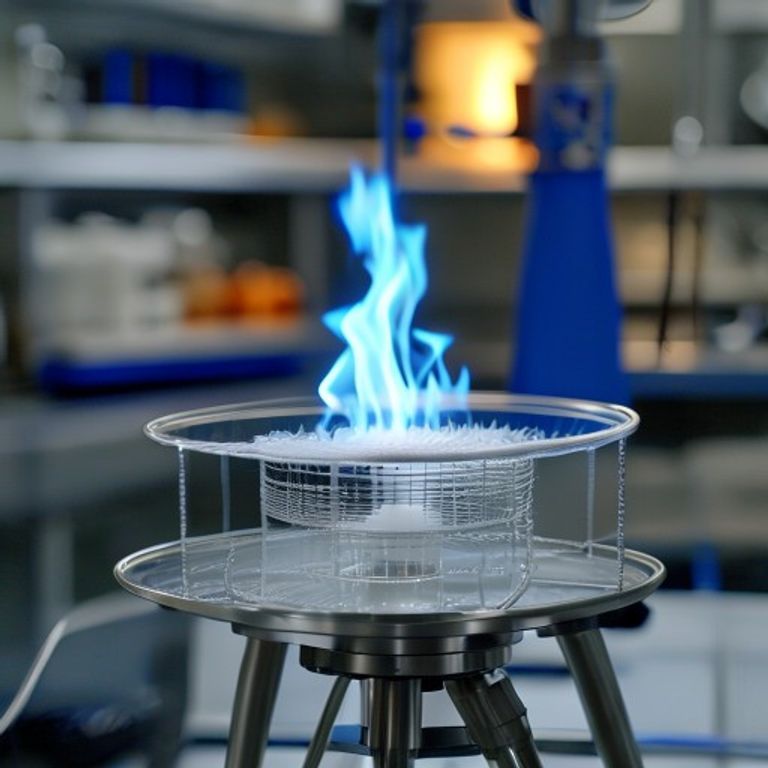
- Introduire la source de chaleur : Placez votre brûleur Bunsen sous le trépied, directement sous la gaze filaire. Réglez la flamme à l'intensité désirée. Rappelez-vous, la gaze brillera en rouge là où la flamme la frappe, indiquant le transfert de chaleur.
- Surveiller et ajuster : Gardez toujours un œil sur votre expérience. Si le chauffage est trop rapide, régler la flamme ou même retirer temporairement le brûleur.
- Refroidir : Une fois le chauffage terminé, éteignez le brûleur Bunsen. Laissez refroidir la verrerie et la gaze filaire sur le stand avant de tenter de les manipuler. Utilisez des pinces ou des gants résistants à la chaleur si vous devez les déplacer pendant qu'ils sont encore chauds.
Sécurité d'abord ! Assurez-vous toujours que votre installation est stable avant d'allumer la flamme. Ne laissez jamais une expérience de chauffage sans surveillance.
Keep it Clean: Nettoyer la jauge de fil pour les expériences
Une gaze de fil propre n'est pas seulement pour l'esthétique; elle assure un transfert de chaleur efficace et prévient la contamination. Voici comment nous gérons habituellement gaze de nettoyage pour les expériences:
- Après utilisation: Une fois qu'il est frais, brossez doucement tous les résidus solides qui pourraient avoir éclaboussé dessus. Un pinceau à brosse rigide fait souvent des merveilles.
- Lavage: Pour les taches plus tenaces, nous pouvons le laver avec de l'eau savonneuse chaude et un brossage. Rincer soigneusement pour éliminer tous les résidus de savon.
- Séchage: L'air sèche complètement la gaze de fil avant de la stocker. Toute humidité laissée sur une gaze de fer ordinaire peut conduire à la rouille.
- Staines étouffées: Pour les résidus carbonisés très résistants (marques noires de produits chimiques brûlés), un peu de nettoyant abrasif doux et un lavage vigoureux pourraient être nécessaires.
Si votre gaze de fil devient fortement déformé, rouillé, ou a de grands trous, il est probablement temps de le remplacer. Une gaze endommagée n'apporte pas un support uniforme ou une distribution de chaleur efficace.
Conseils pour maximiser votre jauge de fils Durée de vie
Pour tirer le meilleur parti de notre gaze filaire et éviter les remplacements fréquents, voici quelques conseils pratiques:
- Stockage adéquat: Entreposer les gazes en fil plat et sec. Les écraser soigneusement empêche les déformeurs et les dommages au maillage.
- Éviter toute chaleur excessive: Bien que conçu pour la chaleur, exposition prolongée à des flammes très élevées, directe (surtout sans verre sur le dessus) peut dégrader le métal au fil du temps.
- Poignée avec soin : Évitez de plier ou de tordre la gaze, car cela peut affaiblir le maillage et détacher le centre de la céramique si elle en a une.
- Inspection régulière : Avant chaque utilisation, vérifiez rapidement la gaze pour tout signe de dommage, comme de grands trous, de la rouille sévère, ou un centre de céramique lâche.
Conclusion
Alors nous l'avons – une plongée profonde dans l'indispensable gaze de fil de chimie. Il ne s'agit peut-être pas de l'équipement le plus flash dans notre laboratoire, mais son rôle dans le soutien de la verrerie et, surtout, assurer la sécurité et même le chauffage est absolument fondamental. De la compréhension des avantages d'une gaze de fil avec un centre de céramique à la maîtrise de son utilisation sûre et le nettoyage approprié, nous espérons que ce guide vous permet d'utiliser ce cheval de travail de laboratoire avec confiance.
La prochaine fois que vous vous préparez pour une expérience qui implique le chauffage, prenez un moment pour apprécier l'humble gaze filaire. Il fait tranquillement son travail vital, nous aidant à obtenir des résultats précis et sûrs à chaque fois. Bonne expérience !
Foire aux questions (FAQ)
Q: Puis-je utiliser la gaze filaire sans trépied?
R: Techniquement, vous pouvez, mais c'est très dangereux et peu pratique. Le trépied fournit la hauteur et la stabilité nécessaires pour positionner correctement la gaze de fil et la verrerie sur un brûleur Bunsen ou une autre source de chaleur. Sans elle, votre verrerie serait agitée, dangereusement proche de la flamme, et sujette à basculer.
Q: Quelle est la principale différence entre la gaze filaire et un tapis en céramique?
R: Alors que les deux sont utilisés pour la chaleur, leurs fonctions primaires diffèrent. La gaze filaire (surtout avec un centre en céramique) est spécialement conçue pour soutenir la verrerie *sur une flamme directe* et répartir uniformément cette chaleur. Un tapis en céramique, par contre, est généralement une surface solide et résistante à la chaleur utilisée comme couche de protection du banc ou pour placer des articles chauds après chauffage. Il n'a pas la structure de maille pour permettre la flamme à travers pour le chauffage de la verrerie directement.
Q: Comment savoir quand remplacer ma gaze filaire?
R: Il est temps de remplacer votre gaze filaire si:
- Il a la rouille ou la corrosion importante qui ne peut pas être nettoyé.
- La maille est fortement déformée ou courbée, empêchant la verrerie de s'asseoir à plat.
- Il y a de grands trous dans le maillage qui compromettent le support ou la distribution de chaleur.
- Le centre de céramique (si présent) est fissuré, cassé, ou est sorti du maillage.