The Unsung Hero: Démystifiant Wire Gauze Chimie dans votre laboratoire

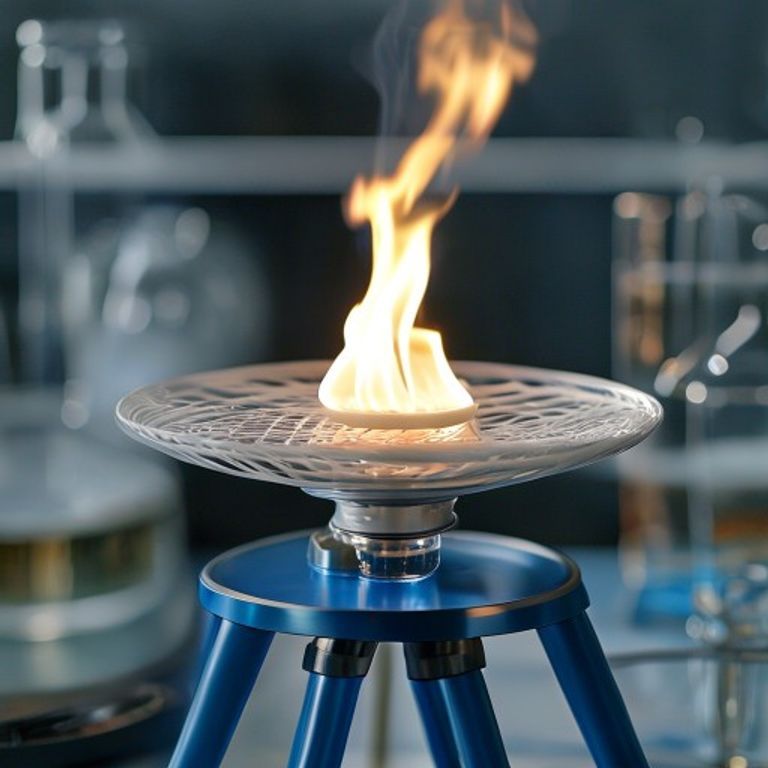
Tu t'es déjà posé des questions sur ce simple morceau de maille avec un cercle blanc au milieu, assis patiemment à côté du brûleur Bunsen dans ton laboratoire de chimie ? Ça, mes amis, c'est la gaze de fil, et c'est bien plus important qu'il ne semble ! Aujourd'hui, nous allons plonger profondément dans le monde fascinant de chimie des gazes filaires, en découvrant son rôle crucial dans la sécurité et l'efficacité des expériences de chauffage.
Pour nous, la gaze de fil n'est pas juste un morceau de matériel de laboratoire; c'est un dispositif de sécurité fondamental et un outil de précision. Sans elle, beaucoup de nos opérations de chauffage seraient risquées, inefficaces, voire carrément dangereuses. Voyons pourquoi cet humble objet est vraiment un héros méconnu en chimie.
Qu'est-ce exactement que Wire Gauze et pourquoi est-il indispensable en chimie?
À son cœur, une gaze de fil est une mince feuille de maille métallique, généralement faite de fer ou d'acier inoxydable, souvent avec un petit tampon de fibre céramique ou sans amiante intégré dans son centre. Pensez-y comme une plaque d'atterrissage spécialisée pour votre verrerie, conçue pour s'asseoir sur un trépied.
Mais pourquoi en avons-nous besoin ? Imaginez essayer de cuisiner sur un poêle en mettant un bol en verre fin directement sur un brûleur flamboyant. Que se passerait-il ? Très probablement, le verre se fissurerait, se briserait, ou du moins se réchaufferait inégalement, ce qui entraînerait un désordre ou une situation dangereuse. En chimie, ce n'est pas différent. Exposition directe du verre Verrerie de chauffage, comme les béchers et les flacons, à la flamme intense et localisée d'un brûleur Bunsen peut causer des chocs thermiques. Ce choc peut facilement entraîner une rupture, des déversements de produits chimiques précieux, et potentiellement causer des blessures. C'est précisément pour quel fil gaze est utilisé en chimie – prévenir ces dangers et assurer un chauffage cohérent.
Le but de base de la jauge de fil dans le laboratoire
Le primaire but de la gaze filaire en laboratoire les paramètres se résument à deux fonctions critiques: le support et la distribution de chaleur. Laissez les décomposer :
Fournir un soutien stable
Lorsque nous échauffons des liquides dans un bécher ou un ballon, nous avons besoin d'une plate-forme stable. La gaze en fil, placée sur un trépied, crée une surface plane et sécurisée pour notre verrerie. Ceci empêche les oscillations et les déversements potentiels, ce qui nous permet de nous concentrer sur l'expérience sans nous soucier de notre équipement qui déborde.
Atteindre une répartition égale de la chaleur
C'est là que la magie de distribution de chaleur de gaze fil en laboratoire les environnements brillent vraiment. Lorsqu'une flamme du brûleur Bunsen frappe le maillage métallique, la chaleur est absorbée puis répartie sur une zone plus large. La maille de fil agit comme un diffuseur, en prenant la chaleur concentrée de la flamme et en la distribuant plus uniformément sur le fond du bécher ou du ballon. Cela empêche les points chauds localisés qui pourraient faire craquer le verre ou faire bouillir le liquide de façon erratique.
Maîtriser la configuration: Comment utiliser la jauge de fil avec un support de trépied
La configuration correcte de votre appareil de chauffage est cruciale. Voici un guide simple sur Comment utiliser la gaze filaire avec trépied:
- Tout d'abord, placez votre trépied robuste sur une surface plane et résistante à la chaleur.
- Ensuite, placez doucement la gaze de fil sur le haut du trépied, en assurant qu'il est assis à plat et est centré.
- Ensuite, placez soigneusement votre bécher ou votre fiole, contenant la matière à chauffer, directement sur la gaze filaire. Assurez-vous que la verrerie est stable et ne tète pas.
- Enfin, placez votre brûleur Bunsen sous le trépied, directement sous le centre céramique de la gaze filaire. Régler la flamme à l'intensité souhaitée, en s'assurant qu'elle frappe le tampon céramique pour une diffusion optimale de la chaleur.
Simple, pas vrai ? Cette approche systématique minimise les risques et maximise l'efficacité.
L'arme secrète : l'importance du centre de céramique
Vous avez peut-être remarqué que la plupart des gazes en fil moderne disposent d'un tampon en céramique ou en fibre dans le centre même. Ce n'est pas seulement pour l'esthétique ; c'est un design brillant pour une sécurité et des performances améliorées. Les importance du centre céramique en gaze filaire ne peut pas être surestimé:
Amélioration de la propagation de la chaleur : Alors que le fil de fer lui-même distribue la chaleur, le tampon en céramique absorbe la chaleur directe et intense de la flamme du brûleur Bunsen. Il rayonne alors cette chaleur vers l'extérieur plus uniformément que le métal seul, réduisant encore le risque de surchauffe localisée et de choc thermique.
Protection contre les flammes directes: La plaque en céramique empêche l'extrémité même de la flamme du brûleur Bunsen de toucher directement le verre. Ceci est vital parce que le contact direct de la flamme peut affaiblir le verre, en particulier avec une exposition prolongée.
Matériel non combustible: Contrairement aux anciennes gazes de fil qui utilisaient parfois de l'amiante (qui est maintenant connu pour être dangereux), les coussinets en céramique modernes sont sûrs, non combustibles et durables, ce qui les rend idéales pour les applications à haute température.
Conclusion : Le gardien silencieux de nos expériences
Du soutien de notre verrerie à la diffusion experte de la chaleur, la gaze filaire est un composant indispensable dans tout laboratoire de chimie. Il transforme une flamme directe potentiellement dangereuse en une source de chaleur contrôlée et répartie uniformément, protégeant notre équipement et, plus important encore, nous. Donc, la prochaine fois que vous atteindrez votre gaze filaire, rappelez-vous son rôle vital dans la sécurité et l'efficacité chimie des gazes filaires. C'est vraiment l'un des héros méconnus qui rend possible une expérimentation précise et sûre.
FAQ sur la chimie de la jauge métallique
Q1: Puis-je utiliser une gaze de fil sans le centre céramique?
A1: Alors que les anciennes versions de gaze de fil existaient sans centre de céramique, la pratique moderne recommande fortement d'utiliser ceux avec un tampon en céramique. Le centre céramique améliore significativement la distribution de chaleur et réduit le risque de choc thermique à votre Verrerie de chauffage, rendant vos expériences plus sûres et plus efficaces. En utilisant un sans il augmente le risque de bris de verre.
Q2: Comment puis-je nettoyer une gaze de fil?
R2: Typiquement, une gaze de fil doit être essuyée avec un chiffon humide après l'utilisation, surtout si des produits chimiques se sont déversés dessus. Pour les résidus tenaces, un gommage doux avec du savon et de l'eau peut fonctionner. Toujours l'assurer complètement sec avant de stocker pour prévenir la rouille, surtout si elle est faite de fer.
Q3: Quelle est la différence entre une gaze filaire et un plat d'évaporation?
A3: Une gaze filaire est un diffuseur de support et de chaleur utilisé *sous* verrerie. Un plat d'évaporation, par contre, est un morceau de verre lui-même, généralement en porcelaine, utilisé *directement* pour chauffer et évaporer les liquides. Ils remplissent des fonctions très différentes au labo.
Q4 : Pourquoi le centre céramique devient-il parfois noir après chauffage ?
A4: Le centre céramique tournant noir est généralement dû à une combustion incomplète de la flamme du brûleur Bunsen. Si la flamme n'obtient pas assez d'oxygène, elle produit de la suie (carbone), qui se dépose sur le tampon céramique. Ajuster votre brûleur Bunsen pour obtenir une flamme bleue plus propre peut empêcher cela.