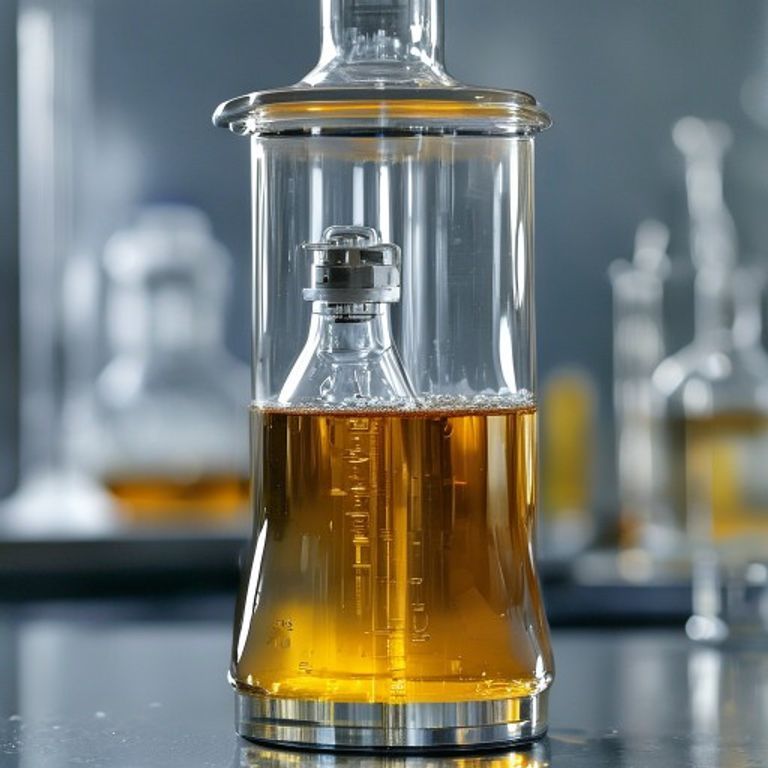
Le guide ultime pour séparer les entonnoirs: maître extraction liquide-liquide avec facilité

Débloquer les secrets de l'entonnoir de séparation : votre guide pour nettoyer les séparations
Avez-vous déjà essayé de mélanger huile et eau ? Tu sais qu'ils ne se mélangent pas ? Ils ne font que s'asseoir là, refusant obstinément de devenir une solution homogène. Eh bien, dans le monde fascinant de la chimie, cette immiscibilité est en fait une superpuissance, et la entonnoir de séparation est l'outil super-héros qui nous permet de l'exploiter. Pour quiconque travaille dans un laboratoire, des étudiants aux chimistes chevronnés, comprendre ce morceau de verrerie de laboratoire est essentiel.
Aujourd'hui, nous allons plonger profondément dans tout ce que vous devez savoir sur le entonnoir de séparation. Nous allons explorer son design, l'ingénieuse principe de séparation de l'entonnoirEt surtout, comment utiliser un entonnoir séparé comme un pro. Oubliez le jargon complexe; nous allons le décomposer avec des analogies simples et des conseils pratiques que vous pouvez appliquer immédiatement.
Qu'est-ce qu'un entonnoir séparé exactement?
Imaginez un récipient en verre en forme de poire avec un bouchon en haut et un bouchon (une valve) en bas. En un mot, c'est un entonnoir séparé. Typiquement en verre borosilicaté pour sa résistance thermique et chimique, il est spécialement conçu pour la séparation liquides immiscibles – liquides qui ne se mélangent pas, comme l'huile et l'eau. Le bouchon crée un environnement scellé, et le bouchon permet un drainage contrôlé des couches séparées.
Sa forme unique n'est pas seulement pour l'esthétique ; il est conçu pour l'efficacité. Le fond conique descend jusqu'à une tige étroite, ce qui le rend facile à drainer avec précision une couche liquide sans perturber l'autre. C'est vraiment un témoignage de conception d'équipement de laboratoire réfléchi.
La magie derrière la séparation : différences de densité
Le noyau principe de séparation de l'entonnoir est étonnamment simple: séparation de densité. Lorsque vous avez deux liquides immiscibles dans l'entonnoir, ils s'arrangeront naturellement en couches en fonction de leur densité. Le liquide le plus dense coulera au fond, tandis que le liquide le moins dense flottera sur le dessus. Pensez-y comme une boisson en couches – les ingrédients les plus lourds se déposent toujours au fond.
Par exemple, si vous avez un mélange d'eau et d'huile de cuisson, l'huile est moins dense que l'eau. Ainsi, lorsque vous les verserez dans un entonnoir séparé, l'eau formera la couche inférieure, et l'huile s'assiéra gracieusement sur le dessus. Notre travail est alors d'ouvrir soigneusement le bouchon et de drainer la couche inférieure (denser), laissant la couche supérieure (moins dense) derrière. C'est la chimie Version d'une scission parfaite!
Comment utiliser un entonnoir de séparation : un guide étape par étape
L'utilisation efficace d'un entonnoir séparé est plus d'art que de science, nécessitant une main ferme et un œil vif. Laissez passer les étapes pour assurer une séparation propre:
- Sécurisez l'entonnoir : Placez toujours votre entonnoir de séparation en toute sécurité dans un support de retort avec une pince appropriée. Cela empêche les déversements accidentels et les ruptures.
- Ajouter le mélange: Versez votre liquides immiscibles dans l'entonnoir à travers l'ouverture supérieure, assurant la fermeture du bouchon. Ne le remplissez pas trop; vous avez besoin d'espace pour trembler.
- Insérer le bouchon: Fermez l'entonnoir en toute sécurité avec le bouchon.
- Mélanger doucement (et évent!): Inverser soigneusement l'entonnoir quelques fois pour mélanger les liquides. C'est souvent nécessaire extraction par solvant processus permettant au soluté de se déplacer entre les phases. Principalement, après chaque inversion (ou toutes les quelques secondes si elle tremble vigoureusement), pointez la tige loin de n'importe qui et ouvrez le bouchon pour libérer toute pression accumulée. C'est ce qu'on appelle la «venture» et c'est vital, surtout quand on traite de solvants volatils !
- Permettre de régler : Replacez l'entonnoir dans le support de retort et laissez les couches complètement séparées. La patience est la clé ici; parfois il faut quelques minutes pour qu'une interface claire se forme. Vous verrez deux couches distinctes.
- Égoutter la couche inférieure : Retirez le bouchon du haut (cela permet d'éviter un vide et permet un écoulement fluide). Ouvrez lentement le bouchon et laissez la couche inférieure (denser) s'égoutter dans un bec ou un flacon propre.
- Arrêter précisément : À mesure que l'interface entre les deux couches s'approche du robinet, ralentir le drainage. Fermez le bouchon précisément quand la dernière goutte de la couche inférieure a quitté l'entonnoir, et avant que la couche supérieure commence à couler.
- Recueillir le calque supérieur : La couche supérieure (moins dense) est maintenant laissée dans l'entonnoir de séparation. Vous pouvez verser cela de l'ouverture supérieure dans un autre récipient propre. Rappelez-vous, vous collectez les deux couches séparément pour éviter la contamination.
Comme maîtriser le cylindre gradué Pour des mesures précises du volume, l'utilisation d'un entonnoir de séparation nécessite une pratique et une attention aux détails. Ne soyez pas découragé si vos premières tentatives ne sont pas parfaites!
Principales applications : Séparation des utilisations des entonnoirs en chimie
L'entonnoir de séparation est indispensable dans divers processus chimiques, notamment en chimie organique. Voici quelques-uns de ses principaux séparation des utilisations des entonnoirs en chimie:
- Extraction de liquides: C'est sans doute son usage le plus courant. Séparer l'entonnoir pour l'extraction liquide-liquide nous permet de transférer un soluté d'un solvant à un autre. Par exemple, si nous voulons extraire un composé d'une solution aqueuse dans un solvant organique, nous pouvons mélanger les deux solvants immiscibles dans l'entonnoir. Le composé se dissout de préférence dans un solvant, et nous pouvons ensuite séparer les couches. C'est une technique fondamentale pour la purification et l'isolement des composés.
- Solutions biologiques de lavage : Souvent, après une réaction, un produit biologique peut être contaminé par des impuretés solubles dans l'eau (comme des matières premières ou des sous-produits non réagis). Nous pouvons « laver » la couche organique en la agitant avec de l'eau ou une solution aqueuse (comme la saumure ou un acide dilué/base) dans un entonnoir séparé. Les impuretés se dissolvent en phase aqueuse, puis sont éliminées.
- Suppression des agents de séchage : Après le séchage d'une solution organique à l'aide d'un agent de séchage solide, le produit liquide doit souvent être séparé du solide. Bien que la filtration soit courante, si l'eau résiduelle doit être enlevée par lavage, un entonnoir de séparation peut être utilisé conjointement avec d'autres méthodes.
- Décantation: Alors que les entonnoirs de séparation sont principalement pour deux liquides immiscibles, le processus de drainage de la couche inférieure est une forme hautement contrôlée de décantation.
Où acheter un entonnoir séparé
Si vous vous demandez où acheter un entonnoir séparé, vous les trouverez facilement disponibles auprès de divers laboratoires fournisseurs. Vous pouvez rechercher en ligne « fournisseurs de verrerie de laboratoire » ou « magasins d'équipement de chimie ». Lors de l'achat, considérez ce qui suit :
- Volume Les entonnoirs de séparation sont de différentes tailles (p. ex. 50 mL, 100 mL, 250 mL, 500 mL, 1000 mL). Choisissez-en un adapté à votre échelle d'expérience typique.
- Matérielle Le verre Borosilicate (comme Pyrex ou Duran) est standard en raison de sa résistance chimique et thermique.
- Type de butée: Les bouchons en verre sont communs, mais des bouchons en plastique (comme PTFE) sont également disponibles et peuvent parfois offrir un meilleur joint avec certains solvants.
- Matériel d'arrêt: Les bouchons en verre sont traditionnels, mais les bouchons en PTFE (Teflon) sont souvent préférés pour leur inerte chimique et leur fonctionnement sans graisse, ce qui les rend moins enclins à coller.
Conclusion : Votre nouveau compagnon de laboratoire
L'entonnoir de séparation peut sembler simple, mais son rôle dans la chimie, en particulier dans l'extraction liquide-liquide, est profond. En comprenant le principe séparation de densité et la maîtrise des mesures pratiques comment utiliser un entonnoir séparé, vous débloquez un outil puissant pour la purification et l'isolement. De l'élimination des impuretés à l'extraction des composés désirés, ce morceau de verrerie de laboratoire deviendra sans doute l'un de vos compagnons les plus dignes de confiance au labo. Continuez à pratiquer, restez en sécurité et profitez des séparations propres!
FAQ sur la séparation des entonnoirs
Q1: Pourquoi dois-je évacuer l'entonnoir de séparation après avoir tremblé?
A : Lorsque vous secouez l'entonnoir, en particulier avec des solvants organiques volatils, la pression peut s'accumuler à l'intérieur en raison de vapeurs de solvant. L'aération (ouverture du bouchon avec la tige pointée) libère cette pression, empêchant le bouchon de sauter ou, pire, l'entonnoir d'éclater, qui peut être dangereux.
Q2: Quelle est la différence entre un entonnoir séparé et un flacon conique?
A : Une fiole conique (fiole Erlenmeyer) est utilisée pour le mélange, le chauffage et la rétention des liquides, mais elle n'est pas conçue pour séparer les couches immiscibles. L'entonnoir de séparation, avec sa forme particulière de poire et son bouchon, sert explicitement à séparer deux liquides non mélangés en fonction de leurs différences de densité.
Q3: Puis-je utiliser un entonnoir séparé pour séparer un solide d'un liquide?
A : Non, un entonnoir de séparation n'est généralement pas utilisé pour séparer les solides des liquides. Pour cela, vous utiliseriez des techniques comme la filtration (en utilisant du papier filtre et un entonnoir) ou la décantation (en versant soigneusement le liquide d'un solide stabilisé).
Q4: Comment puis-je savoir quelle couche est dans l'entonnoir de séparation?
A : Vous devez connaître la densité des liquides avec lesquels vous travaillez. Le liquide le plus dense sera toujours la couche inférieure. Si vous n'êtes pas sûr, vous pouvez ajouter une petite goutte de solvant connu (par exemple, de l'eau) pour voir quelle couche il joint. Si la goutte passe par la couche supérieure et rejoint le fond, la couche inférieure est la couche aqueuse, et vice versa.