Maîtriser les applications volumétriques : dilutions précises, solutions standard et meilleures pratiques de laboratoire

Présentation
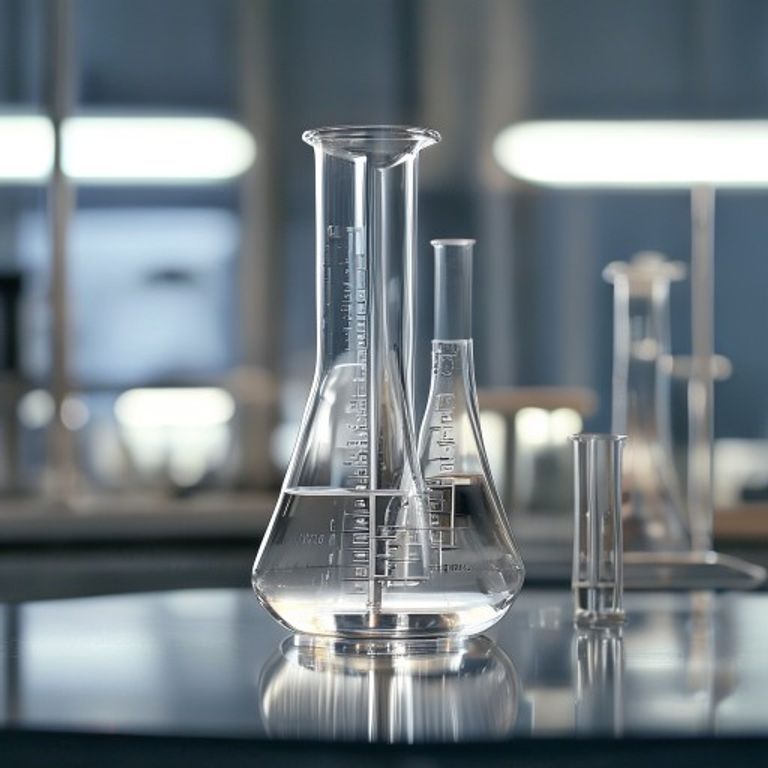
Ever wondered why a simple piece of glass can be the star of any analytical chemistry lab? The answer lies in the fiole jaugée. It’s not just a container; it’s a precision instrument that lets us create exact concentrations, perform reliable dilutions, and keep our experiments reproducible. In this article, I’ll walk you through the most common uses of a volumetric flask, share step‑by‑step tips for flawless technique, and explain why this glassware is celebrated for its accuracy.
Why Volumetric Flasks Are So Accurate
Before diving into the applications, let’s understand what makes a volumetric flask highly accurate:
- Calibrated neck: The narrow neck is etched with a single graduation line that corresponds to a specific volume at a defined temperature (usually 20 °C).
- Uniform wall thickness: This reduces the effect of temperature changes on the internal volume.
- Quality glass: Borosilicate glass resists chemical attack and thermal shock, preserving the calibration over many uses.
Because of these design features, a volumetric flask can deliver solutions with an error of less than 0.1 % when used correctly.
Key Applications in the Lab
1. Préparation de solutions standard
Standard solutions are the backbone of quantitative analysis. To prepare one, you dissolve a known amount of solute in a volumetric flask and then fill it up to the calibration line with solvent. This ensures the final concentration is exact, which is crucial for calibration curves in spectrophotometry or titration.
2. Performing Dilution Calculations
When you need a lower concentration from a stock solution, the volumetric flask is your go‑to tool. The classic dilution formula C1V1 = C2V2 (initial concentration × initial volume = final concentration × final volume) works perfectly because the flask guarantees the final volume (V₂) is precise.
3. Specific Applications in Analytical Chemistry
From preparing buffer solutions for pH control to making calibration standards for atomic absorption spectroscopy, the volumetric flask appears in virtually every analytical protocol. Its role is especially vital when dealing with trace‑level analytes where even a tiny volume error can skew results.
4. Complementary Glassware
While the volumetric flask handles the precise volume, you’ll often pair it with other lab glassware. For instance, reading about The Beaker’s Secret Life can give you insights on how beakers complement flasks during solution transfer. Similarly, Unsung Hero of the Lab: Glass Stirring Rods are handy for mixing solutions before you pour them into the flask.
Proper Technique for Filling a Volumetric Flask
Even the best flask won’t deliver accuracy if you don’t use it right. Follow these steps:
- Nettoyer le flacon: Rinse with distilled water, then with a small amount of the solvent you’ll use.
- Add solute: If you’re making a standard solution, weigh the exact mass of the solid and transfer it into the flask.
- Pre‑dilute: Add solvent up to about 80 % of the calibration line. Swirl gently to dissolve the solute completely.
- Bring to the mark: Using a wash bottle, add solvent dropwise until the bottom of the meniscus sits exactly on the calibration line. The eye should be level with the line, and the flask should be on a flat surface.
- Cap and mix: Stopper the flask and invert it several times to ensure homogeneity.
Tip: Perform the final adjustment at the temperature specified on the flask (usually 20 °C). If the lab temperature differs, allow the flask to equilibrate first.
Practical Tips & Common Mistakes
- Don’t over‑fill – the narrow neck makes it easy to overshoot the mark.
- Avoid bubbles – any trapped air will alter the volume.
- Use a clean stopper – residues can affect the solution’s purity.
- Vérifier les fissures – even tiny chips can change the calibrated volume.
FAQ
What is the difference between a volumetric flask and a graduated cylinder?
A volumetric flask is calibrated for a single, highly accurate volume, while a graduated cylinder provides a range of volumes with lower precision. For analytical work requiring exact concentrations, the flask is preferred.
Can I use a volumetric flask for volatile solvents?
Yes, but be aware that evaporation can change the volume. Seal the flask promptly after filling and store it in a closed container if the solvent is highly volatile.
How often should I recalibrate a volumetric flask?
Most manufacturers guarantee accuracy for several years if the flask is handled properly. However, if you notice chips, cracks, or frequent temperature swings, consider sending it for re‑calibration.
Is it okay to use the flask at temperatures other than 20 °C?
The calibration is based on 20 °C. Small temperature variations (< 2 °C) usually have negligible impact, but for high‑precision work, adjust the volume using temperature‑correction tables or let the flask equilibrate.
Can I use the same flask for different solvents?
Yes, provided you clean it thoroughly between uses. Some solvents may leave residues; a rinse with a compatible solvent followed by distilled water is recommended.
Conclusion
Les fiole jaugée may look modest, but its role in achieving precise, reproducible results cannot be overstated. By mastering its uses—preparing standard solutions, executing accurate dilutions, and following proper filling techniques—you’ll elevate the reliability of your analytical work. Remember, the devil is in the details: clean glass, correct temperature, and a steady hand at the meniscus are the keys to unlocking the flask’s full potential.