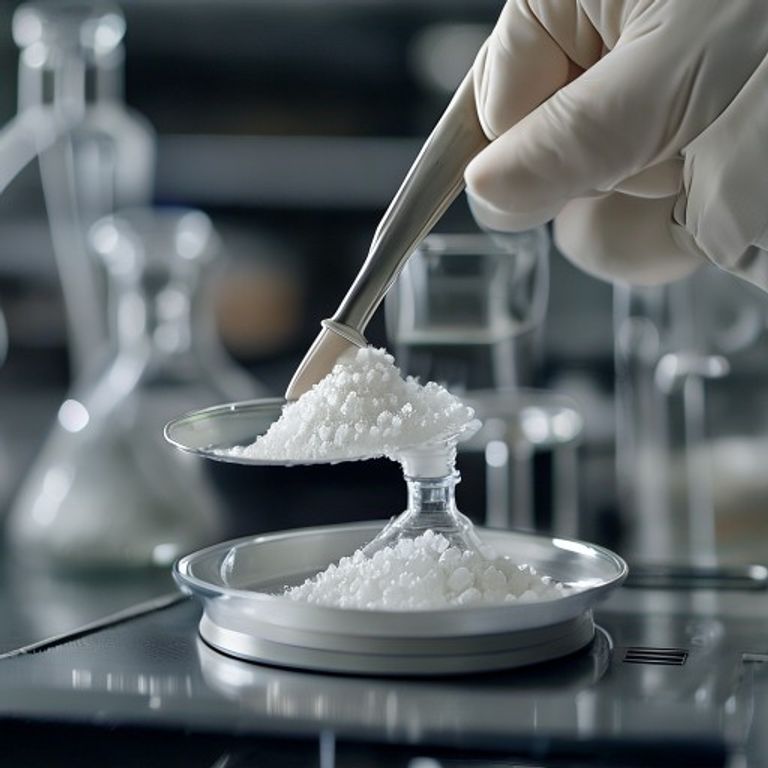
Maîtriser la spatule puissante : votre guide essentiel sur l'utilisation des laboratoires de chimie

Vous êtes déjà entré dans un laboratoire de chimie et vous êtes-vous posé des questions sur tous ces équipements complexes ? Parmi la verrerie flashy et les instruments high-tech, il ya un outil humble qui est souvent négligé mais est absolument indispensable: la spatule de chimie. Pensez-y comme le héros méconnu, faisant tranquillement la plupart du levage lourd quand il s'agit de manipuler des produits chimiques. Nous ne lui donnons peut-être pas toujours le mérite qu'il mérite, mais croyez-moi, comprendre son utilisation correcte est la clé de la précision et de la sécurité dans toute expérience.
Aujourd'hui, nous allons plonger dans le monde de la spatule de laboratoire. Nous allons explorer non seulement ce qu'il est, mais plus important, comment l'utiliser comme un pro, quels types sont là, et comment le garder en forme de sommet. Prêt à donner à ce petit champion la vedette qu'il mérite ?
Pourquoi la Spatule est notre Buddy Go-To Lab
Imaginez essayer de prendre une petite quantité de poudre chimique avec vos mains nues ou, pire, une cuillère de votre tiroir de cuisine. Non seulement il est peu hygiénique et imprécis, mais il est aussi carrément dangereux! C'est là que notre spatule de confiance entre en jeu. Sa conception nous permet de manipuler de façon sûre et précise de petites quantités de solides, que nous transférions un réactif, mélangeons une solution ou pondérions une quantité précise sur un balance analytique. C'est vraiment l'un des morceaux les plus polyvalents de matériel de laboratoire Oui.
Les nombreux visages des spatules dans les laboratoires de chimie
Tout comme nous avons différents types de cuillères pour différents aliments, il existe différents types de spatules, chacune conçue pour des tâches spécifiques. Voyons quelques uns communs:
- Spatules à lame plate: C'est probablement ce qui vient à l'esprit en premier. Ils ont une lame plate, souvent mince, parfaite pour racler les solides à partir de conteneurs ou de pâtes.
- Scoopules: Comme son nom l'indique, ceux-ci ont une extrémité semblable à une cuillère, ce qui les rend idéales pour ramasser de plus grandes quantités de poudres ou de matériaux granulaires. Ils sont super quand vous avez besoin de transférer un bon morceau de solide d'un endroit à un autre.
- Micros spatules: Ce sont les artistes délicats du monde des spatules. Avec leurs lames extrêmement fines et minuscules, les microspatules sont spécialement conçues pour manipuler des quantités infimes de substances, souvent pour des tâches de haute précision ou pour traiter des produits chimiques très coûteux ou puissants. Nous les utilisons lorsque nous avons besoin d'être incroyablement précis, comme en travaillant avec des tests analytiques sensibles ou en préparant des échantillons où même un milligramme fait une différence. Si jamais vous vous demandez ce qui est une micro spatule utilisée pour la chimie, pensez précision, précision, précision!
- Spatules flexibles: Certaines spatules ont une lame plus souple, ce qui est utile pour gratter tous les derniers morceaux de matériau des murs d'un bécher ou d'un ballon.
- Matières: Les spatules sont généralement en acier inoxydable (durable, facile à nettoyer) ou en plastique (déposable, bon pour les produits chimiques hautement réactifs).
Maîtriser l'art de la bonne utilisation des spatules chimiques
D'accord, laisse tomber les affaires. Savoir comment utiliser correctement une spatule chimique Il ne s'agit pas seulement de ramasser des solides; il s'agit de technique, de sécurité et de précision. Voici quelques-unes des meilleures pratiques pour l'utilisation des spatules chimiques:
Peser des solides avec Finesse
C'est là que la spatule brille ! Lorsque nous utilisons un bilan analytique pour obtenir une mesure exacte, notre spatule est notre meilleur ami. Voici un pourboire : utilisez toujours un bateau de pesage ou un verre de montre. Tapez doucement la spatule pour ajouter lentement le solide jusqu'à ce que vous atteignez votre masse désirée. Évitez de dumping de grandes quantités à la fois, car il est beaucoup plus difficile d'éliminer l'excès que d'ajouter plus. Les petits mouvements contrôlés sont la clé de la précision. Souvenez-vous, lent et stable gagne la course quand il s'agit de pesée précise!
Transfert sécuritaire des réactifs et manipulation chimique
Que l'on déplace un produit chimique de son contenant vers un récipient de réaction ou un bécher vers un tube d'essai, la spatule assure un déversement et une contamination minimes. Assurez-vous toujours que votre spatule est propre et sèche avant chaque transfert pour éviter toute réaction indésirable ou impuretés. Pour les substances particulièrement dangereuses, nous pourrions même utiliser une spatule dédiée pour éviter la contamination croisée.
Solutions de mélange et de stirring
Bien que les barres de brassage soient courantes pour les liquides, les spatules peuvent également être utilisées pour le mélange doux, surtout lorsqu'il s'agit de suspensions ou lorsqu'il s'agit de briser des amas de solides dans un liquide. Faites juste attention de ne pas gratter le fond de votre verrerie trop dur!
Nettoyage et entretien des spatules de laboratoire
Comme n'importe quel équipement de laboratoire, nettoyage et entretien des spatules de laboratoire est crucial. Une spatule sale peut ruiner une expérience et même poser un risque de sécurité. Après chaque utilisation, en particulier lorsqu'il s'agit de différents produits chimiques, nous devons nettoyer soigneusement nos spatules. Habituellement, cela signifie le rinçage avec de l'eau distillée, suivi d'un lavage avec un détergent approprié, puis un autre rinçage avec de l'eau distillée avant de sécher complètement. Pour les résidus particulièrement tenaces, nous pourrions avoir besoin d'une brosse ou d'agents de nettoyage spécifiques. Conservez-les toujours dans un endroit propre et sec, prêt pour leur prochaine aventure !
Foire aux questions sur l'utilisation de la spatule
Q: Puis-je utiliser la même spatule pour différents produits chimiques?
R: Idéalement, non. Pour prévenir la contamination croisée, il est toujours préférable d'utiliser une spatule propre pour chaque produit chimique. Si vous n'en avez qu'un, assurez-vous qu'il est soigneusement nettoyé entre les utilisations.
Q: Que dois-je faire si un produit chimique colle à la spatule?
R: Parfois, l'électricité statique ou la nature du produit chimique peut le faire coller. Vous pouvez essayer doucement de taper la spatule ou utiliser une seconde spatule pour la racler. Pour statique, parfois se poser ou travailler dans un environnement humide peut aider.
Q: Comment puis-je choisir la bonne spatule pour une tâche?
R: Considérez la quantité de matériau, sa forme (poudre, granulaire, pâte), et la taille du contenant. Une scoopula est bonne pour les grandes quantités, une lame plate pour le grattage, et une micro spatule pour les petites quantités.
Voilà ! L'humble spatule chimique, un outil que nous tenons souvent pour acquis, mais qui est absolument vital pour la précision, la sécurité et l'efficacité dans le laboratoire. Des microtransferts délicats à la manipulation chimique générale, maîtriser l'art de la spatule est une compétence que chaque chimiste, bourgeonné ou assaisonné, doit posséder. Gardez vos spatules propres, choisissez le bon type pour le travail, et vous trouverez votre travail de laboratoire devient plus lisse et plus fiable. Bonne expérience !