

Your Ultimate Guide to Vortex Mixers: From Lab Essentials to Everyday Applications

Have you ever found yourself in the lab, staring at a test tube, needing to mix a solution quickly and thoroughly, but shaking it by hand just isn’t cutting it? Or perhaps you’re in a creative field, needing to perfectly blend pigments? If so, then you’ve probably encountered – or desperately need – a vortex mixer!
For us, the world of laboratory equipment can sometimes feel a bit overwhelming, but some tools are simply game-changers. The vortex mixer is definitely one of them. It’s like having a tiny, super-efficient tornado in a box, ready to whip up your samples in seconds. We’re not just talking about scientists here; from tattoo artists to DIY enthusiasts, this compact device is proving its worth in countless scenarios. In this comprehensive guide, we’ll dive deep into everything you need to know about vortex mixers, from how they work to choosing the best one for your specific needs.
What Exactly is a Vortex Mixer?
Imagine you have a cup of coffee and you want to stir in some sugar. You could use a spoon, right? A vortex mixer does something similar, but with a whole lot more power and precision, especially for smaller volumes in tubes or vials. At its core, a vortex mixer is a simple piece of laboratory equipment designed to rapidly mix small liquid volumes in test tubes, microplates, or other small containers. It achieves this by creating a powerful vortex (hence the name!) within the liquid, ensuring homogeneous mixing in just a few seconds.
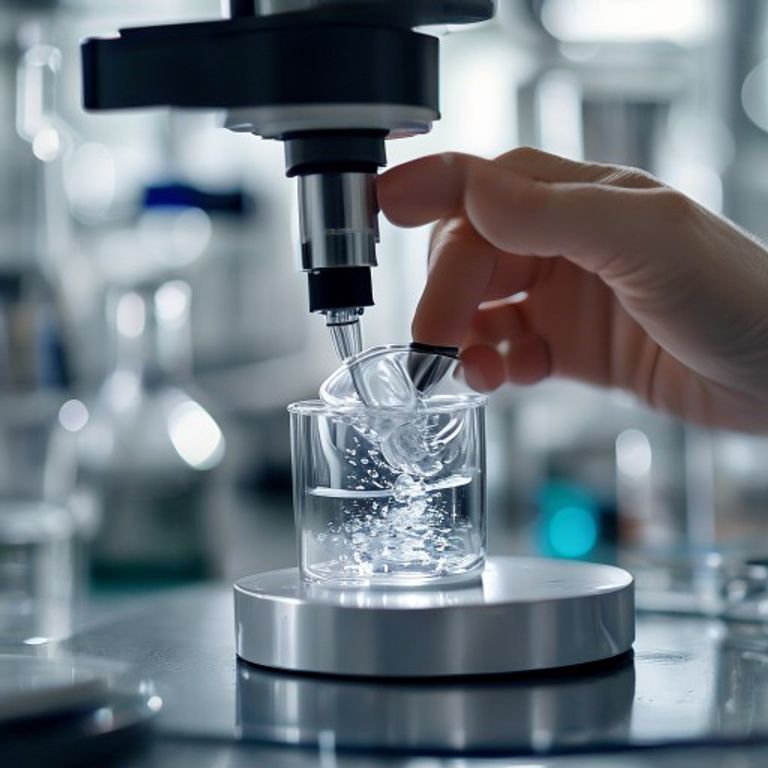
Think of it like this: instead of a spoon, the vortex mixer has a rubber cup or platform that vibrates in a circular motion. When you press a tube containing your liquid against this cup, the vibration is transferred, creating that characteristic swirling motion – a vortex – in your sample. This turbulent flow is incredibly effective for suspending cells, dissolving solids, or simply achieving a uniform solution.
How Does a Vortex Mixer Work Its Magic?
The principle behind a vortex mixer is deceptively simple but incredibly effective. Inside the mixer, there’s an electric motor connected to an offset drive shaft. This design means that when the motor spins, the rubber cup or platform attached to the shaft doesn’t just go up and down or in a simple circle; it moves in a unique eccentric motion. When we apply pressure by pressing a test tube or vial onto the vibrating head, this motion is transferred directly to the liquid inside.
The rapid oscillation causes the liquid to swirl, forming a “vortex” – essentially a miniature whirlpool. This vortex creates strong shear forces within the liquid, forcing particles to mix thoroughly. Most modern vortex mixers offer adjustable speed mixer settings, allowing us to control the intensity of the vortex. This is super handy because some delicate samples might require a gentle mix, while others, like dense suspensions, need a more vigorous swirl.
Why Do We Need a Vortex Mixer? The Practical Benefits
Okay, so why bother with a specialized mixer when you can just shake a tube by hand? Well, the truth is, a vortex mixer offers several undeniable advantages that make it an indispensable tool for efficient sample preparation:
- Speed: Hand-shaking is slow and tiring. A vortex mixer does the job in seconds, freeing up our valuable time.
- Consistency: Manual shaking is inconsistent. The mechanical action of a vortex mixer ensures uniform mixing every single time, which is crucial for reproducible experimental results.
- Thoroughness: The powerful vortex can effectively resuspend pellets, dissolve stubborn powders, and ensure complete homogenization that manual methods often miss.
- Reduced Contamination Risk: With touch-start models, we only need to briefly touch the tube to the mixer, minimizing direct contact and potential contamination compared to handling shakers or stirrers.
- Versatility: From single tubes to microplates, and liquids of various viscosities, vortex mixers are surprisingly adaptable.
Types and Applications: Finding Your Perfect Match
The world of vortex mixers isn’t one-size-fits-all. We can find several types, each designed for specific applications:
Vortex Mixer for Laboratory Use: The Workhorse
In research labs, diagnostic centers, and educational institutions, vortex mixer for laboratory use is a fundamental piece of equipment. We use them for everything from preparing DNA/RNA samples and cell suspensions to mixing reagents for assays and dissolving chemicals. Their reliability and efficiency make them a staple.
Mini Vortex Mixer Reviews: Small But Mighty
For personal use, small labs, or educational settings where space is at a premium, mini vortex mixer reviews often highlight their compact design and affordability. These smaller versions offer the same basic functionality but with a smaller footprint. They are perfect for individual workstations or when only a few samples need to be processed at a time.
Best Vortex Mixer for Tattoo Ink: Precision for Artists
Beyond the lab, these mixers have found a unique niche. For tattoo artists, consistent ink pigment is vital. A best vortex mixer for tattoo ink ensures that all pigments are perfectly blended and free of clumps, leading to smoother application and better results. It’s a testament to the mixer’s ability to handle various types of liquids effectively.
Portable Vortex Mixer Price: On-the-Go Mixing
Sometimes, we need to mix samples in the field or in different locations within a facility. This is where a portable vortex mixer price becomes a consideration. These models are often battery-operated or lighter, making them easy to transport. They might not have all the bells and whistles of a full-sized lab model, but their convenience is unbeatable.
How to Use a Vortex Mixer Like a Pro
Using a vortex mixer is pretty straightforward, but a few tips can help us get the best results:
- Plug It In: Make sure your mixer is plugged into a power source and turned on.
- Select Speed: If your mixer has adjustable speed, choose the appropriate setting. Start lower for delicate samples and increase as needed.
- Load Your Sample: Take your test tube mixing vial with the liquid you want to mix.
- Activate: Most vortex mixers are “touch-activated.” Simply press the bottom of your test tube firmly against the rubber cup. The mixing action will start instantly.
- Observe the Vortex: Watch for the characteristic whirlpool. If it’s not forming properly, you might need to adjust the pressure or speed.
- Mix Briefly: For most applications, 5-15 seconds is enough. Over-mixing can sometimes lead to foaming or heat generation.
- Clean Up: Always wipe down your mixer after use, especially if there are spills.
When preparing samples for various analyses, whether it’s for measuring specific properties or ensuring homogeneity, a vortex mixer is invaluable. For instance, if you’re preparing a solution to assess its electrical conductivity, ensuring a perfect mix is key to accurate readings. You might find our ultimate guide to conductivity meters helpful in understanding the next steps after sample preparation.
Choosing the Right Vortex Mixer for You
When we’re in the market for a new vortex mixer, here are some factors to consider:
- Speed Range: Do you need a wide range for various samples, or just a fixed speed?
- Operating Mode: Touch activation only, or continuous mode for hands-free operation?
- Capacity: Will you be mixing single tubes, multiple tubes, or microplates? Look for mixers with interchangeable heads if you need versatility.
- Footprint: How much space do you have on your bench?
- Durability and Brand: Invest in a reputable brand for longevity and reliable performance.
- Price: Compare features against your budget. A more expensive model might save you time and headaches in the long run.
For certain applications, especially involving viscous solutions like oils or gels, proper mixing is critical before any further analysis. For example, if you’re preparing a sample to determine its resistance to flow, using a vortex mixer can ensure the sample is homogeneous before transferring it to another instrument. Our article on viscometer essentials delves into how such properties are measured.
FAQ About Vortex Mixers
What’s the difference between a vortex mixer and an orbital shaker?
That’s a great question! While both are used for mixing, they operate differently. A vortex mixer creates a tight, swirling vortex within small volumes, ideal for rapid, vigorous mixing of individual tubes. An orbital shaker, on the other hand, moves an entire platform in a circular motion, suitable for mixing larger volumes or multiple containers gently and for longer durations. Think of a vortex mixer as a blender for single servings, and an orbital shaker as a slow-cooker for many dishes.
Can I use a vortex mixer for highly viscous liquids?
Yes, you can, but with some caveats. For moderately viscous liquids, a vortex mixer works well, especially at higher speeds. However, for extremely thick liquids, you might get less of a vortex and more of a vigorous jiggle. For very high viscosity samples, other methods like overhead stirrers or specialized homogenizers might be more effective.
How do I clean my vortex mixer?
Cleaning is simple! Always unplug the unit first. For the exterior, a damp cloth with a mild detergent is usually sufficient. For the rubber cup, you can wipe it with an alcohol swab or a mild disinfectant solution. Avoid abrasive cleaners or submerging the unit in water.
Is a portable vortex mixer worth it?
If you frequently work with samples in different locations or have limited bench space, a portable vortex mixer can be incredibly convenient and absolutely worth the investment. It provides the same effective mixing in a compact, often battery-operated, package, making your workflow much more flexible.
Wrapping Up Our Vortex Mixer Journey
From the bustling chemistry lab to a meticulous tattoo studio, the vortex mixer stands out as a small but mighty hero. We’ve seen how its simple yet powerful mechanism can transform our mixing tasks, making them faster, more consistent, and ultimately, more reliable. Whether you’re a seasoned scientist or an emerging artist, understanding and utilizing this compact marvel can significantly enhance your work. So, next time you need a perfect mix, remember the unassuming power of the vortex mixer – your tiny tornado, ready to swirl away your mixing woes!