Erlenmeyer Flask Explained: Uses, Parts, Materials, and How to Describe It

Introduction
When I first stepped into a chemistry lab, the conical shape of the Erlenmeyer flask caught my eye. It’s one of those pieces of laboratory glassware that looks simple but actually does a lot of heavy lifting—from mixing solutions to supporting precise titrations. In this article, I’ll walk you through everything you need to know about the Erlenmeyer flask: what it’s used for, its main parts, the materials it’s made from, and a quick guide on how to describe it in a lab report.
What Is an Erlenmeyer Flask Used For?
The Erlenmeyer flask (often called a conical flask) is a versatile workhorse in any lab. Here are the most common applications:
- Mixing and swirling: Its narrow neck reduces splashing while you swirl the contents.
- Titration experiments: The shape allows easy addition of titrant and clear observation of color changes.
- Heating liquids: When placed on a wire gauze, the flask distributes heat evenly without the risk of boiling over.
- Storing reagents: The tight-fitting stopper keeps solutions safe from contamination.
Detailed Description of an Erlenmeyer Flask
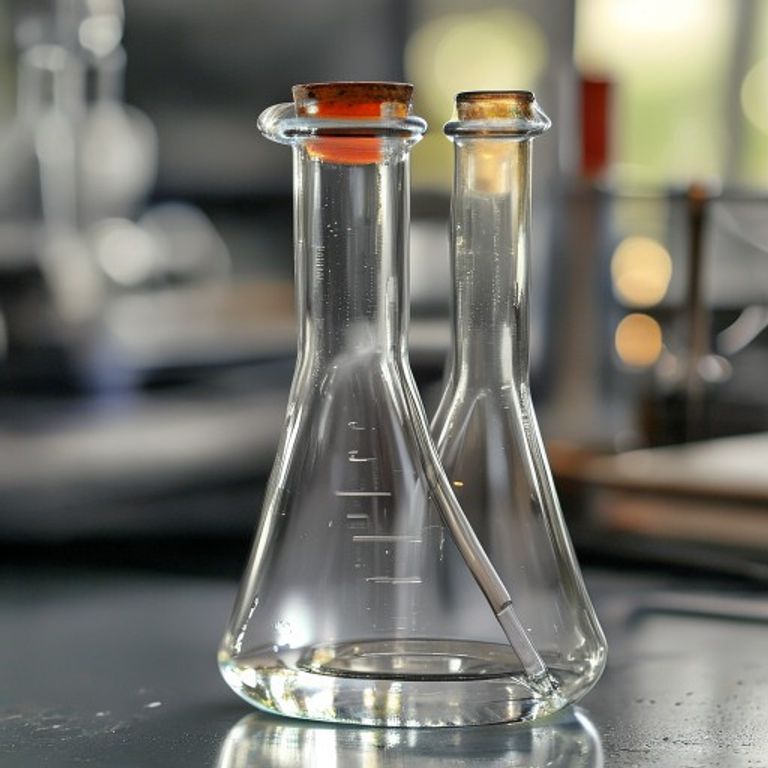
Think of the Erlenmeyer flask as a “traffic cone” for liquids. Its design is intentional:
- Base: Flat and sturdy, it sits securely on the bench.
- Body (or body wall): The conical side walls taper toward the neck, creating a space that encourages gentle mixing.
- Neck: Narrow and often graduated, it lets you add reagents drop‑by‑drop while minimizing loss.
- Rim: Slightly flared to accommodate stoppers or rubber caps.
Parts of an Erlenmeyer Flask Explained
1. Base
The base is usually a thick, flat disc made from the same glass as the rest of the flask. It provides stability, especially when you’re heating the flask on a hot plate.
2. Body
The body’s sloping walls are the secret sauce. They create a vortex when you swirl, mixing contents without spilling. This is why you’ll often see students swirling their solutions rather than stirring with a glass rod.
3. Neck
The narrow neck can be marked with volume graduations. If you need to measure liquids precisely, you can use these markings in combination with a how to accurately measure liquid volume with a graduated cylinder technique for cross‑checking.
4. Rim
The rim’s slight flare makes it easy to attach a stopper, preventing evaporation or contamination.
Erlenmeyer Flask Material and Capacity
Most modern Erlenmeyer flasks are made from borosilicate glass. This type of glass can handle sudden temperature changes without cracking—perfect for heating or cooling experiments. Some labs also use plastic (polypropylene) versions for organic solvents that might react with glass.
Capacity ranges from tiny 25 mL flasks used for microscale work up to massive 2 L vessels for bulk synthesis. When choosing a size, consider the volume of reagents and the need for headspace (extra room above the liquid) to avoid overflow during vigorous mixing.
How to Describe an Erlenmeyer Flask in a Lab Report
When you need to mention the flask in a report, keep it concise but informative. Here’s a template you can adapt:
"The reaction was carried out in a 250 mL borosilicate Erlenmeyer flask equipped with a rubber stopper. The conical shape allowed gentle swirling to ensure homogeneous mixing while minimizing splashing."
Notice how the description covers three key points: size, material, and functional advantage.
Practical Tips for Using an Erlenmeyer Flask
- Swirl, don’t stir: Tilting the flask back‑and‑forth creates a vortex that mixes faster than a glass rod.
- Use a stopper: Prevents contamination and reduces evaporation, especially during long reactions.
- Heat safely: Place the flask on a wire gauze or a heating mantle to distribute heat evenly.
- Label clearly: Write the contents, concentration, and date on the flask’s exterior to avoid mix‑ups.
FAQ
What is the difference between an Erlenmeyer flask and a beaker?
An Erlenmeyer flask has a conical shape with a narrow neck, which reduces splashing and allows easy mixing. A beaker has straight sides and a wide mouth, making it better for pouring but more prone to spills.
Can I use an Erlenmeyer flask for vacuum filtration?
Yes, as long as the flask is made of borosilicate glass and can withstand the pressure difference. The narrow neck helps maintain a good seal with the filtration apparatus.
Is it safe to heat an Erlenmeyer flask directly on a Bunsen burner?
Direct flame can cause uneven heating and breakage. Always place the flask on a wire gauze or a heat‑resistant mat to spread the heat evenly.
How do I clean an Erlenmeyer flask after a reaction?
Rinse with distilled water, then soak in a mild detergent solution. For stubborn residues, a soak in dilute acid (e.g., 10% HCl) followed by thorough rinsing works well.
What size flask should I choose for a 100 mL reaction?
Pick a flask that holds at least 150–200 mL. This provides enough headspace to prevent overflow when you swirl the mixture.
Conclusion
The Erlenmeyer flask may look like just another piece of glass, but its thoughtful design makes it indispensable for mixing, heating, and measuring solutions in the lab. By understanding its parts, material options, and best‑practice tips, you’ll handle it with confidence—whether you’re a student learning titration or a researcher scaling up a synthesis. Next time you pick up a conical flask, remember: it’s not just a container, it’s a tool that helps you work smarter, safer, and more efficiently.