Unveiling the Precision: What is a Graduated Cylinder Used For?

Ever found yourself in a science lab, staring at a collection of glass containers, wondering which one does what? Among the many essential tools, there’s one that stands out for its unique blend of simplicity and critical accuracy: the graduated cylinder. Today, we’re going to dive deep into the world of this unassuming hero of the laboratory, exploring its main purpose and why it’s indispensable for anyone dealing with precise liquid measurements. Think of it like a specialized measuring cup for scientists!
What Exactly is a Graduated Cylinder?
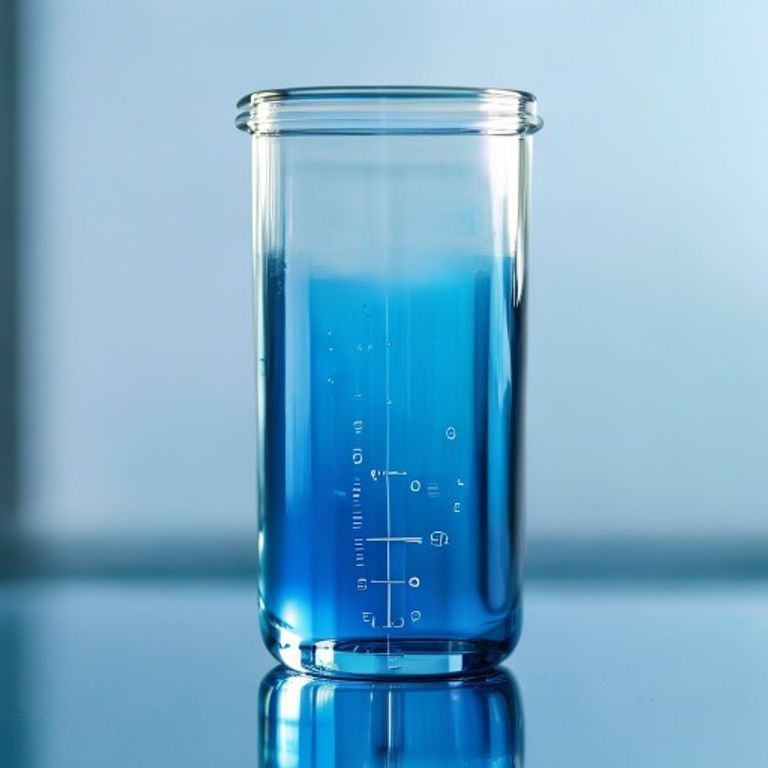
First things first, let’s get acquainted with our star. A graduated cylinder is a tall, cylindrical container, usually made of glass or plastic, with a flat base for stability. What makes it special are the precise markings, or “graduations,” etched along its side, indicating specific volumes. These markings are typically in milliliters (mL), and they allow us to measure liquids with far greater accuracy than, say, a beaker or a flask. Imagine trying to measure exactly 100 mL of water with a regular kitchen cup – it’s tough, right? That’s where our graduated cylinder comes in!
The Core Purpose: Why Use a Graduated Cylinder for Measuring?
The primary graduated cylinder purpose boils down to one word: accuracy. While other essential function of test tubes in every lab or beakers might hold liquids, they are not designed for precise volume measurement. Beakers, for instance, are fantastic for mixing and holding liquids, but their wide mouths and less refined markings make them unsuitable for exact measurements. They are like a wide-mouthed mug, great for drinking but not for knowing if you’ve poured exactly 237 mL.
A graduated cylinder, on the other hand, is specifically calibrated to give us very accurate readings of liquid volumes. This precision is absolutely crucial in many scientific experiments, particularly in chemistry, where even a tiny difference in reactant volumes can significantly alter the outcome of a reaction or invalidate research results. It’s like using a finely tuned scale to measure ingredients for a delicate recipe – you need precision to get it just right.
Graduated Cylinder Function in Chemistry Lab and Beyond
In a chemistry lab, the graduated cylinder is a workhorse. It’s used for preparing solutions, diluting chemicals, and transferring specific volumes of reagents. Let’s say we need to add exactly 50 mL of acid to a base; the graduated cylinder is our go-to tool. Its accuracy ensures that our experimental conditions are controlled and reproducible.
But its use isn’t limited to chemistry. You’ll find graduated cylinders in biology labs for measuring media, in environmental science for water sample analysis, and even in some industrial settings for quality control. Anywhere that liquid volume needs to be measured with a high degree of reliability, this piece of laboratory equipment finds its home.
How to Read a Graduated Cylinder Accurately: Mastering the Meniscus
Getting accurate measurements isn’t just about using the right tool; it’s also about using it correctly. The biggest secret to how to read a graduated cylinder accurately lies in understanding the meniscus. What’s a meniscus? When water or most other liquids are in a narrow container, the surface isn’t perfectly flat. It curves slightly, forming a U-shape. This curve is called the meniscus.
To get an accurate reading, we always read the bottom of the meniscus. Here’s how to do it:
- Place the graduated cylinder on a flat, level surface.
- Bring your eye level even with the bottom of the meniscus. Don’t read from above or below, as this can lead to parallax error (it’s like trying to read a car’s speedometer from the passenger seat – it looks different!).
- Read the marking at the lowest point of the curved liquid surface.
- Always estimate one digit beyond the smallest marking. For example, if the smallest marks are in 1 mL increments, you should estimate to the nearest 0.1 mL.
This attention to detail might seem minor, but it makes a significant difference in the reliability of our measurements and, consequently, our experimental results.
Graduated Cylinder vs. Beaker: Why the Difference Matters
We touched on this earlier, but let’s emphasize the difference between a graduated cylinder vs. beaker purpose. A beaker, with its wider mouth and fewer, less precise markings, is designed for holding, mixing, and heating liquids. Its measurements are usually approximate, often marked in increments that are only accurate to within 5-10%. It’s like a general-purpose bowl.
The graduated cylinder, however, is a specialist. Its narrow, uniform diameter and finely etched lines mean it’s built for precision. Its measurements are typically accurate to within 0.5% or even less, depending on its size and class. So, if you’re ever in the lab and need to know the exact volume of a liquid, reach for the graduated cylinder!
Conclusion
So, there you have it. The graduated cylinder, though simple in design, is an indispensable piece of laboratory equipment. Its primary purpose is to provide highly accurate volume measurements, crucial for reliable scientific experimentation across various fields. By understanding its design, knowing how to read it correctly, and appreciating its role compared to other glassware, we can ensure our scientific endeavors are built on a foundation of precision. It’s a small tool, but its impact on scientific accuracy is anything but small!
FAQ
Q: Can I heat liquids in a graduated cylinder?
A: It’s generally not recommended. While some graduated cylinders are made of borosilicate glass (which can withstand heating), their narrow opening and tall shape are not ideal for even heating, and rapid temperature changes can still cause breakage, especially if it’s plastic or regular glass.
Q: How do I clean a graduated cylinder?
A: Wash it with soap and water, using a brush designed for lab glassware if needed. Rinse thoroughly with distilled water and let it air dry upside down, or use a drying rack. Ensure it’s completely dry before reuse, especially for accurate measurements.
Q: Are there different sizes of graduated cylinders?
A: Absolutely! They come in a wide range of sizes, from small ones measuring 5 mL or 10 mL, up to large ones measuring 1000 mL or even 2000 mL. The size you choose depends on the volume you need to measure and the level of accuracy required.
Q: What’s the difference between Class A and Class B graduated cylinders?
A: Class A graduated cylinders offer higher accuracy and are typically used for analytical work where precision is critical. Class B cylinders are less accurate but are suitable for general laboratory use where extreme precision isn’t paramount. Class A usually costs more due to stricter manufacturing tolerances.