


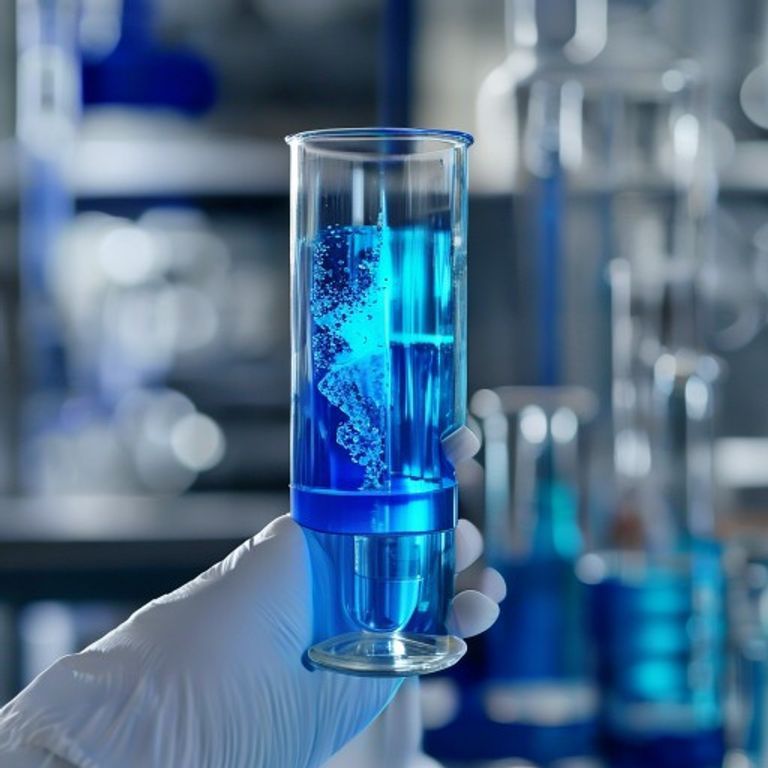
Unveiling the Versatility: Exploring the Essential Function of Test Tubes in Every Lab

Imagine a scientist’s lab. What’s one of the first things that comes to mind? For many of us, it’s that iconic, slender glass tube: the test tube. Often seen as a simple piece of laboratory equipment, its role in scientific discovery is anything but basic. Today, we’re going to dive deep into the function of a test tube, exploring why this humble piece of glassware is so indispensable in chemistry, biology, and beyond. We’ll unpack what are test tubes used for in a laboratory and discover how they facilitate countless scientific experiments every single day.
What Exactly Is a Test Tube?
At its core, a test tube is a cylindrical glass or plastic tube, typically open at one end and closed with a rounded (U-shaped) bottom at the other. This unique design isn’t just for aesthetics; it’s engineered for specific purposes. The rounded bottom allows for efficient heating and mixing, while the narrow opening helps minimize evaporation and provides a safe way to hold and manipulate small volumes of liquids. They come in various sizes, from tiny micro test tubes to larger versions, each suited for different tasks.
The Primary Purpose: Holding and Observing Samples
The most straightforward primary purpose of a test tube in chemistry (and biology) is simply to hold small volumes of liquid or solid samples. Think of it as a dedicated mini-container for your scientific curiosities. Its transparency allows us to easily observe reactions, color changes, precipitation, or even the growth of microorganisms without disturbing the sample. This direct visual feedback is crucial for quick assessments and tracking experiment progress.
Beyond Holding: Key Functions in Chemistry
When we think about how test tubes facilitate chemical reactions, their utility truly shines. Here are some key ways they contribute:
Mixing and Stirring
The narrow shape and rounded bottom make them ideal for mixing small quantities of liquids by swirling. We can easily agitate solutions without spillage, ensuring proper homogenization.
Heating Reactions
Test tubes are designed to withstand direct heat, making them perfect for heating small volumes of reagents over a Bunsen burner. The uniform glass thickness and rounded bottom ensure even heat distribution, preventing “hot spots” that could compromise an experiment. When heating, it’s often necessary to use a special tool. For tips on safely handling them, you might want to learn more about mastering test tube clamp use: safety tips, types, and heating procedures.
Small-Scale Reactions
For experiments requiring only a few milliliters of reagents, test tubes are incredibly efficient. They help conserve expensive chemicals and minimize waste, which is a big win in any lab.
Precipitation and Solubility Tests
We often use them to test the solubility of different compounds or to observe the formation of precipitates, providing clear visual evidence of chemical changes.
Test Tubes in Biological Applications
It’s not just chemists who love test tubes. Different applications of test tubes in biology are just as widespread:
Culturing Microorganisms
They provide a sterile environment for growing bacteria, yeast, or other microbes in liquid media. We can easily observe growth patterns and changes in the culture.
Sample Storage
From blood samples in a medical lab to plant extracts in a botanical study, test tubes offer a compact and secure way to store biological materials, often under refrigeration.
Diagnostic Tests
Many biochemical assays and diagnostic tests, especially those involving small volumes, are performed directly within test tubes.
Why Do Scientists Rely on Them?
So, why do scientists use test tubes so extensively? It boils down to a few key advantages that make them truly indispensable:
Versatility
As we’ve seen, they handle a vast array of tasks across multiple scientific disciplines.
Affordability
They are relatively inexpensive, making them accessible for educational settings and large-scale research alike.
Ease of Cleaning
Glass test tubes are easy to wash and sterilize, ensuring no contamination between experiments.
Safety
When handled correctly, their design minimizes spills and allows for controlled heating, contributing to a safer laboratory environment.
Choosing the Right Test Tube
While the basic design is consistent, test tubes aren’t one-size-fits-all. We choose based on the experiment: borosilicate glass for high heat resistance, plastic for disposable use or when glass might be too fragile, and various sizes depending on the sample volume needed. Some even come with screw caps for long-term storage or secure transport, adding another layer of versatility.
Conclusion
From holding delicate biological samples to facilitating vigorous chemical reactions, the test tube is an unsung hero of the scientific world. Its simple yet effective design makes it a cornerstone piece of laboratory equipment, empowering scientists to observe, analyze, and discover. Next time you see a test tube, remember its critical function – it’s far more than just a fancy container; it’s a window into the wonders of science.
FAQ About Test Tubes
Q1: Are all test tubes made of glass?
Not always! While traditional test tubes are typically made of borosilicate glass (think Pyrex) for heat resistance, many are also made from various plastics. Plastic test tubes are often preferred for disposable uses, when working with highly corrosive substances that might etch glass, or for applications like centrifuging where plastic offers better impact resistance.
Q2: Can test tubes be reused?
Yes, glass test tubes are designed for reuse. They can be thoroughly cleaned, washed, and sterilized (often in an autoclave) to remove any contaminants before being used in another experiment. Plastic test tubes are generally considered disposable, particularly in medical or sensitive biological applications, to prevent cross-contamination and ensure sterility.
Q3: What’s the difference between a test tube and a beaker?
The main differences lie in their shape and primary use. Test tubes are narrow, cylindrical, with a rounded bottom, making them ideal for holding small volumes, mixing, and heating reactions directly. Beakers, on the other hand, are wider, cylindrical with a flat bottom and typically feature a pouring spout. They are better suited for holding larger volumes, preparing solutions, and general measuring (though less precise than volumetric glassware). Think of a test tube as a specialized tool for reaction and observation, while a beaker is more of a general-purpose container for mixing and holding.







