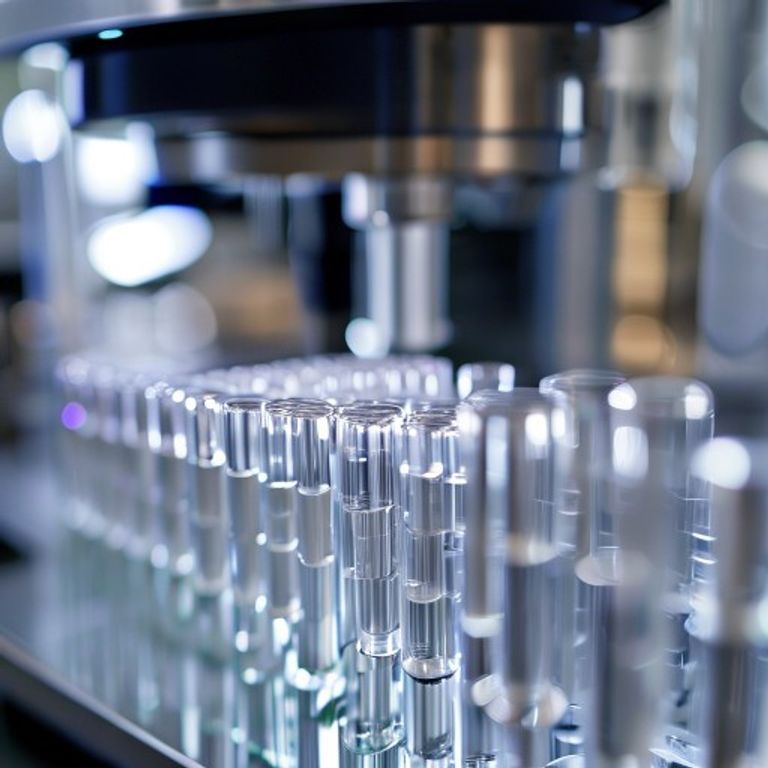
Beyond the Spin: Unveiling the Essential Centrifuge Tube Uses in Every Lab

In the bustling world of laboratory science, where precision and minute details often make all the difference, we rely on a plethora of tools. Among these, the humble centrifuge tube might seem like a simple container, but its role is nothing short of critical. Imagine trying to separate cream from milk, but at a microscopic level – that’s essentially what a centrifuge tube helps us achieve. It’s an unsung hero, silently facilitating countless breakthroughs in research and diagnostics every single day.
Here at our lab, we know firsthand just how indispensable these tubes are. They are designed to withstand incredible forces, making them perfect for separating different components of a liquid mixture. So, if you’ve ever wondered about the true versatility and the many precision of volumetric vs. graduated pipette in handling samples, then understanding the core centrifuge tube uses is equally fundamental. Let’s dive deep into the fascinating world of centrifuge tubes and explore why they are an absolute staple in our laboratory.
What Exactly Are Centrifuge Tubes?
At its core, a centrifuge tube is a specialized container, usually made from plastic (like polypropylene) or sometimes glass, designed to hold samples during the Essential Test Tube Holder Uses for a Safer Lab and centrifugation process. Think of them as tiny, robust rocket ships for your precious samples. They come in various sizes and shapes, each tailored for specific applications. The most common types we encounter are:
- Microcentrifuge Tubes (Eppendorf Tubes): These are small, typically 0.5 mL, 1.5 mL, or 2.0 mL, with a snap-cap lid. They are perfect for handling tiny volumes and are ubiquitous in molecular biology.
- Conical Tubes (Falcon Tubes): Ranging from 15 mL to 50 mL, these larger tubes have a conical bottom and often a screw cap. The conical shape is super helpful for concentrating a small pellet at the very tip after spinning.
- Ultra-centrifuge Tubes: These are built to withstand even higher centrifugal forces, often used in specialized applications for separating very fine particles or molecules.
The Core Principle: How Centrifugation Works
The magic behind centrifuge tubes lies in the process of centrifugation. This technique uses centrifugal force to separate particles from a solution based on their size, shape, density, viscosity of the medium, and rotor speed. Essentially, we load our samples into these tubes, place them in a centrifuge machine, and spin them at incredibly high speeds.
During centrifugation, denser components of the sample are forced outwards to the bottom of the tube, forming a compact layer known as the pellet. The lighter components, meanwhile, remain suspended in the liquid above, which we call the supernatant. It’s a bit like when you spin a bucket of water with some sand in it – the sand collects at the bottom. Our centrifuge tubes are specifically designed to handle these forces without breaking or leaking, making them perfect for reliable sample preparation.
Versatile Centrifuge Tube Applications Across Disciplines
The true brilliance of centrifuge tubes comes to light when we look at their diverse applications. They aren’t just for one type of experiment; their utility spans across various scientific fields.
In Molecular Biology: Unlocking Genetic Secrets
When we’re working with DNA, RNA, or proteins, microcentrifuge tubes are our best friends. The centrifuge tube applications in molecular biology are vast and critical for many protocols. For instance, when we want to isolate DNA from a cell sample, we often ask how to use centrifuge tubes for DNA extraction. Here’s a quick look:
- DNA/RNA Extraction: After lysing cells, we spin down cell debris, leaving purified nucleic acids in the supernatant or pellet, depending on the method.
- Protein Purification: Separating proteins from cell lysates or removing unwanted precipitates.
- PCR Product Cleanup: Removing primers and free nucleotides from PCR reactions using spin columns placed inside microcentrifuge tubes.
- Concentrating Samples: If we have a dilute sample of a molecule we need more of, a quick spin can help us concentrate it.
In Microbiology: Separating the Invisible World
Microbiologists also heavily rely on these tubes. The microcentrifuge tube uses in microbiology are essential for handling bacterial cultures and other microbial samples.
- Cell Harvesting: We can quickly collect bacterial or yeast cells from liquid cultures by spinning them down into a compact pellet.
- Washing Cells: After harvesting, cells often need to be washed multiple times to remove media components or impurities, and centrifuge tubes are perfect for this iterative process.
- Preparation of Media Components: Sometimes, solutions need to be clarified by removing particulate matter before being added to growth media.
In Cell Culture: Gentle Handling of Delicate Cells
For those of us working with delicate mammalian cells, conical tubes are particularly useful. The purpose of conical tubes in cell culture is primarily for their ability to concentrate cells gently and efficiently. We also commonly use falcon tube uses in laboratory procedures for similar applications.
- Cell Washing: Rinsing cells to remove old media, trypsin, or other reagents.
- Cell Counting: Concentrating cells before diluting them for counting.
- Cell Freezing: Preparing cell suspensions in cryo-preservation media before freezing.
- Harvesting Cells: Detaching cells from culture flasks and spinning them down to form a pellet.
Beyond Biology: General Lab Sample Preparation
Even outside specific biological fields, these tubes are invaluable pieces of laboratory equipment. They are used for general sample preparation, such as:
- Separating immiscible liquids during extraction processes.
- Removing precipitates from chemical reactions.
- Clarifying solutions by spinning down fine particulate matter.
Choosing the Right Centrifuge Tube for Your Needs
Selecting the correct centrifuge tube is crucial for the success and safety of your experiments. When we pick a tube, we consider several factors:
- Volume: Does it match our sample size? We have everything from micro-liters to 50 mL.
- Material: Polypropylene is common for its chemical resistance and robustness, but glass tubes are sometimes preferred for specific chemical applications or for solvent resistance.
- Sterility: For cell culture and microbiology, sterile tubes are a must to prevent contamination.
- Maximum RCF (Relative Centrifugal Force): Each tube has a maximum force it can withstand. We always check this to avoid tube failure during high-speed spins.
Conclusion
So, the next time you’re in the lab, take a moment to appreciate the humble centrifuge tube. From isolating the very blueprint of life in molecular biology to carefully preparing delicate cells for culture, its centrifuge tube uses are incredibly diverse and absolutely essential. They might look simple, but these little workhorses are foundational to countless scientific endeavors, helping us separate, purify, and analyze samples with unparalleled efficiency. Without them, our lab work would be significantly more challenging, if not impossible. They truly are an indispensable part of our scientific toolkit.
FAQ
Q1: What’s the main difference between a microcentrifuge tube and a conical tube?
A: The primary differences are size and capacity. Microcentrifuge tubes are much smaller (0.5 mL – 2.0 mL) and often have a snap-cap, ideal for small-volume molecular biology work. Conical tubes (15 mL – 50 mL) are larger, usually have a screw-cap, and their conical bottom is excellent for pelleting larger volumes of cells or precipitates.
Q2: Can centrifuge tubes be reused?
A: Generally, no, especially for most plastic types and critical applications. Plastic centrifuge tubes are often designed for single-use to ensure sterility and prevent cross-contamination. Reusing them can also weaken the plastic, making them unsafe for subsequent high-speed spins. Glass centrifuge tubes can sometimes be sterilized and reused, but it depends on the specific application and lab protocols.
Q3: What does RCF mean for centrifuge tubes?
A: RCF stands for Relative Centrifugal Force. It’s a measure of the force exerted on a sample in a centrifuge, expressed as a multiple of the Earth’s gravitational force (g). Centrifuge tubes are rated for a maximum RCF they can withstand. Exceeding this limit can cause the tube to deform, crack, or even explode during centrifugation, creating a significant safety hazard and damaging your sample.
Q4: Why are most centrifuge tubes conical shaped at the bottom?
A: The conical shape is a brilliant design feature that significantly aids in collecting and recovering the pellet. When a sample is spun, the denser components (the pellet) collect at the very tip of the cone, making it much easier to visualize, isolate, and remove with a pipette without disturbing the overlying supernatant. This maximizes recovery and minimizes loss of the desired separated material.