Unveiling the Precision: Volumetric vs. Graduated Pipette – Which One Reigns in Your Lab?

In the fascinating world of chemistry and biology, accuracy is not just a preference; it’s a necessity. Every drop, every milliliter, can make or break an experiment. That’s why tools for measuring liquids are so critical, and among them, pipettes stand out. But if you’ve ever stepped into a lab, you’ve probably noticed that not all pipettes are created equal. We often face a common dilemma: the volumetric pipette versus the graduated pipette. Which one should we grab for our next experiment? And what exactly is the difference?
Don’t worry, we’re here to demystify these essential lab accuracy tools. Think of it like choosing the right spoon for baking: a precise measuring spoon for a delicate spice versus a regular tablespoon for general stirring. Both measure, but one is designed for exactness. Let’s dive deep into the world of pipettes and figure out when to use which, so your experiments are always spot on.
The Volumetric Pipette: The Champion of Precision
Imagine a sprinter preparing for a race – every muscle, every movement, is optimized for one specific goal: speed. That’s how I like to think of a volumetric pipette. Also known as a transfer pipette or bulb pipette, it’s meticulously designed for one single, fixed volume with incredibly high accuracy. If you need to transfer exactly 10.00 mL or 25.00 mL, this is your go-to device.
What Makes It So Accurate?
- Unique Design: A volumetric pipette features a long, slender stem with a larger bulb in the middle and a single calibration mark (etch line) on the upper stem. This design minimizes the surface area where errors can occur during reading.
- Fixed Volume: It delivers only one specific volume, and it’s calibrated to do so with exceptional precision, typically to four significant figures (e.g., 25.00 mL).
- Tolerance: The tolerance (the allowable deviation from the stated volume) for volumetric pipettes is extremely low. This means when you’re using it, you can be very confident in the exact amount of liquid you’re transferring. This kind of exacting standard is also often found in other how volumetric flasks deliver unmatched accuracy in liquid measurement.
When to Use a Volumetric Pipette
We typically reach for a volumetric pipette when the exactness of the volume is paramount. Think critical lab procedures such as:
- Preparing standard solutions for titrations.
- Diluting samples to a precise concentration.
- Performing quantitative analyses where even a tiny error could skew results significantly.
- Any application requiring liquid measurement precision at its best.
The Graduated Pipette: The Versatile Workhorse
Now, let’s look at the graduated pipette. If the volumetric pipette is the specialized sprinter, the graduated pipette is the marathon runner – versatile, capable of covering various distances, but perhaps not with the same burst of pinpoint speed. Also known as a measuring pipette, it has multiple calibration marks along its length, allowing us to measure and dispense different volumes.
Understanding Its Design and Accuracy
- Straight Tube Design: Unlike the bulbous volumetric pipette, a graduated pipette is usually a straight glass tube with a tapered tip.
- Multiple Graduations: It has a series of markings (graduations) along the body, much like a ruler, enabling us to measure various volumes from a maximum capacity down to smaller increments.
- Accuracy vs. Precision: While significantly more accurate than, say, a beaker or a test tube, a graduated pipette is generally less precise than a volumetric pipette. Its tolerance is higher, usually to two or three significant figures (e.g., 25.0 mL or 25.1 mL). If you want to know more about similar types of graduated graduated cylinder uses in the lab, feel free to check out our other guides.
When to Use a Graduated Pipette
We find graduated pipettes incredibly useful for tasks that require transferring a specific, but not ultra-critical, volume, or when we need the flexibility to measure different amounts from the same pipette. Common uses include:
- General liquid transfers in the lab.
- Preparing solutions where concentration doesn’t need to be hyper-accurate (e.g., reagents for qualitative tests).
- Aliquoting smaller, non-critical volumes from a stock solution.
- Any situation where we need to measure variable volumes quickly.
Volumetric vs. Graduated Pipette: The Core Differences
To sum up the difference between volumetric and graduated pipette, here’s a quick overview:
- Accuracy & Precision: Volumetric pipettes are designed for extreme accuracy and precision for a single volume. Graduated pipettes offer good accuracy over a range of volumes, but not as high as their volumetric counterparts.
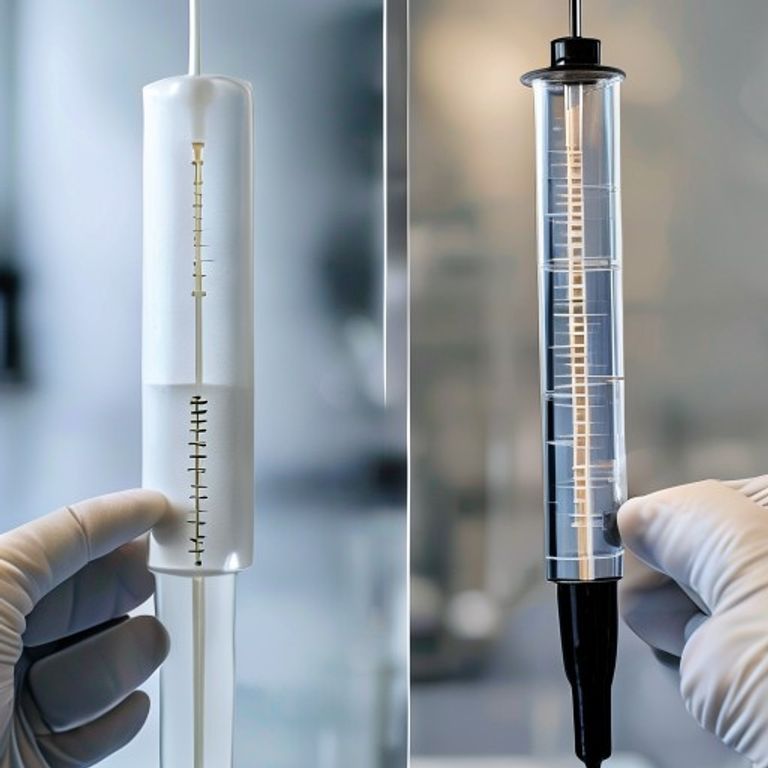
- Design: Volumetric pipettes have a bulb and a single mark. Graduated pipettes are straight with multiple marks.
- Functionality: Volumetric pipettes are for fixed, highly accurate transfers. Graduated pipettes are for variable, less critical volume transfers.
- When to use volumetric vs graduated pipette: It boils down to your experimental requirements. If your experiment demands exactness (like for a primary standard), go volumetric. If flexibility and good-enough accuracy for general transfers are needed, graduated is the way.
Making the Right Choice: Practical Solutions for Your Lab
Ultimately, how to choose volumetric or graduated pipette depends entirely on the demands of your specific experiment. If you’re conducting a sensitive titration or preparing a standard curve for calibration, the superior accuracy volumetric vs graduated pipette offered by the volumetric type is non-negotiable. Its advantages of volumetric over graduated pipette in precision make it invaluable for these tasks.
However, for routine tasks like transferring buffers, adding reagents for qualitative observations, or preparing solutions where a slight deviation won’t impact the outcome dramatically, a graduated pipette is perfectly sufficient and often more practical because of its versatility. It saves time and resources without compromising the integrity of less critical measurements.
Conclusion
Understanding the distinction between volumetric and graduated pipettes is fundamental for anyone working in a lab. It’s not about one being “better” than the other, but rather about choosing the right tool for the job. By matching the pipette to your accuracy needs, you ensure reliable results and efficient lab work. So, next time you’re reaching for a pipette, take a moment to consider the precision required, and choose wisely!
FAQs
Q1: Can I use a graduated pipette for preparing standard solutions?
A: While technically possible, it’s strongly advised against. For standard solutions where high accuracy is crucial, you should always use a volumetric pipette to minimize errors and ensure the solution’s concentration is precisely known.
Q2: Are there different types of graduated pipettes?
A: Yes, there are generally two main types: Serological pipettes (Mohr pipettes), which are calibrated to the tip (meaning you dispense all the way to the tip), and Measuring pipettes (transfer pipettes), which are calibrated to a specific line above the tip. Serological pipettes are generally less accurate than measuring pipettes.
Q3: How do I read the volume on a pipette accurately?
A: Always read the bottom of the meniscus (the curved surface of the liquid) at eye level. This prevents parallax error, which can lead to incorrect readings, especially with pipettes that have small diameters.
Q4: How should pipettes be cleaned and stored?
A: Pipettes should be thoroughly rinsed with distilled water after use, and sometimes with a cleaning solution depending on the substance transferred. They should be stored vertically in a pipette stand to prevent contamination and damage to the tips.