

Beyond the Blue Flame: Unlocking the Essential Bunsen Burner Function in Your Lab

Introduction: The Unsung Hero of the Laboratory
Walk into almost any chemistry or biology lab, and chances are you’ll spot a familiar piece of equipment sitting patiently on the workbench: the Bunsen burner. It might look simple, just a metal tube with a hose, but this unassuming device is truly a workhorse. For many of us, it was one of the first pieces of scientific equipment we learned to operate, a gateway to understanding chemical reactions and physical changes. But have we ever stopped to truly consider the full Bunsen burner function? It’s more than just a source of fire; it’s a precision tool for controlled heating.
Today, we’re going to dive deep into what makes this classic lab instrument so indispensable. We’ll explore not just how does a Bunsen burner work, but also its primary purpose, how to use it effectively, and why it remains a staple despite all the advanced technology available. So, let’s ignite our curiosity and get started!
The Core Purpose: Why Do We Need a Bunsen Burner?
At its heart, the primary function of a Bunsen burner in a chemistry lab is to provide a single, open, gas flame for heating, sterilization, and combustion. Think of it like a chef’s burner, but for scientific experiments. We need a reliable and adjustable heat source for countless tasks, from gently warming a solution to bringing it to a boil, or even initiating a reaction that requires high temperatures. Before the Bunsen burner, labs often relied on less consistent heat sources, which made experiments tricky and results variable. This device brought a new level of control and reproducibility to scientific heating.
Anatomy of Heat: Explaining How a Bunsen Burner Works
Understanding the Bunsen burner function really starts with understanding its parts. It’s a marvel of simple engineering!
- Gas Inlet: This is where the fuel, usually natural gas or propane, enters the burner via a rubber tube.
- Base: A heavy base keeps the burner stable on your lab bench. No wobbling flames, please!
- Barrel (Chimney): The tall, vertical tube where the gas mixes with air.
- Air Hole (Vent): Located at the base of the barrel, this adjustable opening allows air to enter and mix with the gas. This is crucial for controlling the flame quality.
- Collar: A rotatable ring that covers the air hole, letting us precisely adjust the amount of air mixing with the gas.
So, how does a Bunsen burner work? Gas flows up the barrel, and as it rises, it draws in air through the adjustable air hole, thanks to a principle called the Venturi effect. This mixture of gas and air then ignites at the top of the barrel, producing our controlled flame. By adjusting the collar, we can change the air-to-gas ratio, which in turn changes the color and temperature of the flame.
Mastering the Flame: Understanding Its Purpose and Power
The beauty of the Bunsen burner lies in its adjustable flame. Different tasks require different types of flames. Knowing what is the purpose of a Bunsen burner flame in its various forms is key to effective laboratory heating:
- Luminous (Safety) Flame: This is a yellow, flickering flame, produced when the air hole is almost closed. It’s relatively cool and dirty (producing soot). We use it when we need a visible flame but not intense heat, perhaps as a stand-by flame while preparing an experiment.
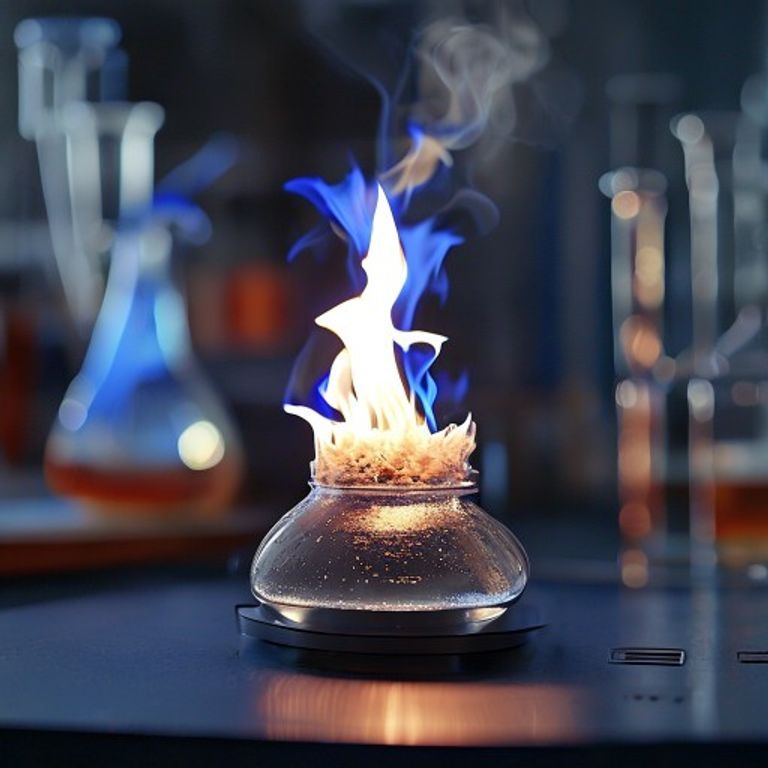
- Non-Luminous (Heating) Flame: By opening the air hole, we get a blue, cone-shaped flame. This flame is much hotter and cleaner. The more air mixed with the gas, the more complete the combustion, leading to higher flame temperature. This is your go-to flame for most heating tasks.
- Roaring (Hot) Flame: With the air hole fully open, the flame becomes a distinct blue cone with an inner, even bluer cone. This is the hottest flame the burner can produce, ideal for rapid heating or high-temperature reactions.
Each of these flames serves a specific purpose, allowing scientists to have precise control over their experiments. Getting the right flame for the job is a big part of mastering the art of lab work.
The Bunsen Burner’s Role in Practical Lab Applications
The role of a Bunsen burner in heating substances is incredibly varied. Whether we’re in a high school chemistry class or a university research lab, this simple tool is constantly in use.
- Heating Solutions: From dissolving solids faster to speeding up chemical reactions, heating liquids in beakers, flasks, or essential test tube uses every scientist should know is perhaps its most common application. We can control the rate of heating by adjusting the flame and the distance of the apparatus from the flame.
- Sterilization: In microbiology, Bunsen burners are vital for sterilizing inoculating loops and the mouths of culture tubes, preventing contamination. The high heat effectively kills microorganisms.
- Combustion Experiments: Demonstrating how different materials burn or studying the products of combustion process often involves a Bunsen burner.
- Melting Solids: For substances with relatively low melting points, a Bunsen burner can be used to melt them for further analysis or reaction.
Remember, safety is paramount. Always use appropriate tools like tongs to handle heated objects, ensuring you’re protecting yourself from burns. If you’re looking for an essential guide to mastering crucible tongs in the lab, we’ve got you covered.
Conclusion: The Enduring Legacy of Lab Heat
So, there you have it! The humble Bunsen burner, a device many of us take for granted, actually plays a complex and crucial role in the scientific world. From its simple yet ingenious design that allows for controlled gas burner operation to its versatile applications in heating, sterilization, and combustion, the Bunsen burner function is truly fundamental. It’s a testament to good design that a tool invented in the mid-19th century remains an essential piece of science lab equipment today. Mastering its use is a foundational skill for any aspiring scientist, opening up a world of practical experimentation and discovery.
Frequently Asked Questions (FAQ)
Q1: What is the main function of a Bunsen burner?
A: The main Bunsen burner function is to provide a safe, controlled, and adjustable open flame for heating, sterilization, and combustion in a laboratory setting.
Q2: Can I adjust the flame temperature of a Bunsen burner?
A: Yes, absolutely! You can adjust the flame temperature by rotating the collar to control the amount of air mixing with the gas. More air leads to a hotter, bluer flame, while less air results in a cooler, yellow flame.
Q3: What are the key parts of a Bunsen burner and what do they do?
A: To explain the function of a Bunsen burner and its parts, we can highlight the base (stability), gas inlet (fuel supply), barrel (gas-air mixing), air hole (air intake), and collar (air hole adjustment). Each part works together to create a controlled flame.
Q4: Why is the Bunsen burner flame sometimes yellow?
A: A yellow, luminous flame occurs when the air hole is mostly closed, meaning insufficient oxygen is mixing with the gas for complete combustion. This “dirty” flame is cooler and produces soot.
Q5: Is a Bunsen burner still used in modern labs?
A: Yes, despite technological advancements, Bunsen burners are still widely used in modern laboratories for various tasks, especially for general heating, sterilization, and demonstrations where an open flame is practical and necessary.