The Unsung Hero: Essential Beaker Uses in Every Modern Lab

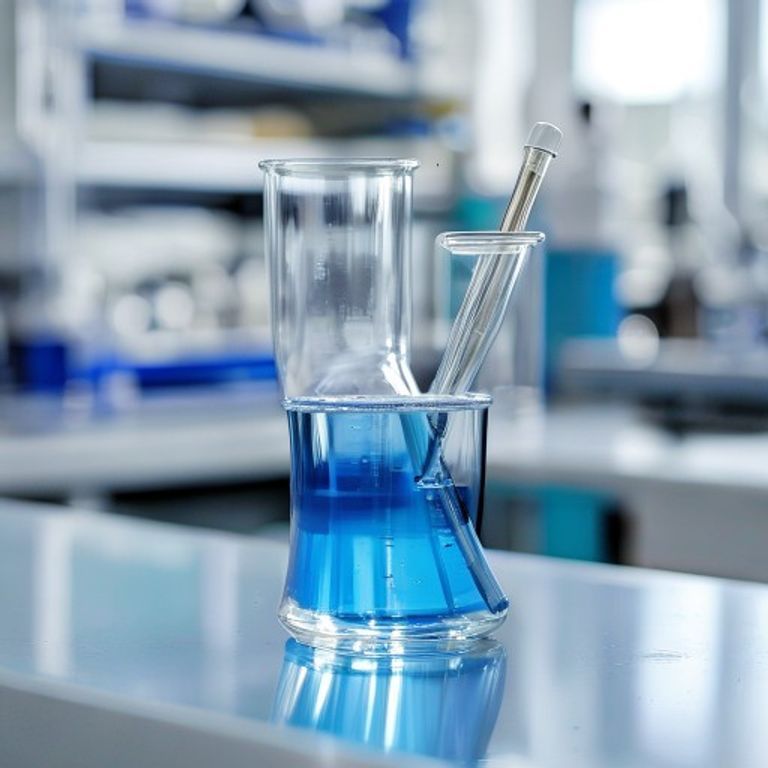
In the vast world of scientific exploration, some tools are flashy and complex, while others are humble workhorses. The beaker, with its simple cylindrical shape and spout, definitely falls into the latter category. Often overlooked, it’s one of the most fundamental pieces of laboratory glassware you’ll find, a true all-rounder in almost any scientific setting. If you’ve ever wondered, what are beakers used for in a lab, you’re in the right place. We’re going to dive deep into the versatile world of beaker uses, showing just how indispensable this simple container really is.
For us, beakers are like the multi-purpose bowls in a kitchen – not always the most precise, but incredibly useful for a huge variety of tasks. From mixing ingredients to holding liquids, their primary functions of laboratory beakers are surprisingly broad, making them a staple from high school chemistry classes to advanced research facilities. Let’s explore the many ways we rely on this sturdy piece of equipment.
Why Beakers Are So Crucial for Mixing Solutions
One of the most common and vital beaker uses is for mixing solutions. Imagine trying to stir a thick liquid in a container with a narrow neck; it would be messy and inefficient, right? This is precisely where the beaker shines. Its wide mouth and straight sides make it ideal for combining various substances, whether you’re using a stirring rod, a magnetic stirrer, or simply swirling by hand. We find them perfect for preparing reagents, dissolving solids, or blending different liquids together.
Unlike an erlenmeyer flask, which has a narrower neck that can sometimes restrict stirring, a beaker offers ample space. This open design also allows for easy addition of other components or instruments during the mixing process. So, next time you see a scientist vigorously stirring something in the lab, chances are, they’re using a beaker.
Heating Solutions Safely and Efficiently
Another key application in our daily lab work involves heating. Many experiments require solutions to be heated, sometimes to boiling. Most laboratory beakers are made from borosilicate glass (like Pyrex or Kimax), which is designed to withstand thermal shock – meaning it won’t crack when exposed to rapid temperature changes. This heat-resistant quality makes them perfect for:
- Boiling liquids over a Bunsen burner (usually with the aid of a wire gauze to distribute heat evenly).
- Heating solutions in a hot water bath.
- Performing reactions that require elevated temperatures.
When we use beakers for heating, we always remember to never seal them completely, as this could lead to dangerous pressure buildup. The wide mouth also facilitates the escape of gases or steam, ensuring safety and efficiency during heating processes.
Simple Measurements and Containing Reactions
While beakers have volume markings on their sides, it’s crucial to understand that these are generally for approximate measurements, not precise ones. If we need to measure liquids with high accuracy, we’d reach for a graduated cylinder or a pipette. However, for quick estimations or when adding solvents to a roughly specified volume, beakers are perfectly adequate and incredibly convenient.
Beyond mixing and heating, beakers serve as excellent reaction vessels. Their open design allows for easy monitoring of chemical reactions, observation of precipitates, or changes in color. They are also widely used for:
- Holding liquids during filtration or titration setups.
- Collecting filtrate.
- Temporary storage of solutions or waste liquids.
- As a recipient for samples during various analytical procedures.
The versatility of beaker applications in chemistry experiments really makes them an indispensable tool.
Beyond the Lab Bench: Different Types of Beaker Uses
The utility of beakers isn’t confined solely to advanced chemistry. We see them in biology labs for culturing microbes, in physics labs for demonstrating principles of fluid dynamics, and even in educational settings for simple science projects. Their robust nature and ease of cleaning make them suitable for repeated use across various disciplines. Some specialized beakers, like Griffin beakers or low-form beakers, are designed for specific tasks, further expanding the range of beaker uses.
From a simple holding container to a crucial component in complex reactions, the humble beaker proves its worth time and time again. Its ease of handling, resistance to heat, and broad utility cement its place as a primary tool in any scientist’s arsenal.
Conclusion
So, the next time you step into a laboratory, take a moment to appreciate the unassuming beaker. Its simple design belies its incredible versatility. We’ve seen how its design makes it perfect for mixing solutions, why beakers are used for mixing solutions, for safely heating, and for a multitude of other tasks that are fundamental to scientific discovery. It truly is one of the unsung heroes of the lab, quietly enabling countless experiments and innovations every single day. Without this piece of essential laboratory glassware, our work would undoubtedly be much harder.
Frequently Asked Questions (FAQ) about Beaker Uses
Are beakers good for accurate measurements?
No, generally not. Beakers have approximate volume markings and are best for rough estimations or holding liquids. For precise measurements, we always recommend using a graduated cylinder, volumetric flask, or pipette.
Can I heat any type of beaker?
Most standard laboratory beakers are made from borosilicate glass, which is designed to withstand heating. However, it’s always good practice to confirm the material and its heat resistance before applying direct heat. Avoid heating plastic beakers or those not specified as heat-resistant.
What is the main difference between a beaker and an erlenmeyer flask?
The primary difference lies in their shape and typical uses. Beakers have straight sides and a wide mouth, making them excellent for mixing, pouring, and general holding. Erlenmeyer flasks, on the other hand, have a conical body and a narrow neck, which makes them ideal for swirling liquids without spilling, performing titrations, and heating solutions where solvent loss needs to be minimized.
What are the primary functions of laboratory beakers?
The primary functions include mixing and preparing solutions, holding and heating liquids, containing chemical reactions, and performing approximate volume measurements. They are a versatile general-purpose container in almost any lab.