Unsung Hero of the Lab: Mastering the Tripod Stand for Safe & Effective Chemistry Experiments

Introduction: Why Every Lab Needs a Tripod Stand
Ever walked into a chemistry lab and wondered how scientists manage to heat solutions safely and precisely without holding everything over a flame? Well, the unsung hero behind much of that steady, controlled heating is often a simple yet indispensable piece of equipment: the tripod stand. For anyone, from a curious student to an experienced researcher, understanding the role and proper use of a tripod stand in a chemistry lab is absolutely fundamental. It’s not just a metal stand; it’s the stable foundation for countless experiments, ensuring safety and accuracy. So, let’s dive deep into what makes this humble piece of lab equipment support so crucial.
What is a Tripod Stand and Its Purpose in Chemistry?
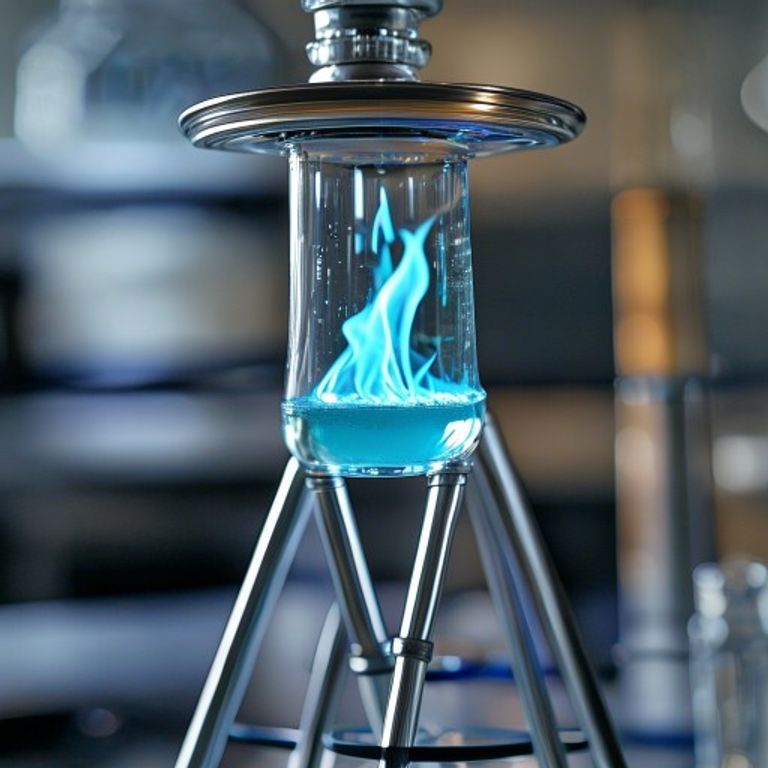
At its core, a tripod stand is exactly what it sounds like: a three-legged metal stand, usually made of steel or iron, designed to provide a stable, elevated platform. In the chemistry lab, its primary purpose is to support various types of laboratory glassware, like beakers, flasks, or evaporating dishes, above a heat source, most commonly a Bunsen burner. Without it, you’d be trying to hold a hot beaker over a flame, which is not only incredibly dangerous but also impossible for maintaining a consistent distance and temperature.
Think of it like this: if you’re trying to cook soup, you wouldn’t just hold the pot over the stove burner, right? You’d put it on the stovetop. The tripod stand acts as that sturdy “stovetop” for your lab glassware, allowing for even heat distribution when combined with a wire gauze, and preventing accidental spills or burns. It ensures your experiments are not only successful but also safe.
Setting Up Your Tripod Stand with a Bunsen Burner and Wire Gauze
Alright, let’s get practical! Proper setup is key. Here’s a step-by-step guide on how to use a tripod stand in a chemistry lab for heating:
- Step 1: Position the Tripod Stand. Place your tripod stand on a flat, heat-resistant surface, usually a lab bench. Ensure all three legs are firmly on the surface to prevent wobbling.
- Step 2: Add the Wire Gauze. This is crucial. A wire gauze is a thin sheet of metal mesh with a ceramic center, which you place on top of the tripod stand. The wire gauze serves two main functions:
- Support: It provides a flat, even surface for your glassware to rest on, distributing the weight evenly.
- Heat Distribution: The ceramic center helps to spread the heat from the Bunsen burner evenly across the bottom of the glassware, preventing hot spots and potential cracking. Imagine trying to toast bread by just hitting it with a tiny torch in one spot; it would burn! The wire gauze ensures a more uniform “toast.”
- Step 3: Place Your Glassware. Carefully set your beaker, flask, or evaporating dish containing the solution onto the center of the wire gauze. Make sure it’s stable and not teetering.
- Step 4: Position the Bunsen Burner. Now, slide your Bunsen burner underneath the tripod stand, directly below the wire gauze and the center of your glassware. Adjust the burner to achieve the desired flame height and intensity for your experiment. Remember, the tip of the inner blue cone is the hottest part of the flame.
Safety Guidelines for Using a Tripod Stand in Chemistry Experiments
While a tripod stand is designed for safety, we still need to be mindful of best practices. Here are some essential safety guidelines:
- Always use a wire gauze: As we discussed, it distributes heat and provides stable support. Never place glassware directly on the metal frame of the tripod stand over a flame.
- Ensure stability: Before applying heat, gently push on the tripod stand and glassware to confirm everything is stable and won’t tip over.
- Heat-resistant surfaces: Always conduct heating experiments on a heat-resistant mat or lab bench to protect the surface from direct heat or accidental spills.
- Watch for boiling: When heating solutions, especially to boiling, never leave your setup unattended. Bumping, boiling over, or changes in the flame can happen quickly.
- Use proper tongs/mitts: After heating, never touch hot glassware directly. Always use beaker tongs, crucible tongs, or heat-resistant gloves to move or handle hot apparatus.
- Cool down: Allow glassware to cool completely on a heat-resistant mat before cleaning or storing. Rapid cooling can cause thermal shock and crack the glass.
Common Scenarios: Heating Solutions on a Tripod Stand
The tripod stand is incredibly versatile. We use it for a variety of tasks:
- Evaporation: Heating a solution to evaporate the solvent, leaving behind a solid solute. Think of evaporating salt water to get salt crystals.
- Boiling: Heating solutions to their boiling point for reactions or to speed up dissolution.
- Distillation: Although distillation setups are more complex, the initial heating of the solution often starts on a tripod stand with a flask.
- General Heating: Simply warming a solution to increase reaction rates or solubility.
Understanding these practical applications helps us appreciate just how vital this piece of equipment is in almost every corner of a chemistry lab.
Conclusion: The Steadfast Support in Every Experiment
So, there you have it! The tripod stand, often overlooked, is truly one of the most fundamental and crucial pieces of lab equipment. Its simple design belies its immense importance in providing stability, safety, and control during heating experiments. By understanding its purpose, how to set it up correctly with a wire gauze and Bunsen burner, and adhering to safety guidelines, we can ensure our chemistry experiments are not only successful but also conducted in the safest possible manner. Next time you’re in the lab, take a moment to appreciate this steadfast supporter of scientific discovery!
FAQ
Q: Can I use a tripod stand without a wire gauze?
A: It’s highly recommended to always use a wire gauze. Without it, the heat from the Bunsen burner will be concentrated in one spot, which can cause glassware to crack due to uneven heating. Additionally, the wire gauze provides a more stable, flat surface for your glassware.
Q: How do I know if my Bunsen burner flame is hot enough when using a tripod stand?
A: For general heating, a blue, non-luminous flame is usually ideal. The hottest part of the flame is at the tip of the inner blue cone. You can adjust the air hole and gas valve on your Bunsen burner to achieve the desired flame intensity and temperature.
Q: What kind of glassware can I heat on a tripod stand?
A: You can heat various types of heat-resistant laboratory glassware, such as beakers, Erlenmeyer flasks, and evaporating dishes. Always ensure the glassware is made of borosilicate glass (like Pyrex or Kimax) which is designed to withstand thermal stress.