

The Unsung Hero: Unraveling the Essential Laboratory Tripod Uses

When we step into a chemistry lab, our eyes are often drawn to the colorful reactions, bubbling beakers, or sophisticated analytical instruments. But amidst all the scientific spectacle, there’s a humble, three-legged device that quietly supports many of our most crucial experiments: the laboratory tripod. Often overlooked, understanding its diverse uses of the lab tripod is fundamental for any budding scientist or seasoned researcher.
You might be asking, “what is a laboratory tripod used for?” Well, it’s far more versatile than you might imagine. Think of it as the sturdy foundation upon which countless chemical transformations and observations take place. Without it, many common lab procedures would be unsafe, inefficient, or downright impossible. So, let’s pull up a stool and dive into the fascinating world of this essential piece of lab equipment!
More Than Just a Stand: The Core Purpose of a Laboratory Tripod
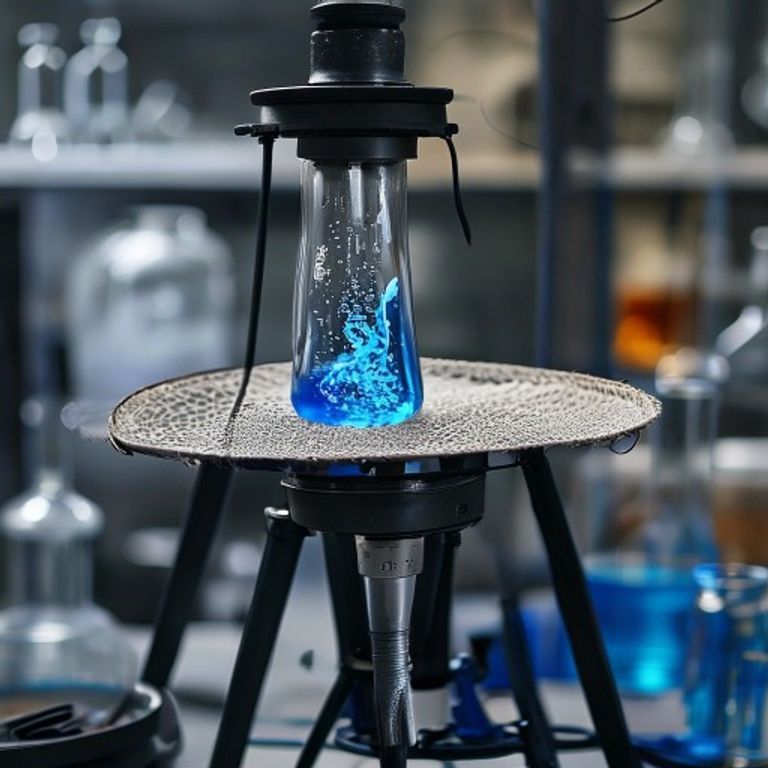
At its heart, the main purpose of a tripod stand in a chemistry lab is to provide a stable, elevated platform. Imagine trying to heat a beaker directly on a lab bench – not only would it likely damage the surface, but it would also be incredibly unstable. The tripod lifts the glassware (like a beaker or conical flask) above the heat source, creating a safe distance and allowing for even heating. It’s like having a dedicated little table just for your experiment, ensuring everything stays put and at the right height.
Its robust, usually cast iron construction, gives it the strength to support considerable weight, making it reliable for various experimental setups. This stability is key, especially when dealing with hot liquids or delicate chemical reactions where precision is paramount. We wouldn’t want our experimental setup wobbling around like a jelly on a plate, right?
The Dynamic Duo: Tripod, Gauze Mat, and Bunsen Burner
One of the most classic images of a chemistry lab involves a Bunsen burner heating a beaker on a tripod. This setup isn’t just iconic; it’s incredibly practical. The functions of a tripod stand and gauze mat work hand-in-hand to facilitate controlled heating experiments. The gauze mat, typically made of wire mesh with a ceramic center, sits on top of the tripod.
- Support: The gauze mat provides a flat, even surface for beakers, flasks, or crucibles.
- Heat Distribution: The wire mesh helps to spread the heat from the Bunsen burner flame evenly across the bottom of the glassware, preventing hot spots that could crack the glass. The ceramic center is especially good at this, ensuring uniform heating and reducing the risk of thermal shock.
- Safety: It separates the direct flame from the glassware, reducing the chance of overheating or a sudden boil-over.
Together, this trio forms a powerhouse for precise temperature control, making it indispensable for processes like boiling, evaporating, or simply warming solutions.
Setting Up for Success: How to Use a Tripod in Lab Experiments
Setting up a tripod might seem straightforward, but a few best practices can make all the difference for safety and experimental success. Here’s how we typically do it:
- Placement: Position the tripod securely on a stable, flat lab bench. Make sure its legs are spread out and not wobbly.
- Gauze Mat: Carefully place the gauze mat on top of the tripod’s three arms. Ensure it sits centrally and doesn’t overhang excessively.
- Glassware: Place your beaker, flask, or other glassware containing your sample directly on the center of the gauze mat.
- Heat Source: Position the Bunsen burner or spirit lamp underneath the tripod, ensuring the flame will be directly under the center of the gauze mat and glassware. Adjust the flame height as needed for your specific heating experiments. Always remember to clear any flammable materials from the immediate area before lighting your burner!
Always double-check the stability of your setup before you begin heating. A little vigilance goes a long way in the lab!
Beyond Heating: Other Applications of Lab Tripods
While the applications of a lab tripod for heating are its primary function, its usefulness extends beyond just fire and flasks. It essentially acts as a versatile lab equipment support. For instance:
- Supporting Filtration Setups: We can use it to support a funnel during gravity filtration, ensuring the filtrate collects safely in a beaker below.
- Holding Apparatus: Sometimes, we might use it as a stable base for holding other pieces of apparatus with clamps, like thermometers or stirrers, although dedicated stands are often preferred for more complex setups.
- Temporary Storage: In a pinch, it can serve as a temporary, elevated platform for cooling glassware after heating, preventing it from coming into direct contact with a cold bench surface which could cause cracking.
It’s a testament to its simple, yet effective design that it finds so many auxiliary roles in our daily lab work.
Conclusion
So, the next time you’re in the lab, take a moment to appreciate the humble laboratory tripod. It may not be the flashiest piece of equipment, but its steadfast support and critical role in countless heating experiments and other procedures make it an indispensable tool. From ensuring safety to promoting even heat distribution, the tripod truly is an unsung hero, making our scientific explorations possible and much safer. We rely on its stability and versatility more than we often realize, proving that sometimes, the simplest tools are the most powerful.
FAQ About Laboratory Tripod Uses
Q1: Can I use a tripod without a gauze mat?
A: While technically possible, it’s generally not recommended, especially for heating. The gauze mat helps distribute heat evenly and provides a more stable, flat surface for glassware, reducing the risk of breakage or uneven heating.
Q2: What materials are laboratory tripods usually made from?
A: Laboratory tripods are typically made from cast iron or steel, which provides excellent stability, durability, and resistance to heat and chemical corrosion.
Q3: Is a tripod suitable for very high-temperature heating?
A: Yes, in conjunction with a ceramic-centered gauze mat and a powerful Bunsen burner, a tripod can safely support glassware for high-temperature heating experiments. Always ensure the glassware itself is appropriate for high temperatures (e.g., borosilicate glass).
Q4: How do I clean a laboratory tripod?
A: A simple wipe down with a damp cloth is usually sufficient. For stubborn residues, a mild laboratory detergent might be used, followed by rinsing and drying to prevent rust, especially if it’s made of steel.