The Unsung Hero of the Lab: Mastering Your Lab Mortar and Pestle for Perfect Samples

Hello, fellow science enthusiasts and lab adventurers! Today, we’re peeling back the layers on a true workhorse of the laboratory – the humble yet incredibly mighty lab mortar and pestle. You’ve probably seen one, perhaps used one, or maybe even wondered about the true power behind this traditional duo. Trust me, it’s far more crucial than it looks, especially when we talk about achieving precision in our experiments.
From the earliest days of chemistry to the cutting edge of modern material science, the mortar and pestle have been our trusted companions for transforming solid samples. Think about it: how do you get a large chunk of a substance into a fine, uniform powder ready for analysis or reaction? That’s where our heroes come in! This article will dive deep into everything you need to know, from choosing the best lab mortar and pestle for sample grinding to essential cleaning instructions. Let’s get ready to pulverize some knowledge!
What Exactly is a Lab Mortar and Pestle?
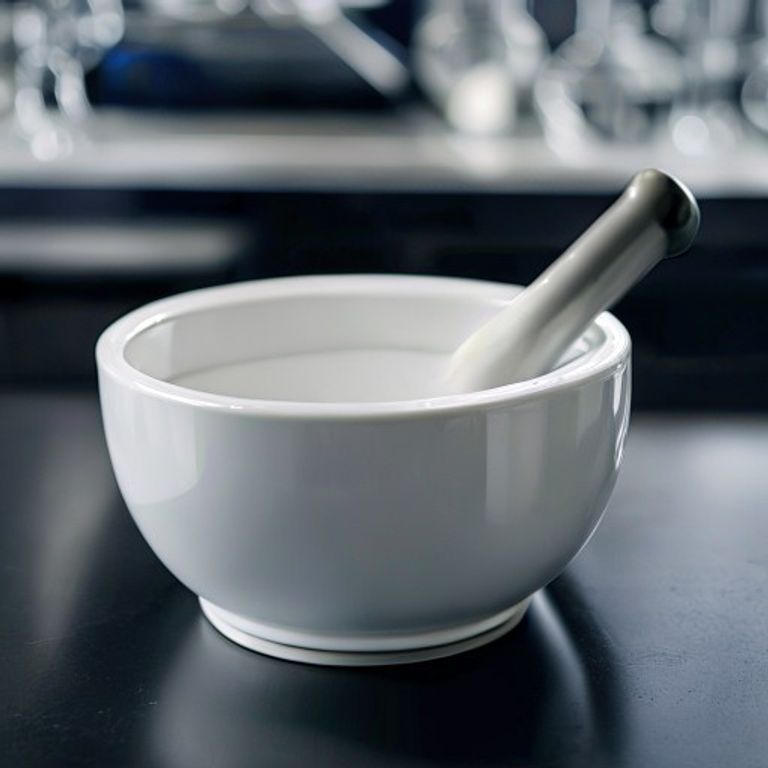
At its core, a lab mortar and pestle is a pair of fundamental pulverizing tools designed for crushing, grinding, and mixing solid substances. The “mortar” is the bowl-shaped vessel, usually made from a hard, non-porous material, while the “pestle” is a heavy, club-shaped object used to press and grind the material against the inner surface of the mortar. It’s like a miniature, super-powered version of what you might use in your kitchen for spices, but engineered with scientific precision in mind.
This simple yet effective grinding apparatus relies on mechanical force – your elbow grease, basically – to reduce particle size, increase surface area, and facilitate more efficient reactions or analyses. It’s a classic example of how basic physics forms the bedrock of complex scientific processes.
Why We Need It: The Core Uses in the Lab
The applications for a lab mortar and pestle are incredibly diverse, making it indispensable in virtually every scientific discipline. For us, its primary role revolves around:
- Sample Preparation: This is perhaps its most vital function. Before we can analyze a solid material using techniques like spectroscopy, chromatography, or microscopy, it often needs to be ground into a fine, homogeneous powder. This ensures consistent results and proper dissolution.
- Increasing Surface Area: By reducing particle size, we dramatically increase the surface area of a substance. This is crucial for speeding up chemical reactions, improving extraction efficiency, or ensuring complete dissolution in a solvent. Imagine trying to dissolve a sugar cube versus granulated sugar – same principle!
- Mixing and Homogenizing: Beyond just grinding, the mortar and pestle are excellent for thoroughly mixing two or more solid powders to create a uniform blend. This is essential in pharmaceutical compounding, creating new composite materials, or preparing reagent mixtures.
- Size Reduction for Specific Instruments: Many sophisticated pieces of laboratory equipment, such as X-ray diffractometers or calorimeters, require samples within a very narrow particle size range. The mortar and pestle provide the control needed to achieve this.
Whether you’re working with minerals, plant tissues, chemicals, or pharmaceuticals, the ability to control particle size and achieve homogeneity through precise grinding is paramount.
Choosing Your Grinding Partner: Types of Mortar and Pestle
Just like you wouldn’t use a hammer for every task, choosing the right material for your mortar and pestle is key to efficient and contamination-free grinding. Here’s a quick rundown of the common types we encounter:
Porcelain and Ceramic Mortars
These are perhaps the most common types you’ll see in a general chemistry lab. They are relatively inexpensive, robust, and great for general-purpose grinding of moderate hardness. The unglazed interior provides a good abrasive surface. When asking where to buy ceramic lab mortar and pestle, you’ll find these widely available from scientific supply companies.
Agate Mortars
Ah, the agate mortar! This is often considered the gold standard for finer grinding, especially when purity is paramount. Agate is incredibly hard, non-porous, and resistant to chemical attack. This means minimal sample contamination from the grinding surface. For delicate samples or when you need to achieve an ultrafine powder, understanding the uses of agate mortar and pestle in labs is critical. They are ideal for sensitive analytical work.
Glass Mortars
Less common for grinding, glass mortars are primarily used for mixing liquids or very soft solids that don’t require significant abrasive force. They are excellent for visual clarity but are more fragile and not suitable for hard samples.
When thinking about the best lab mortar and pestle for sample grinding, it really boils down to your sample’s hardness, the desired particle size, and the risk of contamination. Always match the tool to the task!
Best Practices for Effective Grinding
Using a mortar and pestle isn’t just about brute force; there’s a technique to it!
- Start Small: Don’t overload the mortar. Work with small portions of your sample at a time. This gives you better control and prevents material from escaping.
- Crush, Then Grind: Begin by gently crushing larger pieces against the bottom and sides of the mortar using the pestle. Once broken down, switch to a circular grinding motion, applying even pressure.
- Scrape and Consolidate: Periodically, use a clean spatula to scrape down any material clinging to the sides of the mortar, ensuring all particles are subjected to grinding. This is where demystifying the spatula’s role in chemistry becomes obvious – it’s a perfect companion!
- Check for Homogeneity: Visually inspect your sample frequently. You want a consistent texture and particle size throughout.
- Patience is Key: Rushing the process can lead to uneven grinding or even sample loss. Take your time to achieve the desired fineness.
Keeping It Clean: Maintenance Tips
Proper cleaning is non-negotiable to prevent cross-contamination between samples. Here are our top cleaning instructions for laboratory mortar pestle:
- Remove Bulk Material: After use, carefully scrape out as much of the sample as possible.
- Rinse Immediately: Rinse the mortar and pestle with appropriate solvents (e.g., distilled water, ethanol, acetone) depending on your sample’s solubility.
- Scrub Gently: Use a brush and a mild detergent. For stubborn residues, you might need a more abrasive scrub, but be careful not to damage softer materials like glass.
- Rinse Thoroughly: Rinse multiple times with distilled water to remove all detergent residue.
- Dry Completely: Allow the mortar and pestle to air dry or dry them in an oven (if material permits) to prevent moisture contamination.
- Special Care for Agate: Agate is very hard but can be brittle. Avoid dropping it. Clean with non-abrasive methods and store carefully.
Remember, a clean mortar and pestle is a happy mortar and pestle, ensuring the integrity of your next experiment!
FAQ
Q: What’s the main difference between ceramic and agate mortars?
A: Ceramic mortars are generally more porous and can sometimes introduce trace contaminants if not properly cleaned or if grinding very hard materials that wear down the surface. Agate mortars, being extremely hard and non-porous, offer superior purity and are ideal for very fine grinding and sensitive analytical work where minimal contamination is critical. However, agate is usually more expensive.
Q: Can I use a lab mortar and pestle for food preparation?
A: While the mechanics are similar to a kitchen mortar and pestle, we strongly advise against using a lab mortar and pestle for food. Laboratory equipment is exposed to various chemicals and substances, even after cleaning, which could pose a health risk. It’s best to keep your lab tools strictly for lab use!
Q: How do I know when to replace my mortar and pestle?
A: For porcelain or ceramic, look for significant chips, cracks, or excessive wear on the grinding surface that might introduce impurities or make grinding ineffective. For agate, replacement is less common due to its hardness, but deep scratches or chips could warrant replacement, especially if purity is paramount. If you notice a change in grinding efficiency or an inability to achieve desired particle size, it might be time for an upgrade.
Q: Are there any alternatives to manual grinding with a mortar and pestle?
A: Yes! For larger volumes, automated systems like ball mills, rotor mills, or planetary mills are often used. These provide faster and more consistent grinding with less manual effort. However, for small-scale, precise, or heat-sensitive samples, or when specific user control is desired, the manual lab mortar and pestle remains an unparalleled choice.
Conclusion
So there you have it! The lab mortar and pestle, far from being just a basic tool, is a fundamental component of effective sample preparation in countless scientific fields. By understanding its uses, choosing the right type, mastering the technique, and maintaining it properly, we can ensure that our experiments start with the most accurate and homogeneous samples possible. It’s a testament to the idea that sometimes, the simplest tools are the most powerful. Keep grinding, keep discovering!