

The Unsung Hero of Your Lab Bench: Mastering the Laboratory Tripod Stand

Have you ever walked into a chemistry lab and noticed that unassuming, three-legged metal stand? It might not be as flashy as a centrifuge or as precise as a pipette, but trust me, the laboratory tripod stand is one of the most fundamental and indispensable pieces of equipment we use. Often overlooked, this simple yet robust tool is literally the foundation for countless experiments, especially those involving heat. Today, let’s peel back the layers and truly appreciate this silent workhorse of the lab. We’ll explore its functions, how to use it safely, and why it’s more important than you might think.
What Exactly Is a Laboratory Tripod Stand?
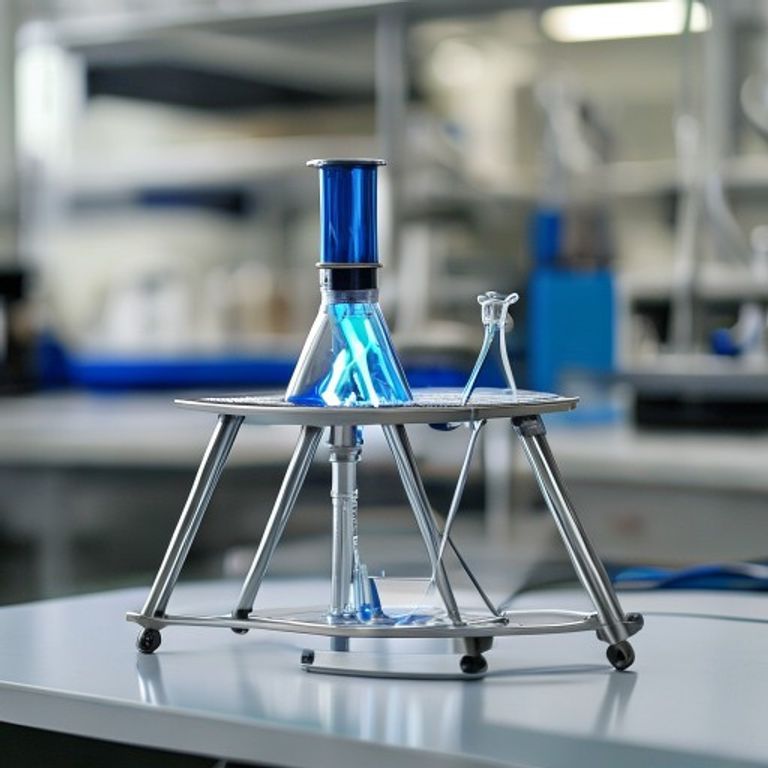
At its core, a laboratory tripod stand is exactly what its name suggests: a three-legged stand, typically made from iron or another heat-resistant metal. Its design is deliberately simple – three sturdy legs meeting at a circular top that provides a stable platform. Think of it like a miniature, incredibly stable coffee table designed specifically for your lab apparatus. This design ensures maximum stability, preventing wobbling and accidental spills, which are crucial when dealing with heat, chemicals, or delicate glassware. It’s truly a cornerstone of lab equipment support, providing a firm base for many experimental setups.
The Core Function: Why Do We Need It?
The primary function of a tripod stand in a chemistry lab is to provide a stable, elevated platform for heating experiments. Imagine trying to heat a beaker directly over a Bunsen burner – it would be unstable, unsafe, and incredibly difficult to manage! This is where our trusty tripod stand comes in. We place the stand over the Bunsen burner, and then a wire gauze (often with a ceramic center) sits on top of the tripod. This setup then supports glassware like beakers or flasks, allowing for even heat distribution and safe heating. This is why the importance of a tripod stand in heating experiments cannot be overstated. It provides the necessary elevation and stability, allowing us to safely conduct reactions, boil liquids, and perform distillations without fear of tipping.
Beyond just heating, the purpose of tripod stand and gauze in laboratory settings extends to general glassware stability. Sometimes, you simply need a secure place to rest a flask or beaker without it touching the cold lab bench, or when you’re waiting for a solution to cool. Its robust nature makes it ideal for supporting heavier items or providing a temporary, stable base for various apparatus. Essentially, it keeps your experimental setup secure, whether heat is involved or not.
Setting Up for Success: How to Use a Tripod Stand in a Science Experiment
Using a tripod stand might seem straightforward, but there’s a proper way to set it up for optimal safety and effectiveness. Let’s walk through the standard procedure for a heating experiment, which is one of its most common uses:
- Placement is Key: First, ensure your lab bench is clean, dry, and level. Place the tripod stand securely on this surface, making sure all three legs are firmly planted. A wobbly stand is an accident waiting to happen!
- Introduce the Heat Source: Position your Bunsen burner directly underneath the center of the tripod stand. Ensure there’s enough clearance between the burner’s top and the tripod to adjust the flame comfortably. This is your basic Bunsen burner setup.
- Add the Wire Gauze: Carefully place a wire gauze mat on top of the tripod stand. The gauze provides an even surface for your glassware and, if it has a ceramic center, helps distribute the heat from the Bunsen burner uniformly across the base of the beaker or flask. This prevents hotspots that could crack the glass.
- Position Your Apparatus: Finally, place your beaker, flask, or other glassware (containing the substance to be heated) gently onto the center of the wire gauze. Double-check its stability before proceeding with heating.
Following these steps ensures that your experiment runs smoothly and safely, adhering to fundamental laboratory safety practices. Always remember, a well-setup experiment is a safer and more successful one!
Beyond Heating: Common Applications in Lab Settings
While primarily known for its role in heating, the laboratory tripod stand has a versatile range of applications. It’s a true multi-tasker! Let’s explore some common applications of tripod stand in lab settings:
- Filtration Setup: It can support a funnel during filtration, allowing the filtrate to collect in a beaker or flask placed underneath. This frees up your hands and ensures the collection vessel remains stable.
- Evaporation: Supporting an evaporating dish over a gentle heat source (like a Bunsen burner with a low flame) to remove solvents, leaving behind a solid residue.
- General Support: Sometimes, we just need a stable platform to hold a beaker or flask while we’re adding reagents, stirring, or simply letting a solution stand. It keeps glassware elevated and away from potential contaminants on the bench. For example, when making precise measurements, a stable surface is essential, and understanding The Ultimate Guide to Using a Graduated Cylinder: Reading, Uses, and Safety Tips can help ensure accuracy with various lab tools.
- Distillation Setups: In more complex arrangements, a tripod stand can support parts of a distillation apparatus (like a receiving flask), ensuring everything is aligned and secure.
- Cooling Apparatus: After heating, a tripod stand can be used to elevate hot glassware, allowing it to cool down safely and efficiently without direct contact with the bench.
Safety First! Essential Tips for Using Your Tripod Stand
Even for such a simple piece of equipment, safety is paramount. Here are a few practical tips to ensure you use your tripod stand correctly and safely:
- Inspect Before Use: Always give your tripod stand a quick check for any bent legs, loose joints, or other damage before use. A damaged stand can compromise stability and lead to spills or accidents.
- Level Surface: Ensure it’s placed on a perfectly flat and stable surface to prevent wobbling, especially when dealing with hot liquids or expensive reagents.
- Don’t Overload: While sturdy, there’s a limit to its capacity. Avoid placing excessively heavy apparatus on it, particularly when heat is involved. Know your equipment’s limits.
- Handle with Care (Post-Heating): Remember that the tripod stand itself, along with the wire gauze, will become extremely hot during heating experiments. Always use appropriate heat-resistant gloves or tongs when handling them after use. Allow them to cool down completely before storing to prevent burns or damage to other equipment.
- Clear Workspace: Keep the area around your tripod stand clear of clutter. This reduces the risk of accidentally knocking over the setup.
Conclusion
So, the next time you step into the lab, take a moment to appreciate the humble laboratory tripod stand. It may not be the star of every experiment, but it’s undeniably the reliable stage manager, ensuring everything runs smoothly and safely. Its simplicity belies its profound importance in providing stability for heating apparatus and general glassware support. Without it, many of our essential chemical reactions and analyses would be far more challenging, if not impossible, to perform safely and effectively. It’s truly an unsung hero, making our scientific endeavors more secure and efficient.
Frequently Asked Questions (FAQ)
- Q: What is the main purpose of a laboratory tripod stand?
- A: Its main purpose is to provide a stable, elevated platform to support glassware (like beakers and flasks) and other apparatus, especially when heating them over a Bunsen burner.
- Q: Why do we use a wire gauze with a tripod stand?
- A: The wire gauze sits on top of the tripod stand and provides a flat surface for the glassware. Crucially, if it has a ceramic center, it helps to distribute heat evenly across the bottom of the flask or beaker, preventing direct contact with the flame and localized overheating that could crack the glass.
- Q: Can I use a tripod stand without a Bunsen burner?
- A: Absolutely! While commonly associated with heating, a tripod stand is also used for general support of glassware, filtration setups, or simply to elevate apparatus off the lab bench for stability or cleanliness without any heat source involved.
- Q: Are all tripod stands the same size?
- A: No, while they share a similar design, tripod stands come in various sizes (different heights and top ring diameters) to accommodate different sizes of Bunsen burners and glassware. Always choose one appropriate for your specific experimental setup.