

Unveiling the Power of the Grind: Mastering Mortar and Pestle Chemistry in the Lab

When we picture a chemistry lab, our minds often jump to complex apparatus, bubbling beakers, and glowing solutions. But sometimes, the most indispensable tools are the simplest. Take the humble mortar and pestle, for instance. Often overlooked, this ancient duo plays a surprisingly vital role in modern chemistry, impacting everything from drug formulation to analytical testing. Today, I want to take you on a journey to explore the fascinating world of mortar and pestle chemistry and uncover why these tools are far more than just glorified crushers.
The Unsung Heroes of the Lab: What Are Mortar and Pestle?
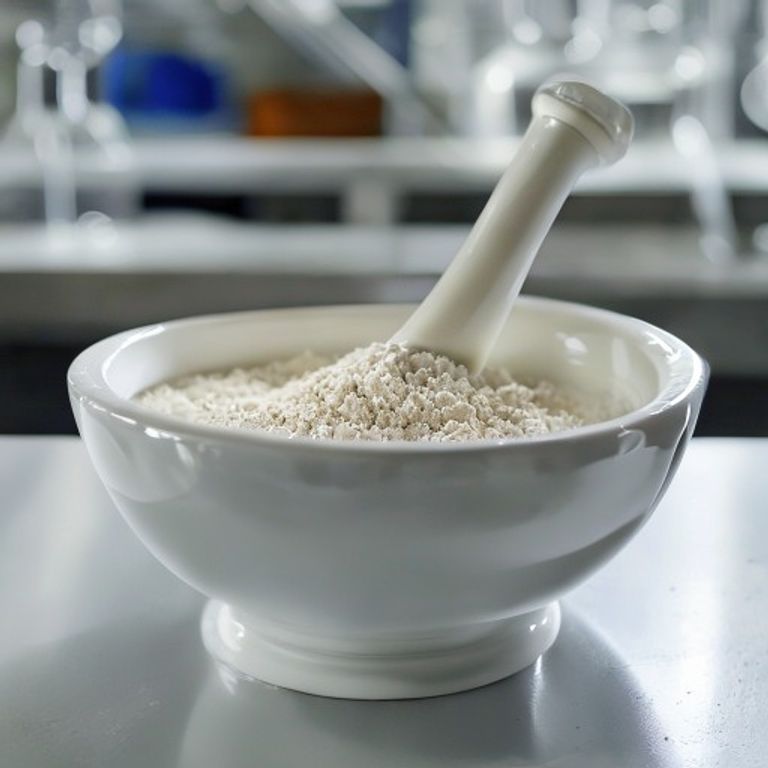
At its core, a mortar is a bowl-shaped vessel, and a pestle is a heavy, blunt instrument, typically club-shaped. Their primary purpose is straightforward: to crush, grind, and mix solid substances into a fine powder or paste. Think of it like a manual blender for solids. We’ve been using variations of these tools for thousands of years, from ancient apothecaries to modern pharmaceutical labs. Their design is deceptively simple, yet incredibly effective, relying on mechanical force to reduce particle size and blend materials thoroughly.
Why Grinding Matters: The Science Behind Particle Size Reduction
You might wonder, why bother with all that grinding? Isn’t crushing enough? The truth is, particle size reduction, a process often called trituration or pulverization, is absolutely critical in many chemical applications. Imagine trying to dissolve a large rock in water compared to fine sand. The sand will dissolve much faster, right? That’s because smaller particles have a larger total surface area exposed to the solvent. In chemistry, this increased surface area leads to:
- Faster Reaction Rates: More surface area means more sites for chemical reactions to occur, speeding up processes.
- Improved Dissolution: Essential for creating uniform solutions, especially in pharmaceutical preparations where precise dosage is key.
- Enhanced Extraction: When extracting compounds from natural products (like grinding plant material), smaller particles allow solvents to penetrate more effectively.
- Better Homogeneity: Ensuring that mixtures are uniformly blended, crucial for consistent results in experiments and product quality.
Without proper particle size reduction, our experiments might yield inaccurate results, reactions could take forever, or medications might not dissolve correctly in the body.
Beyond Just Crushing: Chemical Applications of Mortar and Pestle
The applications of a mortar and pestle in chemical labs are diverse and crucial. We use them for a variety of tasks that go beyond mere crushing:
- Sample Preparation: This is perhaps their most common use. Before analysis, solid samples often need to be ground into a fine, homogeneous powder to ensure consistent results from instruments like spectrophotometers or chromatographs. This ensures we’re analyzing a representative portion of the sample.
- Compounding: In pharmaceutical chemistry, particularly in compounding pharmacies, pharmacists use mortar and pestle to mix active pharmaceutical ingredients with excipients (inactive ingredients) to create custom medications, creams, or suspensions. The goal is a uniform distribution of the active compound.
- Homogenization of Mixtures: Sometimes, we need to thoroughly blend different solid chemicals together. The grinding action helps to physically mix these particles to form a uniform blend, preventing segregation.
- Solid-Phase Reactions: In some specific chemical reactions, grinding reactants together in a mortar and pestle can provide the energy and contact needed to initiate a reaction in the solid state, sometimes even without a solvent.
It’s fascinating how such a simple tool can be central to so many critical processes in the lab. If you’re looking to dive deeper into the nuances of using these tools effectively, I highly recommend exploring resources dedicated to Mastering Mortar and Pestle Chemistry for Lab Success.
Choosing Your Grinding Partner: Different Types of Mortars and Pestles
Just like other laboratory equipment, mortars and pestles come in various materials, each suited for different tasks:
- Porcelain/Ceramic: These are the most common types we find in general chemistry labs. They are excellent for grinding most chemicals due to their hard, non-porous, and chemically inert surface. However, they can sometimes cause contamination if the material being ground is harder than the porcelain itself.
- Agate: Considered the “gold standard” for precise work, agate mortars and pestles are extremely hard and non-porous. They are ideal for grinding very hard materials or when contamination from the grinding surface must be absolutely minimized. They are, however, more expensive.
- Glass: Glass mortars and pestles are less common for grinding but excellent for mixing and crushing soft materials or creating pastes, especially when discoloration or contamination from other materials is a concern. They are easier to clean but also more fragile.
- Metal (e.g., Stainless Steel): Used for specific applications, often in metallurgy or when dealing with highly abrasive materials that might damage other types.
Choosing the right material ensures effective grinding and prevents unwanted interactions between your sample and the tool itself.
Mastering the Technique: How to Use a Mortar and Pestle Effectively
Using a mortar and pestle isn’t just about mashing; it’s a technique. Here’s how we typically approach it for optimal results:
- Start with Small Portions: Don’t overload the mortar. Work with small amounts of material to ensure efficient grinding.
- Apply Pressure and Rotation: Hold the pestle firmly. Start by applying downward pressure to crush larger chunks, then use a circular, grinding motion against the sides of the mortar. Think of it like a gentle, controlled twist and grind, rather than just pounding straight down.
- Scrape Down the Sides: Periodically scrape down any material clinging to the sides of the mortar and pestle with a spatula to ensure everything is thoroughly ground and mixed.
- Work in Stages: If you need a very fine powder, don’t rush. Grind for a few minutes, check the consistency, and continue until you reach the desired particle size.
- Clean Thoroughly: Always clean your mortar and pestle immediately after use to prevent cross-contamination.
With a little practice, you’ll develop a feel for the right pressure and motion to get perfectly ground samples every time.
Conclusion
From the ancient alchemist’s workshop to the cutting-edge research lab of today, the mortar and pestle have stood the test of time. While deceptively simple, their role in mortar and pestle chemistry is undeniably profound. They are the unsung heroes that enable us to effectively prepare samples, create uniform mixtures, and unlock the full potential of chemical reactions by mastering the art of particle size reduction. So, the next time you see one, I hope you’ll appreciate the powerful science behind this timeless tool.
FAQ
Q1: What is the primary purpose of a mortar and pestle in chemical labs?
A: The primary purpose is to crush, grind, and mix solid chemical substances to reduce their particle size, increase surface area, and ensure homogeneity for various applications like sample preparation, dissolution, or reaction enhancement.
Q2: Why is particle size reduction so important in chemistry?
A: Reducing particle size increases the surface area of a substance. This larger surface area leads to faster reaction rates, improved dissolution, enhanced extraction efficiency, and better blending of mixtures, all crucial for accurate and effective chemical processes.
Q3: What are the different types of materials used for mortars and pestles in chemistry?
A: Common materials include porcelain/ceramic (general use), agate (for hard materials and minimal contamination), glass (for mixing and soft materials), and sometimes metal (for abrasive samples).
Q4: Can I use a mortar and pestle for all types of chemicals?
A: While versatile, it’s important to choose the right material for your mortar and pestle based on the chemical’s hardness and reactivity. Avoid using them with highly volatile or hazardous chemicals that might aerosolize easily, or with materials that could react with the mortar itself.
Q5: What is trituration?
A: Trituration is the process of grinding a solid substance into a fine powder or intimately mixing solid materials by grinding them together with a mortar and pestle. It specifically refers to this grinding action used for blending and size reduction.