

Unlocking Microscale Magic: A Deep Dive into Spot Plate Chemistry

Unlocking Microscale Magic: A Deep Dive into Spot Plate Chemistry
Have you ever watched a chef meticulously arranging tiny ingredients on a plate before a final flourish? In a way, that’s a bit like what we do in the fascinating world of spot plate chemistry! This humble piece of lab equipment might look simple, but it’s a powerful tool that allows us to perform multiple reactions in a compact, efficient, and surprisingly elegant manner.
If you’re new to the lab, or even if you’re a seasoned chemist looking for a refresher, understanding the spot plate is crucial. We’ll explore everything from what it is to how to use a spot plate in chemistry effectively, uncovering its many advantages along the way. Get ready to shrink your experiments down to size and see chemistry in a whole new light!
What Exactly is a Spot Plate?
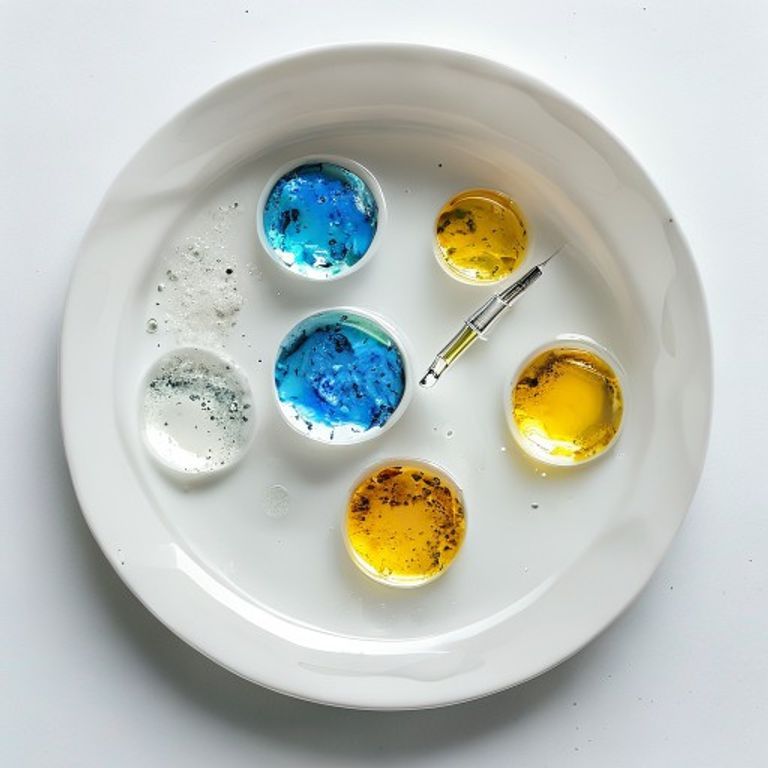
So, what are we talking about here? Imagine a small, rectangular or square piece of white ceramic or porcelain, typically with several shallow depressions or “wells” carved into its surface. That’s our spot plate! These wells are designed to hold tiny volumes of liquids – think drops, not milliliters. The white background makes it super easy to observe color changes, precipitates, or gas evolution, which are common indicators of chemical reactions.
Unlike a beaker or a test tube, which holds a single reaction, a spot plate acts like a miniature multi-reaction chamber. It’s truly a game-changer for comparative studies or when you need to test several reagents against one another without wasting precious chemicals.
Why We Love Spot Plates: The Advantages of Going Small
There are so many reasons why spot plates are a favorite in labs, especially for educational settings and quick qualitative analysis. Here are some of the key advantages of using spot plates in labs:
- Microscale Chemistry: This is perhaps its biggest superpower. Spot plates allow for reactions to be carried out on a very small scale. This means we use minimal amounts of expensive or hazardous chemical reagents, reducing waste and making experiments safer.
- Enhanced Safety: Less chemical means less exposure risk. If a spill happens, it’s usually just a drop or two, making cleanup much easier and less dangerous.
- Quick Observations: The small reaction volumes mean reactions often happen faster, and the white background provides excellent contrast for observing subtle changes. It’s like having a magnifying glass for your chemical interactions!
- Cost-Effective: Using less reagent directly translates to lower material costs, which is a huge benefit for schools and research facilities alike.
- Efficiency: You can perform many tests simultaneously, making it ideal for screening reactions or performing qualitative analysis.
How to Use a Spot Plate Like a Pro
Using a spot plate is straightforward, but a little technique goes a long way to ensure accurate and reproducible results. Here’s a simple guide on how to use a spot plate in chemistry:
- Preparation is Key: Always start with a clean spot plate. Residues from previous reactions can interfere with your results. We usually rinse them with distilled water and dry them thoroughly.
- Adding Reagents: Using a dropper or pipette, carefully add a single drop (or a specified small volume) of your first reagent to a well. Be precise! For accurate measurements of slightly larger volumes before transferring to the spot plate, understanding tools like Demystifying the Graduated Cylinder: Essential Tips for Accurate Volume Measurement can be very helpful.
- Mixing: Add your second reagent (again, usually a single drop) to the same well. You can gently swirl the plate or use a clean stirring rod/toothpick to mix the drops.
- Observe and Record: Pay close attention to any changes:
- Color changes (e.g., colorless to pink)
- Precipitation (formation of a solid)
- Gas evolution (bubbles forming)
- Temperature changes (though less common and harder to detect on this scale)
Record your observations systematically.
- Clean Up: Immediately after use, rinse the spot plate with water (and perhaps a brush if needed) and dry it.
Unlocking Discoveries: Common Spot Plate Experiments
Spot plates are incredibly versatile for various experiments, making them perfect for spot plate experiments for high school and introductory college courses. Here are a few examples:
- Qualitative Analysis: This is where the spot plate truly shines. We can identify unknown ions by testing them with different reagents. For instance, testing for the presence of halide ions (Cl-, Br-, I-) using silver nitrate, or identifying various metal ions through precipitation reactions. This is a classic example of ceramic spot plate qualitative analysis.
- Acid-Base Reactions: You can easily observe pH changes using universal indicators or litmus paper placed directly into the well. See how different acids and bases neutralize each other with just a drop!
- Redox Reactions: Observe electron transfers and color changes in small redox systems.
- Complexation Reactions: Watch as metal ions form colorful complexes with ligands.
- Microscale Chemistry Spot Plate Reactions: Beyond simple identification, spot plates are increasingly used to optimize reaction conditions or screen catalysts in a very efficient manner, exploring various combinations quickly.
While spot plates are excellent for many small-scale reactions, for larger volumes or reactions requiring heating, other lab equipment like Unlocking the Lab’s Little Workhorse: A Deep Dive into Test Tube Functions might be more suitable. Each tool has its perfect niche!
Tips for Success and Safety
- Keep it Clean: Always use clean pipettes/droppers for each reagent to avoid cross-contamination.
- Label Everything: Even for small experiments, it’s easy to get confused. Label your reagents clearly.
- Work in a Ventilated Area: Although microscale, some reactions can still produce fumes.
- Proper Waste Disposal: Collect chemical waste in an appropriate container, don’t just rinse it down the drain.
Spot Plate vs. Other Well Plates
You might have heard of other “well plates” like a microtitre plate or a standard well plate. While similar in concept (multiple wells for reactions), spot plates are usually ceramic, have fewer and larger wells, and are primarily for visual qualitative tests. Microtitre plates are often plastic, have many more (96, 384, etc.) smaller wells, and are designed for quantitative analysis, often read by instruments like spectrophotometers.
FAQ: Your Spot Plate Chemistry Questions Answered
Q: Can I heat a spot plate?
A: Ceramic spot plates can withstand some heat, but generally, they’re used for reactions at room temperature. Intense or direct heating might crack them. For reactions requiring significant heating, consider a test tube or beaker.
Q: How do I clean a spot plate with stubborn stains?
A: For most inorganic stains, a good scrub with a brush and detergent, followed by a rinse with distilled water, usually works. For organic residues, a bit of ethanol or acetone might be needed, followed by thorough rinsing.
Q: Are spot plates reusable?
A: Absolutely! They are designed for repeated use, provided they are cleaned properly after each experiment.
Q: What kind of reactions are NOT suitable for spot plates?
A: Reactions that produce large amounts of gas, are highly exothermic (produce a lot of heat), or require precise quantitative measurements are generally not ideal for spot plates. Also, reactions involving volatile or strong fuming chemicals are better done in a fume hood with more contained apparatus.
Conclusion
From simplifying complex reactions to making chemistry more accessible and sustainable, the spot plate truly is a tiny titan in the lab. Its ability to facilitate microscale chemistry spot plate reactions and detailed qualitative analysis makes it an indispensable tool for students and researchers alike. So, next time you’re in the lab, don’t underestimate this humble piece of ceramic. Embrace the magic of miniaturization and explore the colorful world of spot plate chemistry!