

The Unsung Hero of the Lab: Uncovering the Power of Your Laboratory Spatula

The Unsung Hero of the Lab: Uncovering the Power of Your Laboratory Spatula
In the bustling world of scientific research, where complex machines hum and intricate experiments unfold, there’s often one unassuming tool that quietly plays a pivotal role. It’s not flashy, it doesn’t have blinking lights, but without it, many laboratory tasks would be incredibly challenging, if not impossible. We’re talking about the humble laboratory spatula.
Perhaps you’ve seen it lying around – a thin, often metallic, spoon-like or blade-like instrument. But trust me, its simplicity belies its immense utility. As someone who’s spent countless hours in the lab, I can tell you that understanding your spatula isn’t just about knowing how to scoop; it’s about mastering precise sample transfer, ensuring chemical compatibility, and maintaining sterile conditions. Let’s dive deep into why this little tool is a giant in its own right.
What Exactly is a Laboratory Spatula? (And Why It Matters!)
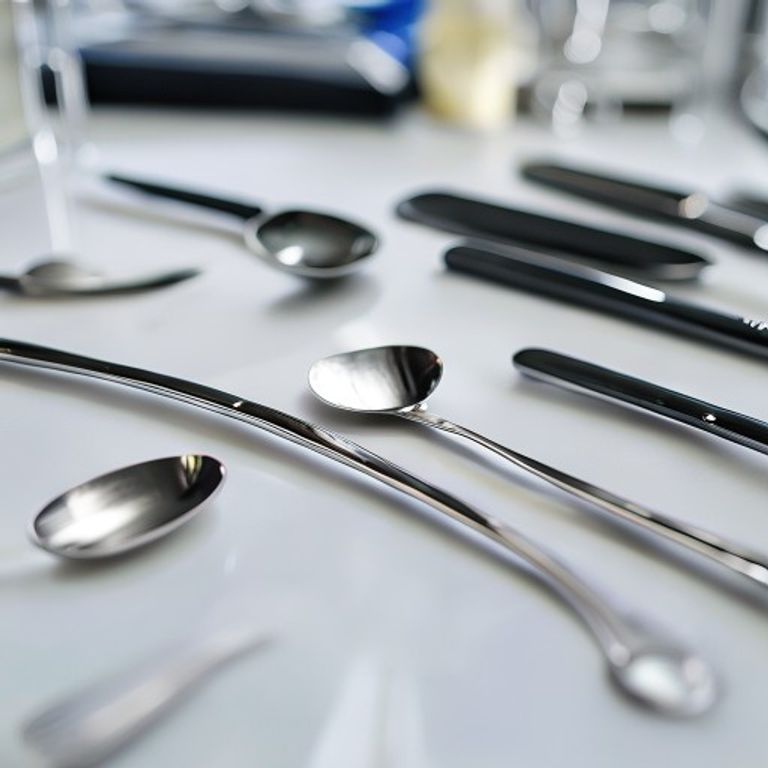
At its core, a laboratory spatula is a small utensil designed for scraping, transferring, and handling small quantities of solid or viscous materials. Think of it like a chef’s spatula, but instead of flipping pancakes, we’re carefully moving milligrams of a precious compound or delicately spreading a biological sample. It’s an indispensable lab equipment for almost any setting, from high school chemistry classes to advanced chemistry tools in industrial research.
Why does it matter so much? Precision and contamination control. When you’re working with expensive reagents, potent chemicals, or sensitive biological materials, you can’t just use your fingers (please, never do that!). A well-chosen spatula allows for accurate handling, minimizing waste and preventing cross-contamination, which is crucial for reliable results.
Types of Spatulas for Every Scientific Endeavor
Just like there’s a specific tool for every job in a carpenter’s kit, there are various types of spatulas used in science labs, each tailored for different applications. Understanding these variations is key to efficient lab work:
- Flat Spatulas: These are the most common, often with a flat blade on one or both ends. Perfect for general scraping and transferring of powders.
- Scoopulas: As the name suggests, a scoopula typically has one end shaped like a small scoop. This design is fantastic for scooping granular materials or powders directly from a container into a weighing boat or a beaker. If you want to learn more about how beakers are used in the lab, be sure to check out our ultimate guide to beaker uses.
- Micro Spatulas: These are incredibly tiny, often with a pointed or very narrow blade. They are essential for tasks requiring extreme precision, such as handling minute quantities of reagents, working with delicate samples under a microscope, or in specific uses of micro spatulas in biological experiments where sample size is critical.
- Bent/Offset Spatulas: With an angled blade, these are great for reaching into bottles with narrow necks or scraping material from the bottom of vessels without your hand obstructing your view.
Choosing Your Lab Spatula: More Than Just a Scoop
Selecting the right spatula is not just about its shape; the material it’s made from plays a critical role, especially when it comes to how to choose a lab spatula for chemical handling. This is where material science comes into play.
- Stainless Steel: This is perhaps the most common material due to its durability, resistance to corrosion, and ease of cleaning. It’s excellent for most general laboratory applications.
- Plastic (Polypropylene, Polystyrene): Often disposable, plastic spatulas are ideal for situations where cross-contamination is a major concern, or when working with highly corrosive chemicals that might react with metal. They are typically cheaper but less durable.
- PTFE (Teflon): When dealing with extremely corrosive substances or situations requiring maximum chemical inertness and heat resistance, PTFE spatulas are the go-to. They are non-stick, making them perfect for sticky or viscous materials, and are among the best spatula materials for scientific research involving harsh conditions.
When making your choice, consider the chemical compatibility (will the material react with your sample?), temperature requirements, and the level of precision needed for your task.
Beyond Scooping: Versatile Uses of Your Lab Spatula
While scooping and transferring are its primary duties, a laboratory spatula is surprisingly versatile:
- Mixing and Stirring: The flat blade or spoon end can be used to gently mix small quantities of solids or viscous liquids.
- Scraping: Efficiently remove residual material from glassware or reaction vessels.
- Spreading: In microbiology, a sterile spatula can be used to evenly spread bacterial cultures on agar plates.
- Breaking Aggregates: A sturdy spatula can help break up clumps of powdered chemicals.
Keeping It Clean: Proper Care and Sterilization
A spatula is only as good as its cleanliness. Proper cleaning and sterilization of lab spatulas are paramount to prevent contamination and ensure accurate results. For reusable spatulas:
- Washing: Immediately after use, wash with appropriate detergent and rinse thoroughly with distilled water.
- Sterilization: Depending on the application, spatulas may need to be sterilized.
- Autoclaving: For heat-resistant materials like stainless steel, this uses high-pressure steam.
- Chemical Sterilization: Soaking in disinfectants like ethanol or bleach can be used for heat-sensitive plastics.
- Flame Sterilization: Metal spatulas can be flame-sterilized by heating them to redness in a Bunsen burner flame, then cooling.
Always follow your lab’s specific protocols for cleaning and sterilization to maintain a safe and accurate working environment.
Conclusion
So, the next time you pick up a laboratory spatula, I hope you’ll see it with new eyes. It’s not just a simple piece of metal or plastic; it’s a critical instrument that enables precision, ensures safety, and upholds the integrity of your scientific work. This unsung hero truly makes our lab lives easier and our experiments more reliable. Let’s appreciate this indispensable tool!
FAQ
Q: Can I use a regular kitchen spatula in the lab?
A: No, absolutely not. Kitchen spatulas are not designed for laboratory conditions, may not be made of chemically inert materials, and are unlikely to meet the sterility requirements of a lab. Always use purpose-built laboratory spatulas.
Q: How do I know which material of spatula to use?
A: Consider the chemicals you’re handling (reactivity, corrosiveness), the temperature, and whether you need a non-stick surface. Stainless steel is good for general use, plastic for corrosive or disposable needs, and PTFE for extreme chemical inertness or high temperatures.
Q: Why are micro spatulas so important?
A: Micro spatulas allow for extremely precise handling of very small quantities of material, which is crucial in analytical chemistry, biological experiments with limited samples, or when preparing microscopy slides where fine manipulation is required.