

The Essential Guide to Stirring Rod Function: How to Mix, Homogenize, and Boost Lab Efficiency

Introduction
When I step into the lab, the first thing I reach for is often a simple glass stirring rod. It may look like just a thin piece of glass, but its role in mixing solutions, controlling reactions, and ensuring reproducibility is huge. In this article, I’ll walk you through the purpose of a stirring rod, how to use it properly, common applications, and the real benefits it brings to everyday chemistry work.
What Is the Purpose of a Stirring Rod in a Lab?
A stirring rod’s primary function is to provide mechanical agitation for liquids in containers such as beakers, flasks, or test tubes. By moving the liquid, the rod helps:
- Disperse solid particles evenly.
- Accelerate dissolution of powders.
- Promote uniform temperature distribution.
- Prevent localized concentration spikes that could skew reaction outcomes.
Think of it like a mini‑whisk for chemistry – simple, yet incredibly effective.
How to Use a Glass Stirring Rod Correctly
Even a basic tool needs a bit of technique. Here’s my step‑by‑step routine:
- Grip the rod near the middle with your thumb and forefinger; this gives you better control.
- Insert the tip gently into the liquid, avoiding a sudden splash.
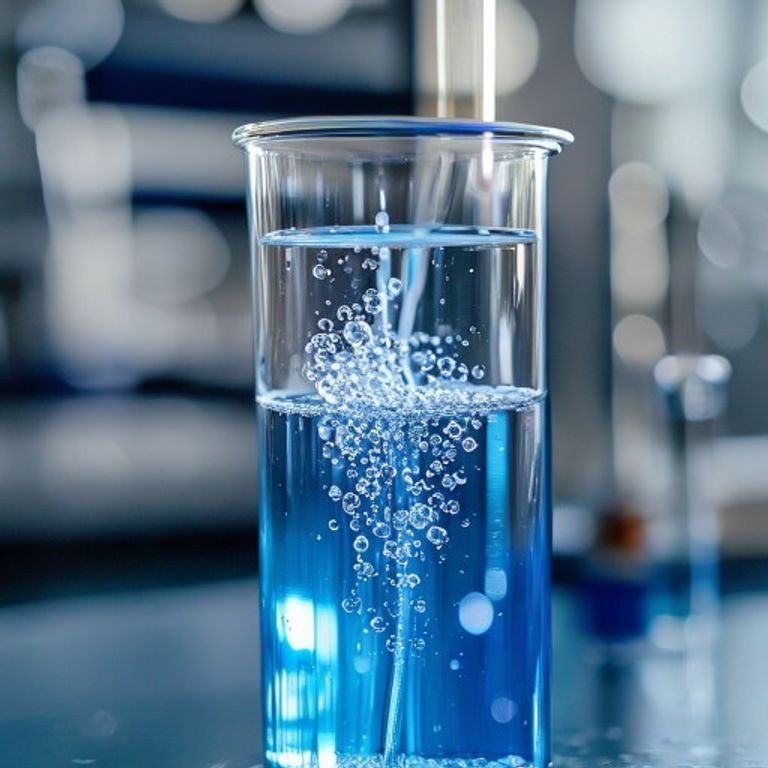
- Rotate the rod in a circular motion, moving it up and down to create a vortex.
- Watch the surface – a steady, smooth swirl means you’re mixing well.
- Clean immediately after use to avoid cross‑contamination.
If you’re working with viscous solutions, a slower, broader motion works best. For thin liquids, a quick flick can be enough.
Common Applications of Stirring Rods in Chemistry
Stirring rods show up in almost every type of experiment. Some typical scenarios include:
- Titrations – gently swirling the analyte while adding titrant prevents local over‑concentration.
- Pre‑cipitation reactions – a steady stir helps particles form uniformly, improving crystal quality.
- Solution preparation – dissolving salts, acids, or bases is faster with constant agitation.
- Temperature equilibration – stirring a heated beaker spreads heat evenly, avoiding hot spots.
Whenever you see a beaker on the bench, a stirring rod is likely nearby, ready to aid the process.
Benefits of Using a Stirring Rod for Mixing Solutions
Beyond the obvious mixing, there are several practical advantages:
- Improved reproducibility – consistent stirring leads to repeatable results across runs.
- Reduced risk of localized reactions – especially important for exothermic or sensitive chemistries.
- Ease of use – no power source, no calibration, just a clean rod.
- Cost‑effectiveness – glass rods are cheap, reusable, and chemically inert.
In fact, mastering the science behind the stirring rod can elevate the quality of even the simplest experiments.
Stirring Rod Function in Scientific Experiments
When I design an experiment, I always ask: “Do I need controlled agitation?” If the answer is yes, the stirring rod becomes a key variable. For kinetic studies, the speed of stirring can affect reaction rates, so I note the motion style in my lab notebook. In microbiology, a gentle stir can keep cultures aerated without damaging cells.
Even in educational settings, teaching students to use a rod correctly builds good lab habits early on. It teaches them to observe the solution’s behavior, adjust technique, and respect the importance of seemingly simple tools.
Linking the Stirring Rod to Other Lab Essentials
While a stirring rod does the heavy lifting for mixing, it often works hand‑in‑hand with other equipment. For example, proper beaker use ensures that the container’s shape supports efficient vortex formation. Pairing the right vessel with the right stirring motion maximizes homogenization while minimizing waste.
FAQ
Q: Can I use a metal stirring rod for acidic solutions?
A: It’s best to stick with glass or PTFE rods for strong acids. Metal can corrode and introduce contaminants.
Q: How long can I reuse a glass stirring rod?
A: As long as it remains free of cracks and scratches. After each use, rinse thoroughly and store in a clean rack.
Q: Is a magnetic stir bar a better alternative?
A: Magnetic stirrers are great for long‑duration or temperature‑controlled mixes, but a glass rod offers more tactile control and works in any container size.
Q: What safety precautions should I take?
A: Avoid applying excessive force that could break the rod, and never stir volatile solvents near an open flame.
Conclusion
Even though a stirring rod looks modest, its function is central to accurate, efficient, and safe laboratory work. By understanding its purpose, mastering proper technique, and integrating it with other equipment like beakers, we can dramatically improve the quality of our experiments. So next time you grab that glass rod, remember it’s not just a stick – it’s a workhorse that keeps your chemistry humming.