

Dévoiler le mystère : votre guide pour la définition de la jauge de fil et ses superpuissances de laboratoire

Ever found yourself in a chemistry lab, staring at a piece of equipment that looks like a fancy mesh screen, wondering, “What exactly is that for?” Well, my friend, you’ve likely encountered the humble yet indispensable wire gauze! Today, we’re going to dive deep into the Définition de la gaze filaire, explore its many uses, and understand why this unsung hero is crucial for safe and effective experiments. It’s more than just a metal net; it’s a foundational piece of laboratory equipment that makes many experiments possible.
What Exactly is Wire Gauze? A Clear Definition
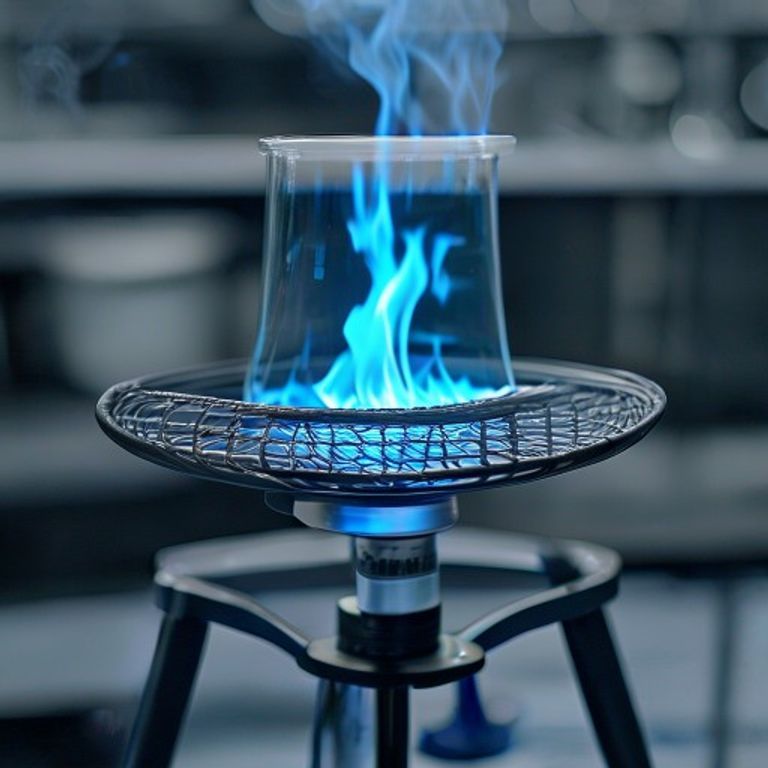
At its core, a wire gauze is a thin sheet of metal mesh, typically made from heat-resistant materials like galvanized iron or stainless steel. Imagine a very fine, sturdy fence-like material, but flat and designed to withstand high temperatures. Its main purpose in the laboratory is to support glassware, such as beakers or flasks, when they are being heated by a Bunsen burner or other heat sources. Think of it as a stable, heat-distributing platform.
Many wire gauzes feature a ceramic fiber center, often white or gray, which is a fantastic addition for even heat distribution. This ceramic mat acts like a diffuser, spreading the flame’s heat more uniformly across the bottom of your glassware, preventing hot spots that could potentially crack the glass or cause uneven heating of the contents. Without it, direct flame contact can be too intense, leading to localized superheating.
The Mighty Role: What is Wire Gauze Used For in Chemistry Labs?
So, why is this simple piece of equipment so vital? Its utility stems from two primary functions:
Support System: The most obvious use is to provide a stable platform. When placed on a trépied de laboratoire stand, the wire gauze creates a flat surface for holding various types of glassware above a flame. Imagine trying to balance a round-bottom flask directly on a small burner – it would be a disaster! The wire gauze solves this beautifully.
Heat Diffusion: This is where the ceramic center really shines. When you place a beaker on wire gauze with a ceramic center and heat it with a Bunsen burner, the ceramic mat ensures that the heat from the flame is distributed evenly across the bottom of the beaker. This is super important to prevent thermal shock to the glass, which can cause it to crack or shatter. It also ensures that your solution heats up uniformly, which is often critical for accurate experimental results.
In essence, the function of wire gauze on a tripod stand is to be the reliable intermediary between your heat source and your delicate glassware. It’s the unsung hero that prevents mishaps and ensures consistent heating.
Working with Wire Gauze: A Practical Guide
Using wire gauze is straightforward, but a few tips can make your experiments safer and more efficient:
Setup is Key: First, position your trépied de laboratoire firmly on a heat-resistant surface. Then, place the wire gauze on top of the tripod stand, making sure it’s centered and stable. Now, you can safely place your beaker or flask on the wire gauze.
Bunsen Burner Placement: When using a Bunsen burner, position it directly underneath the center of the wire gauze. Adjust the flame to the desired intensity. The wire gauze, especially with a ceramic center, will then distribute this heat effectively.
Sécurité d'abord: Always handle hot wire gauze with appropriate heat-resistant gloves or tongs. Remember, it will retain heat for a while even after the flame is removed. Never touch it with bare hands immediately after heating!
The Purpose of Wire Gauze with Ceramic Center: Why It’s Better
You might wonder why some wire gauzes have that white or gray ceramic disc in the middle. The purpose of wire gauze with a ceramic center is primarily for superior heat distribution. Without it, the direct flame of a Bunsen burner creates a very intense hot spot right where the flame touches the metal mesh. This can cause the glass of your beaker or flask to heat unevenly, leading to stress fractures or even breakage. The ceramic mat acts as a buffer and a heat spreader, ensuring a gentler, more uniform heat transfer to your glassware and its contents. It’s like using a diffusion filter on a camera lens to soften harsh light – it softens the harshness of direct flame.
Different Types of Wire Gauze in a Laboratory
While the basic design is consistent, you might encounter slightly different types of wire gauze in a laboratory:
Matérielle Most commonly, they are made from galvanized iron or stainless steel. Stainless steel is more resistant to corrosion and often preferred in environments where chemical spills are common.
Ceramic Center vs. Plain: As we discussed, some have a ceramic mat, while others are plain wire mesh. The ceramic-centered ones are generally preferred for most heating applications due to better heat distribution.
Mesh Size: The weave of the mesh can vary slightly, but it’s typically fine enough to support small flasks and resist warping under heat.
Conclusion
From defining its basic structure to understanding its critical role in heat distribution and support, the wire gauze is undoubtedly a cornerstone of any chemistry laboratory. It allows us to safely and effectively heat chemicals, perform reactions, and conduct countless experiments without worrying about cracked glassware or uneven heating. So, the next time you spot that simple mesh screen on a tripod, remember its significant contribution to the world of science – it’s truly one of the most reliable heat resistant mesh tools we have!
FAQ About Wire Gauze
Q: Can I use wire gauze without a ceramic center?
A: Yes, you can. However, be aware that heating will be less uniform, and there’s a higher risk of creating hot spots on your glassware, which could lead to cracking. For most applications, especially with glass beakers and flasks, the ceramic-centered wire gauze is recommended for better safety and results.
Q: How do I clean wire gauze?
A: For general lab grime, a simple scrub with soap and water is usually sufficient. If there are stubborn residues, you might need to use a lab brush or a mild abrasive. Always ensure it’s thoroughly dry before storing to prevent rust, especially if it’s galvanized iron.
Q: What is the alternative to wire gauze for heating?
A: For very precise heating, especially with specific solutions, alternatives like hot plates with magnetic stirrers are common. Heating mantles are used for round-bottom flasks to provide even heating across their curved surface. However, for general heating over an open flame, wire gauze remains the standard for its simplicity and effectiveness.
Q: La gaze de fil est-elle réutilisable?
A: Absolutely! Wire gauze is designed for repeated use. With proper care and cleaning, it can last for many experiments. Replace it if it becomes excessively rusty, warped, or if the ceramic center breaks down significantly.
Q: Can wire gauze withstand very high temperatures?
A: Yes, it’s specifically designed to be heat resistant. Made from materials like galvanized iron or stainless steel, it can safely withstand the temperatures produced by a standard Bunsen burner flame. The ceramic center also enhances its ability to handle and distribute intense heat.