Comprendre les lois de la physique : des exemples quotidiens et comment ils façonnent notre monde

Présentation
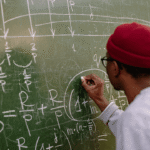
Quand on parle de lois de la physique, beaucoup de gens imaginent des équations complexes griffonnées sur un tableau noir. Mais la vérité est beaucoup plus accessible. Ces lois sont les règles cachées qui régissent tout d'une balle roulante à la lueur d'un écran de smartphone. Dans cet article, je vais vous guider à travers quelques exemples classiques et modernes, montrer comment ils apparaissent dans la vie quotidienne, et vous donner des moyens pratiques de les remarquer autour de vous.
Quelles sont les lois de la physique?
En termes simples, une loi de physique est une déclaration qui décrit une relation cohérente observée dans la nature. Ce n'est pas une suggestion—c'est une règle qui fonctionne à chaque fois, peu importe où vous êtes. Pensez-y comme les lois du trafic pour l'univers : elles maintiennent tout en mouvement de façon ordonnée.
Caractéristiques clés
- Universalité : La même règle s'applique sur Terre, sur la Lune et même dans les galaxies lointaines.
- Prévisibilité: Connaître la loi nous permet de prévoir ce qui se passera ensuite.
- Simplicité : Souvent, une seule équation capture toute une gamme de phénomènes.
Exemples classiques : les lois de motion de Newton
Sir Isaac Newton nous a donné trois déclarations simples qui expliquent la plupart de la motion que nous voyons quotidiennement :
- Première loi (Inertie): Un objet au repos reste au repos, et un objet en mouvement reste en mouvement, sauf si une force nette agit. Photo une tasse de café sur un siège auto—Lorsque la voiture s'arrête soudainement, la tasse continue d'avancer.
- Deuxième loi (F=ma): Force égale masse fois accélération. Cela explique pourquoi il est plus difficile de pousser un panier d'achat chargé qu'un panier vide.
- Troisième loi (Action-Réaction) : Pour chaque action, il y a une réaction égale et opposée. Lorsque vous sautez, vos jambes poussent sur le sol, et le sol vous pousse vers le haut.
La thermodynamique dans la vie quotidienne
La thermodynamique est l'étude de la chaleur, du travail et de l'énergie. Ses lois sont partout :
- Première loi (conservation de l'énergie): L'énergie ne peut être créée ou détruite, seulement transformée. C'est pourquoi une tasse de café chaud refroidit—l'énergie thermique se répand dans l'air environnant.
- Deuxième loi (entropie): Les systèmes tendent vers le désordre. Votre réfrigérateur agit contre cela en retirant la chaleur de son intérieur, nécessitant de l'électricité pour maintenir l'intérieur en ordre.
Vous vous êtes déjà demandé pourquoi la verrerie de laboratoire se sent chaude après une réaction? Les but essentiel d'un tube d'essai comprend des réactions exothermiques en toute sécurité, nous permettant d'observer le transfert d'énergie sans brûler nos doigts.
La mécanique quantique : de petites règles avec un grand impact
A l'échelle atomique, lois de la mécanique quantique de la physique prendre le relais. Ils semblent bizarres.—particules peuvent être des vagues, et ils existent dans plusieurs états à la fois. Pourtant ces règles alimentent la technologie moderne:
- Semi-conducteurs: Le comportement des électrons dans les puces de silicium suit les principes quantiques, permettant les ordinateurs, les smartphones et les lumières LED.
- Imagerie médicale : Les machines IRM dépendent des propriétés de spin quantique des noyaux atomiques.
Si jamais vous avez utilisation polyvalente des tubes d'essai, vous travaillez indirectement avec des conteneurs qui gardent les réactions quantiques sous contrôle pour des diagnostics précis.
La relativité et la perspective cosmique
La théorie de la relativité de Einstein a remodelé notre vision de l'espace et du temps. Alors que vous ne ressentez pas la dilatation du temps sur un trajet quotidien, la relativité est essentielle pour:
- Navigation GPS : Les satellites orbitent la Terre à haute vitesse; leurs horloges cochent légèrement plus lentement. Corrections relativistes garder votre téléphone directions précises.
- Équivalence énergie-mass (E=mc2): Ce principe sous-tend l'énergie nucléaire et même le processus de fusion du soleil.
Conseils pratiques pour voir la physique autour de vous
La recherche des lois de la physique n'exige pas un manteau de laboratoire. Essayez ces activités simples :
- Rocket de ballon : Tapez une paille sur un ballon, filez une corde à travers la paille, et laissez aller. Regardez Newton en action.
- Course de fonte des glaces : Placer deux glaçons—un sur une plaque métallique, un sur du bois. Observez comment la conductivité thermique (un concept de thermodynamique) accélère la fusion.
- Vérification de la batterie du téléphone intelligent : Surveillez comment la vitesse de charge change avec la température; vous voyez la conversion d'énergie et l'entropie au travail.
Si vous créez une petite expérience, considérez trépied parfait pour les laboratoires de chimie pour maintenir votre appareil stable—La stabilité est importante lorsque vous mesurez des forces ou de la lumière.
Conclusion
Les lois de la physique ne sont pas des mythes abstraits enfermés dans les manuels; ce sont les règles quotidiennes qui rendent la vie possible. De la poussée d'un panier à la lueur d'une LED, ces principes sont constamment au travail. En faisant un peu attention, nous pouvons apprécier l'élégance de l'univers et même utiliser ces lois pour résoudre des problèmes pratiques.
FAQ
Quels sont quelques exemples faciles de lois de physique pour les élèves du secondaire?
Les lois de Newton, la conservation de l'énergie et les concepts thermodynamiques simples comme le transfert de chaleur sont des exemples parfaits de démarrage. Les démonstrations avec ballons, rampes ou glaçons rendent ces idées tangibles.
Comment la mécanique quantique affecte-t-elle la technologie quotidienne?
La mécanique quantique sous-tend les semi-conducteurs, qui sont le cœur des ordinateurs, des smartphones et de l'éclairage LED. Sans elle, l'électronique moderne n'existerait pas.
Puis-je observer la théorie de la relativité sans télescope ?
Oui—Les appareils GPS reposent sur des corrections relativistes. Si la navigation de votre téléphone est précise, la relativité est au travail dans les coulisses.
Pourquoi l'entropie augmente-t-elle toujours?
L'entropie mesure le trouble. Les processus naturels tendent vers des états plus probables (c.-à-d. plus désordonnés), c'est pourquoi une tasse chaude de café se refroidit à moins que nous ajoutions de l'énergie.
Comment puis-je utiliser les lois de la physique pour améliorer mes routines quotidiennes?
Comprendre l'inertie peut vous aider à concevoir des sièges auto plus sûrs, tandis que la connaissance du transfert de chaleur peut rendre la cuisson plus efficace. Même organiser des meubles pour réduire le frottement peut économiser de l'effort.