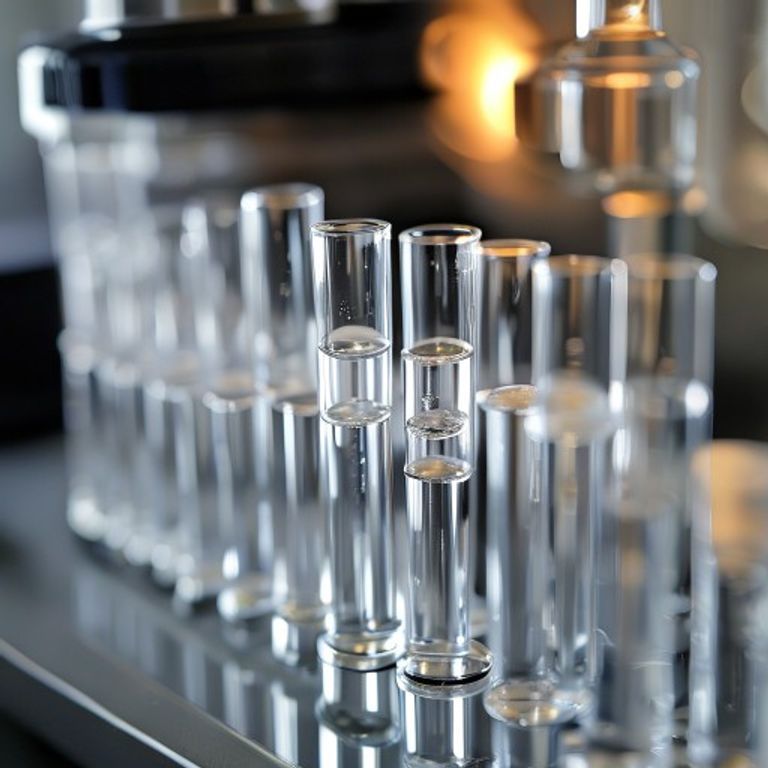
Le but essentiel d'un tube d'essai : des réactions chimiques à la collecte d'échantillons

Présentation
Lorsque nous entrons dans un laboratoire, la première chose qui attire notre attention est souvent un rack rempli de cylindres en verre mince – le tube d'essai humble. Malgré sa forme simple, un tube d'essai joue un rôle étonnamment diversifié dans les travaux scientifiques. Dans cet article, je vais vous guider à travers les principaux objectifs d'un tube d'essai, comment il s'intègre dans des expériences de chimie et de biologie, et pourquoi il reste un conteneur pour la collecte d'échantillons et l'analyse.
Pourquoi tester les tubes matière en chimie
En chimie, les tubes d'essai sont le cheval de bataille des réactions à petite échelle. Leur design étroit et cylindrique offre plusieurs avantages pratiques :
- Chauffage contrôlé: Les parois minces permettent une répartition uniforme de la chaleur, ce qui facilite les réactions chaudes sur un brûleur Bunsen ou une plaque chaude.
- Observation facile: Le verre transparent vous permet de surveiller les changements de couleur, la formation précipitée ou l'évolution du gaz sans ouvrir le tube.
- Mélange polyvalent: Vous pouvez tourner, rouler ou taper doucement le tube pour mélanger des réactifs, réduisant le risque d'éclaboussures par rapport à un bécher ouvert.
Si vous êtes à la recherche d'une perspective plus large sur la façon dont les tubes d'essai se comparent à d'autres verreries, consultez ceci guide des flacons Erlenmeyer. Il souligne pourquoi un tube d'essai est souvent préféré pour des expériences rapides et à faible volume.
Objectif du tube d'essai en biologie
Les laboratoires de biologie aiment les tubes de test pour des tâches qui vont de la culture de microorganismes à l'entreposage d'échantillons de tissus. Voilà pourquoi :
- Environnement stérile: Le verre autoclavable offre un espace propre pour la culture de bactéries ou de champignons.
- Stockage compact: Des centaines de tubes peuvent s'insérer dans un seul rack, ce qui facilite l'étiquetage et l'organisation de plusieurs échantillons.
- Prélèvement simple: L'ouverture étroite permet l'ajout précis de réactifs à l'aide de pipettes ou de gouttelettes.
Pour une plongée plus profonde dans les nombreux tubes d'essai supportent à la fois la biologie et le diagnostic médical, lire l'article sur utilisation polyvalente des tubes d'essai. Il présente des exemples du monde réel, des laboratoires cliniques aux milieux de classe.
Comment les tubes d'essai sont utilisés pour la collecte d'échantillons
Lorsque les scientifiques ont besoin de recueillir une petite quantité de liquide – qu'il s'agisse de sang, d'urine ou d'eau ambiante – un tube d'essai offre un récipient pratique et scellé. Les principales raisons sont les suivantes :
- Scellement sécurisé: Des bouchons à vis ou des bouchons en caoutchouc empêchent la contamination et l'évaporation.
- Précision du volume: Des marquages gradués sur certains tubes vous permettent de mesurer l'échantillon directement.
- Compatibilité avec les équipements d'analyse: De nombreux spectrophotomètres et centrifugeuses sont conçus pour contenir des tubes d'essai standard.
Raisons de l'utilisation des tubes d'essai en analyse de laboratoire
Au-delà des réactions et du stockage, les tubes d'essai servent de mini-chambres de réaction pour les techniques d'analyse:
- Essais colorimétriques: De petits volumes de réactifs réagissent pour produire un changement de couleur qui peut être lu avec un photomètre simple.
- Étapes de prétraitement: Les échantillons peuvent être chauffés, mélangés ou filtrés à l'intérieur du tube avant de se déplacer vers des instruments plus grands.
- Sécurité: Le système fermé réduit l'exposition aux vapeurs dangereuses.
Avantages des tubes d'essai pour les réactions chimiques
Lorsque vous comparez un tube d'essai à un bécher, plusieurs avantages deviennent clairs:
- Moins de déchets: Le petit volume signifie que vous utilisez moins de réactifs, ce qui est rentable et plus vert.
- Portabilité: Vous pouvez facilement transporter un tube scellé d'un banc à l'autre, même sur un terrain.
- Chauffage et refroidissement rapides: Le verre mince accélère les changements de température, utile pour les études cinétiques.
Conclusion
Du chauffage de quelques millilitres de solution à la conservation d'un échantillon clinique, le but du tube d'essai est aussi varié que les expériences qu'il soutient. Sa simplicité, sa durabilité et sa polyvalence le maintiennent au cœur des laboratoires du monde entier. Que vous soyez un étudiant qui commence ou un chercheur chevronné, comprendre les fonctions de base de ce cylindre de verre modeste vous aidera à choisir le bon outil pour chaque tâche.
FAQ
Q: Puis-je utiliser un tube d'essai pour les réactions à grande échelle?
R: Pas vraiment. Les tubes d'essai sont conçus pour de petits volumes (généralement jusqu'à 25 mL). Pour les réactions plus importantes, les flacons ou les béchers sont plus appropriés.
Q: Les tubes d'essai en plastique sont-ils aussi bons que le verre?
R: Les tubes en plastique sont pratiques pour une utilisation jetable et certains échantillons biologiques, mais ils peuvent résister à des températures élevées ou des acides forts comme le verre peut.
Q: Comment stériliser un tube d'essai?
A: L'autoclavement à 121 °C pendant 15 à 20 minutes est la méthode standard. Alternativement, vous pouvez tremper dans une solution de javel suivie d'un rinçage approfondi.
Q: Quelle taille de tube d'essai devrais-je choisir?
R: Cela dépend de votre expérience. Les tailles communes sont de 5 mL, 10 mL et 25 mL. Choisissez la plus petite taille qui tient confortablement votre mélange de réaction.
Q: Puis-je stocker des produits chimiques volatils dans un tube d'essai?
R : Oui, tant que le tube est muni d'un bouchon ou d'un bouchon serré pour prévenir l'évaporation et l'exposition.