

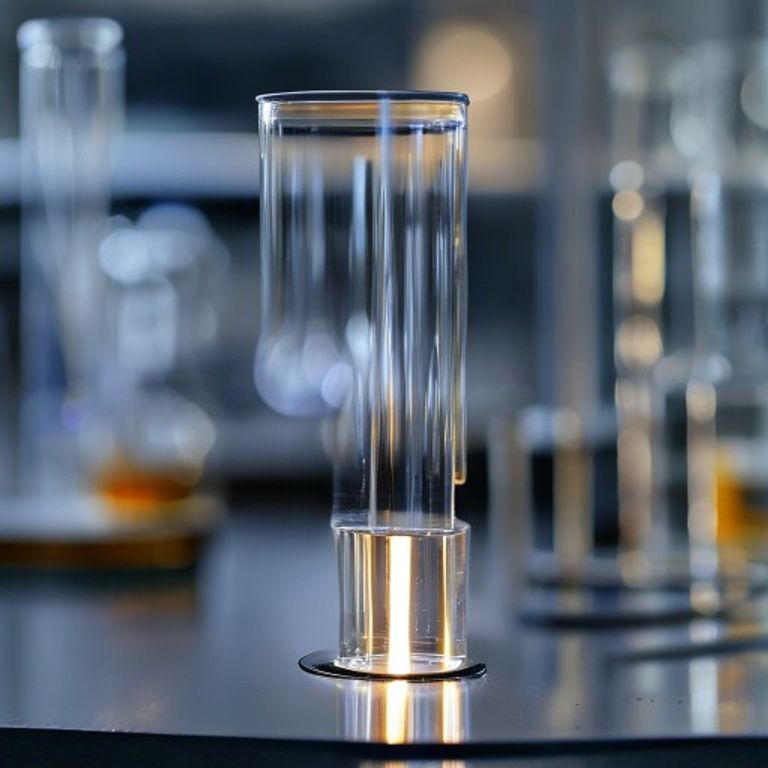
Les héros de la science: Dévoiler le monde des tubes d'essai

Have you ever wondered about the quiet workhorses in every chemistry lab? You know, those slender glass cylinders that seem to be involved in almost every experiment? Today, we’re going to pull back the curtain and shine a spotlight on test tubes. They might look simple, but these little pieces of laboratory glassware are absolutely essential for countless scientific discoveries and everyday analyses.
From a student’s first experiment mixing colorful liquids to advanced research isolating delicate samples, test tubes are indispensable. They’re like the universal containers of the scientific world, holding the secrets of chemical reactions and biological growth. So, let’s embark on a journey to understand what makes these unassuming tools so crucial, what they’re used for, and why they’re more fascinating than you might think!
What Exactly Are Test Tubes? The Basics
At its core, a test tube is a cylindrical glass or plastic tube with a U-shaped bottom and an open top. Simple, right? But this design isn’t accidental. The rounded bottom makes them easy to clean and prevents them from cracking under uneven heating, while the narrow opening helps minimize evaporation and contamination. Most standard test tubes don’t have a lip, but some variations might.
Think of them like a miniature, specialized glass mug designed specifically for the rigorous demands of a laboratory. They’re built to handle chemicals, heat, and sometimes even vacuum without breaking a sweat (or a crack!).
What Are Test Tubes Used For? More Than Just Mixing!
Quand on parle de chimie de base, test tubes are probably one of the first pieces of scientific equipment that comes to mind. Their versatility is truly impressive. Here are some of the primary applications for these handy tubes:
Mixing and Heating Chemical Reagents: This is probably their most common use. Their small volume is perfect for mixing small quantities of liquids or solids. Plus, their heat-resistant construction (especially those made from borosilicate glass) allows us to safely heat their contents over a Bunsen burner.
Observer les réactions chimiques : The clear material allows us to easily observe color changes, gas evolution, precipitation, and other visual cues of a reaction taking place.
Détention d'échantillons: Whether it’s a blood sample in a medical lab or a synthesized compound in a research facility, test tubes are excellent for holding and transporting small liquid or solid samples.
Culturation des microorganismes: In microbiology, sterile test tubes are frequently used to grow bacterial, fungal, or cell cultures in a liquid medium. They provide a controlled environment for these tiny organisms to thrive.
Expériences à petite échelle : For qualitative tests or preliminary investigations, test tubes are ideal because they require minimal amounts of expensive or hazardous chemical reagents.
Different Types of Test Tubes You Might Encounter
While the basic shape remains consistent, not all test tubes are created equal. We find a variety of types, each optimized for specific tasks:
Material Matters: Glass vs. Plastic
Tubes d'essai en verre Borosilicate: These are the standard in most chemistry labs. Borosilicate glass is known for its excellent thermal shock resistance, meaning it can withstand rapid temperature changes without breaking. It also resists chemical corrosion very well, making it suitable for a wide range of chemical reagents. This is why it’s a favorite for heated reactions.
Soda-Lime Glass Test Tubes: Less common in high-heat applications, these are cheaper and suitable for general purpose use where heating isn’t involved, or only gentle warming is needed. They are more susceptible to thermal shock.
Plastic Test Tubes (Polypropylene, Polystyrene): Often used in biological or clinical settings, especially for single-use applications to prevent cross-contamination. They are lighter, unbreakable, and often come with caps. However, most plastic test tubes aren’t suitable for high temperatures or strong solvents, and they might leach chemicals into samples.
Variations in Size and Shape
Standard test tube sizes can vary quite a bit, but commonly range from small 10x75mm tubes (10mm diameter, 75mm length) up to larger 25x150mm or even 38x200mm tubes. The choice depends on the volume of material you need to work with. Some specialized versions include:
Tubes de culture : Often made from glass or plastic, these are specifically designed for growing cultures and may have a screw cap for sterile containment.
Tubes à centrifugeurs: These are usually made of robust plastic and have conical bottoms, designed to fit into centrifuges for separating samples by spinning them at high speeds.
Tubes d'ébullition: Larger and thicker-walled than standard test tubes, these are specifically designed for boiling liquids vigorously, usually made of borosilicate glass.
The Science Behind the Glass: Properties of Laboratory Test Tubes
The reliability of laboratory test tubes, especially those made from borosilicate glass, isn’t magic; it’s pure science. These properties are crucial for safe and accurate experimentation:
Thermal Resistance: Borosilicate glass has a low coefficient of thermal expansion, meaning it expands and contracts very little with temperature changes. This prevents it from cracking when heated or cooled rapidly.
Inerte chimique: It reacts minimally with most chemical reagents, preventing contamination of your samples or reactions.
Transparence : Being clear allows for easy visual observation of contents and reactions without interference.
Durabilité: While not indestructible, good quality test tubes are robust enough to withstand the general wear and tear of a busy lab environment.
Practical Tips for Handling Test Tubes
Working with test tubes effectively means following some best practices:
Utilisez toujours un rack de tube d'essai : Never lay a test tube on its side, especially if it contains liquids or chemicals. A rack keeps them upright and organized, preventing spills and contamination.
Use a Test Tube Holder When Heating: If you’re heating a test tube, always use a proper test tube holder. This protects your hands from heat and ensures you maintain a steady grip. When heating, point the mouth of the tube away from yourself and others to avoid accidental splashes.
Ajouter des solides : When adding solid reagents to a test tube, avoid simply dropping them in as this can crack the bottom. Use a clean spatule de laboratoire to gently slide the solid down the side of the tube.
Nettoyage: Proper cleaning is crucial to prevent contamination. Wash them thoroughly with detergent and rinse with distilled water, then dry them completely, often inverted on a drying rack.
FAQ sur les tubes d'essai
Let’s tackle some common questions we often hear about test tubes:
Q: Can I put a test tube directly on a hot plate?
A: Generally, no. While borosilicate glass is heat-resistant, the direct, uneven heat from a hot plate can still cause stress. It’s better to use a water bath or an appropriate heating mantle, or heat with a Bunsen burner using a test tube holder, perhaps supported by a trépied de laboratoire and gauze mat.
Q: Quelle est la différence entre un tube d'essai et un bécher?
A: Test tubes are narrow and designed for small-scale reactions, mixing, and heating, often with a rounded bottom. Beakers are wider, have a flat bottom, and a spout, making them more suitable for holding larger volumes, pouring, and rough measurements.
Q: Are all test tubes sterile?
A: No. Unless they are specifically labeled as “sterile” or “autoclaved,” you should assume they are not sterile. For sterile applications (like cell culture), you’d use pre-sterilized tubes or sterilize them yourself using an autoclave.
Q: How do I safely dispose of chemicals in a test tube?
A: Never just pour chemicals down the drain! Always follow your lab’s specific waste disposal protocols. There are usually designated waste containers for different types of chemical waste. Consult your supervisor or instructor.
Conclusion
So, there you have it! The humble test tube, often overlooked, is a cornerstone of scientific exploration. We’ve explored pour quels tubes d'essai sont utilisés, delved into the différents types de tubes d'essai, and even touched upon the clever engineering behind how test tubes are made and their incredible properties of laboratory test tubes. They’re a testament to how simple yet brilliantly designed scientific equipment can empower us to understand the world, one small reaction at a time. The next time you see one, perhaps you’ll appreciate the silent contributions it makes to our collective knowledge!