

Le héros unsung : pourquoi le trépied est essentiel dans chaque laboratoire de chimie

Vous êtes déjà entré dans un laboratoire de chimie et vous êtes-vous interrogé sur tous ces équipements ? Certains sont flashy et complexe, mais souvent, les plus fondamentaux sont les plus simples. Aujourd'hui, nous allons faire briller un héros aussi méconnu : le trépied. Il pourrait sembler humble, mais croyez-moi, comprendre le rôle d'un matériel de laboratoire Comme cette merveille à trois pattes de confiance est absolument cruciale pour quiconque s'aventure dans le monde de la chimie. Pensez-y comme le fondement stable d'innombrables expériences. Sans elle, beaucoup des réactions et observations passionnantes que nous menons ne seraient tout simplement pas possibles, ou du moins, ne seraient pas sécuritaires!
Quel est le but d'un trépied en chimie?
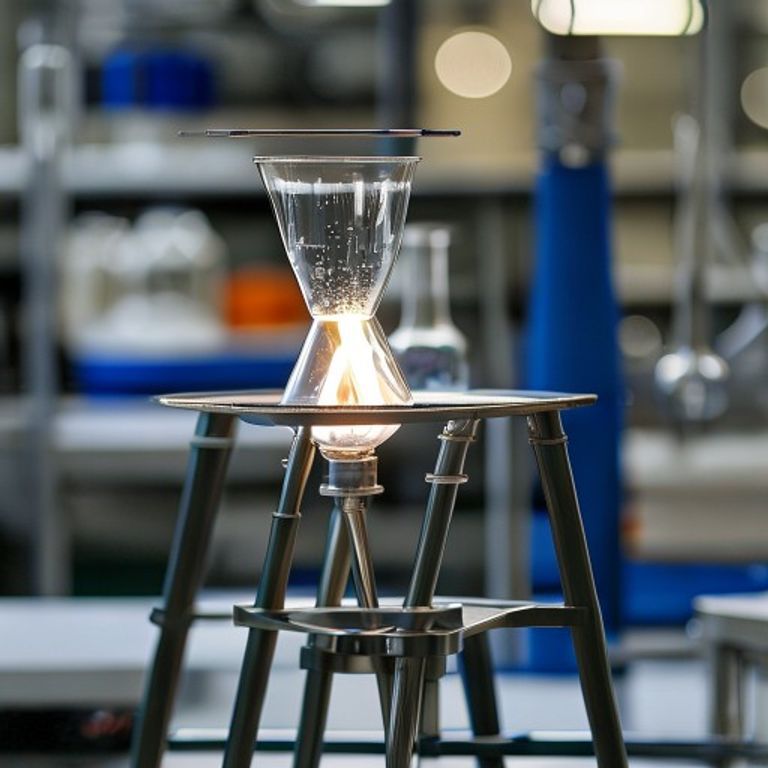
A son cœur, le but d'un trépied en chimie est élégamment simple: fournir une plate-forme stable et surélevée pour le chauffage ou le support de divers appareils chimiques. Imaginez essayer de chauffer un bécher de liquide directement sur un brûleur Bunsen à la main – non seulement il est dangereux, mais il est également incroyablement inefficace et peu pratique. C'est là que notre trépied robuste entre en jeu. Il agit comme une base robuste, assurant que votre verrerie, comme les béchers ou les flacons, reste parfaitement immobile et élevée à la bonne hauteur pour le chauffage ou d'autres processus.
Composants d'une installation de stand trépied en chimie
Une configuration typique du trépied est étonnamment simple, mais chaque composant joue un rôle vital :
- Le trépied se tient lui-même : Habituellement en métal robuste (comme l'acier ou le fer) avec trois pattes, formant une base triangulaire stable. Cette conception est intrinsèquement stable, empêchant les bulles pendant les expériences.
- Gauze de fil: Il s'agit d'un accessoire crucial, souvent placé sur le support du trépied. C'est une mince feuille de métal, généralement avec un centre de céramique. La gaze filaire remplit deux fonctions principales :
- Même distribution de chaleur: Lors du chauffage d'un bécher ou d'une fiole avec un brûleur Bunsen, la gaze de fil étend la flamme uniformément à travers le fond de la verrerie, empêchant la surchauffe localisée qui pourrait fissurer le verre.
- Appui : Il fournit une surface plate et uniforme pour que la verrerie repose en toute sécurité.
- Bunsen Burner : Positionné sous le trépied et la gaze filaire, cela fournit la source de chaleur pour vos expériences.
- Verrerie (p. ex. béchers, flasques coniques): Ce sont les vaisseaux qui tiennent vos produits chimiques et sont placés sur le dessus de la gaze de fil.
Comment utiliser un trépied dans un laboratoire de chimie
L'utilisation correcte d'un trépied est fondamentale pour la sécurité et les expériences réussies. Voici un guide rapide sur la façon dont nous l'avons généralement mis en place:
- Positionner le trépied: Placez-le sur une surface résistante à la chaleur, généralement votre banc de laboratoire, en vous assurant qu'il est stable et qu'il n'est pas facile de basculer.
- Placez la jauge filaire : Placez soigneusement la gaze de fil sur le haut du trépied, en s'assurant qu'elle est à plat et solidement sur les trois jambes.
- Mettre en place le brûleur Bunsen : Place the Bunsen burner directly underneath the center of the wire gauze. Adjust the height of your burner if necessary, so the flame will adequately heat the base of your glassware.
- Add Your Glassware: Gently place your beaker or flask, containing your sample, onto the center of the wire gauze. Make sure it’s stable and not wobbling.
- Ignite and Adjust Flame: Light your Bunsen burner and adjust the flame to the desired intensity. Remember, a blue flame is usually hotter and more efficient for heating.
Simple, right? This basic setup forms the backbone of countless chemical reactions requiring heat.
L'importance du stand trépied pour les expériences de chauffage
Why is this setup so important, especially for heating experiments? Well, think about it like this: if you’re trying to cook something on a stovetop, you need a stable hob for your pot. The tripod stand and wire gauze serve the same purpose in the lab. They provide a safe, consistent, and controlled environment for applying heat. Without the even heat distribution from the wire gauze, a direct flame could cause your glassware to crack due to thermal stress, which is not only a safety hazard but also a ruined experiment. Moreover, it keeps your hands free to manipulate other matériel de laboratoire, like stirring rods or thermometers, while the heating is underway.
Utilisations courantes d'un trépied dans les laboratoires chimiques
While heating solutions with a Bunsen burner is its most famous application, the tripod stand is quite versatile:
- Liquides de chauffage: As we’ve discussed, this is its primary role, allowing us to boil, evaporate, or facilitate reactions that require elevated temperatures.
- Configurations de filtration: Sometimes, we use a tripod stand as a stable base to hold a funnel with filter paper, allowing us to filter solutions cleanly into a beaker or flask below.
- General Beaker Support: Even when not heating, a tripod stand can simply act as a stable platform to elevate glassware for easier access, observation, or when connecting other apparatus. For instance, holding a beaker while we carefully add reagents or for simple mixing.
- Supporting Crucibles: With a clay triangle on top instead of wire gauze, a tripod stand can be used to heat crucibles to very high temperatures, often for igniting solids.
The tripod stand helps us maintain order and safety, whether we’re using a test tube for various experiments or a larger beaker.
Conseils pratiques pour utiliser votre trépied
- Always ensure the tripod stand is on a flat, stable surface.
- Check that the wire gauze is intact and clean before use. A damaged gauze might not distribute heat evenly.
- Never leave an experiment heating unattended, even with a stable setup.
- When placing glassware on the gauze, do so gently to avoid jarring the setup.
Conclusion
So there you have it! The humble tripod stand, often overlooked, is truly one of the foundational pieces of appareils chimiques in any lab. Its simple design belies its critical importance in providing stability, safety, and efficient heat transfer for a myriad of experiments. From boiling solutions to supporting complex filtration systems, this three-legged marvel ensures our chemical explorations are both precise and secure. Next time you’re in the lab, take a moment to appreciate this unsung hero – it’s literally holding your experiment together!
FAQ sur les stands de trépied en chimie
Q: Quel est le but principal d'un trépied dans un laboratoire de chimie?
A: The main purpose is to provide a stable, elevated platform for supporting and heating various pieces of laboratory glassware, often in conjunction with a Bunsen burner and wire gauze.
Q: Puis-je chauffer la verrerie directement avec un brûleur Bunsen sans gaze filaire?
A: It’s strongly advised against. Direct heating with a Bunsen burner can cause uneven heating, leading to thermal stress and potentially cracking the glass. The wire gauze distributes the heat evenly.
Q: Quel genre de verre peut être chauffé sur un trépied?
A: Commonly, beakers, conical flasks, and sometimes crucibles (using a clay triangle instead of wire gauze) are heated on a tripod stand.
Q: Comment puis-je m'assurer que la configuration de mon trépied est sécuritaire?
A: Ensure the stand is on a stable, heat-resistant surface, the wire gauze is flat and secure, and the glassware is centrally placed. Always monitor heating experiments, and never leave an active Bunsen burner unattended.
Q: Est-ce que tous les trépieds sont de la même taille?
A: While the basic design is consistent, tripod stands come in various heights and ring diameters to accommodate different sizes of glassware and experimental setups.