The Unsung Hero: Débloquer les fonctions polyvalentes d'un jet d'Erlenmeyer dans votre laboratoire

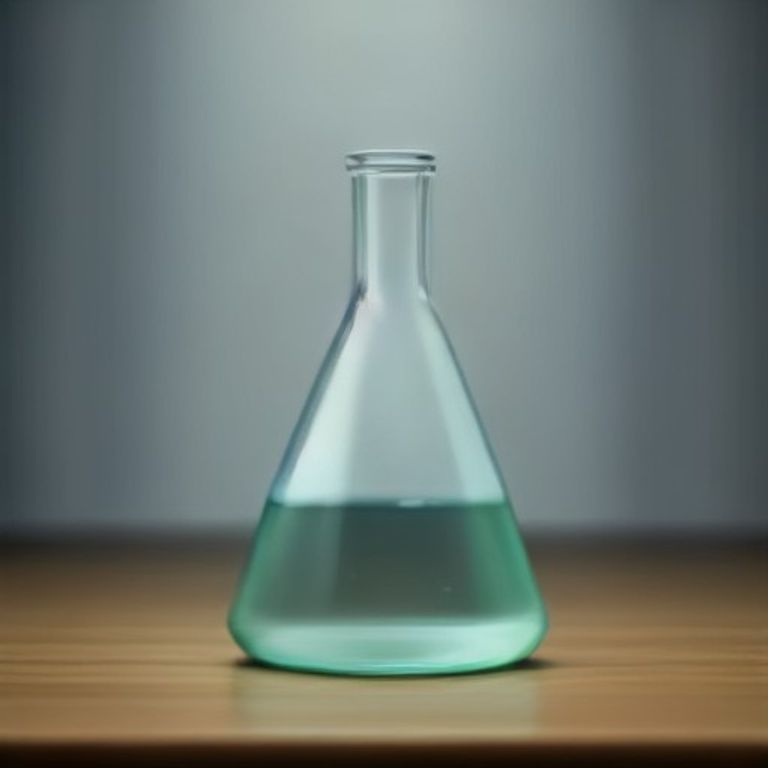
Si vous avez déjà marché dans un labo de chimie, vous l'avez certainement vu. Ce morceau de forme verrerie de laboratoire avec une base plate, un corps conique et un col cylindrique. Oui, je parle de la fiole Erlenmeyer ! Souvent simplement appelé un flacon conique, il est l'un de ces outils omniprésents qui pourrait sembler simple, mais son design est en fait assez brillant. Mais avez-vous jamais cessé de penser à quelle est la fonction principale d'un flacon Erlenmeyer? Ou pourquoi l'atteindre plutôt qu'un bécher pour certaines tâches? Laissez plonger profondément dans le monde fascinant de ce cheval de travail de laboratoire et découvrez son véritable potentiel.
Je me souviens de ma première fois dans un laboratoire de chimie, me sentant submergé par tous les différents récipients en verre. Il y avait des béchers, des tubes d'essai, puis ce flacon en forme étrange. Au début, je pensais que c'était juste un autre conteneur de fantaisie, mais j'ai rapidement appris sa forme unique sert des buts très spécifiques et pratiques qui le rendent indispensable. Des solutions tournantes aux expériences de titration précises, la fiole Erlenmeyer joue de nombreux rôles cruciaux.
Qu'est-ce qui rend l'Erlenmeyer Flask si spécial ?
À première vue, sa caractéristique la plus frappante est sa forme. Contrairement à un bécher, qui a des côtés droits et une large bouche, une fiole Erlenmeyer se coupe d'une large base plate à un cou étroit. Ce n'est pas seulement pour l'esthétique; c'est un chef-d'œuvre de conception pour le travail pratique de laboratoire. Le fond plat assure la stabilité, tandis que le corps conique et le cou étroit sont les vrais changements de jeu. Pensez-y comme ceci: si vous essayez de mélanger quelque chose vigoureusement dans un bol ouvert, vous êtes tenu de faire un désordre. La fiole Erlenmeyer résout ce problème avec élégance.
L'art du swirling : des solutions de mélange faciles
Une des réponses les plus courantes à "quelle est la fonction principale d'un flacon Erlenmeyer" tourne autour du mélange. Sa forme conique le rend parfait pour les solutions tourbillonnantes sans risque de déversement. Lorsque vous tournez doucement une fiole d'Erlenmeyer, le liquide se déplace dans un mouvement circulaire contrôlé, assurant un mélange complet sans éclaboussures. Imaginez essayer de le faire avec un bécher à large bouche – vous auriez du liquide partout sur votre banc de laboratoire en un rien de temps! Cette fonction est un sauveteur lorsque vous devez dissoudre des solides ou homogénéiser les liquides efficacement et en toute sécurité. C'est pourquoi nous prenons souvent une fiole Erlenmeyer pour remuer à la main ou en utilisant un agitateur magnétique.
Meilleur ami: Précision en action
Si vous avez déjà effectué une expérience de titration, vous saurez que la fiole Erlenmeyer est pratiquement un morceau de verrerie de laboratoire. Dans le titrage, on ajoute lentement une solution de concentration connue (le titrage) à une solution de concentration inconnue (l'analyte) jusqu'à ce qu'une réaction soit complète, souvent indiquée par un changement de couleur. Le col étroit de la fiole Erlenmeyer minimise l'évaporation, ce qui est crucial pour des résultats précis. Plus important encore, il nous permet de tourner la solution en continu pendant l'ajout du titre, en assurant le mélange rapide et complet des réactifs. Ce mélange constant est essentiel pour observer le point final précis de la réaction, qui est souvent un changement subtil de couleur visible sur le fond blanc du banc de laboratoire. C'est précisément pourquoi utiliser un flacon Erlenmeyer pour les solutions de tourbillonnage lors d'expériences aussi sensibles.
Au-delà du mélange : solutions de chauffage et de stockage
Alors que le mélange et la titration sont ses rôles stellaires, le Utilisation des flacons erlenmeyer extend further. Its heat-resistant glass (usually borosilicate) means it can be safely heated on a hot plate or with a Bunsen burner, though care must always be taken. The narrow neck also makes it easy to stopper, allowing for temporary storage of solutions or even the creation of a closed system for reactions where gas exchange needs to be controlled. This versatility makes it an invaluable asset for various chemical processes. We can use them for simple boiling tasks, for preparing media, or even for setting up basic distillation setups when combined with other equipment.
Erlenmeyer Flask vs Beaker: Pourquoi choisir l'un plutôt que l'autre?
This is a question I often hear, and it boils down to function. While both are fundamental pieces of verrerie de laboratoire, their designs serve different primary purposes. Beakers, with their wide mouths and straight sides, are excellent for pouring, measuring approximate volumes, and holding solutions that don’t require vigorous mixing or minimizing evaporation. They’re like an all-purpose cup. However, the advantages of an Erlenmeyer flask over a beaker become clear when mixing, preventing spillage, or needing to seal the container. For instance, if I need to heat a solution gently and don’t want too much solvent to escape, I’d pick an Erlenmeyer. If I just need to hold 100 mL of water, a beaker is perfectly fine.
Conclusion
So, the next time you see an Erlenmeyer flask, remember it’s far more than just a piece of glass. Its ingenious design makes it a true unsung hero in the lab, perfect for everything from vigorous swirling to precise titration experiments. Its versatility and practical advantages, especially compared to its cousin the beaker, solidify its place as an essential tool for chemists and scientists worldwide. It’s a simple design that delivers big on functionality, making our lab work safer, cleaner, and more accurate.
Foire aux questions (FAQ)
Q1: Puis-je chauffer les liquides dans une fiole Erlenmeyer?
A1: Yes, most Erlenmeyer flasks are made from borosilicate glass, which is heat resistant and safe for heating on a hot plate or with a Bunsen burner. However, always ensure the flask is not completely sealed when heating to prevent pressure buildup, unless it’s designed for a specific reaction under pressure.
Q2 : Un flacon Erlenmeyer est-il utilisé pour des mesures précises du volume?
A2: No, Erlenmeyer flasks are generally not used for accurate volume measurements. While they have volume markings, these are approximate. For precise volume measurements, you should use measuring cylinders, volumetric flasks, or burettes.
Q3 : Quelle est la différence principale entre un flacon Erlenmeyer et un bécher ?
A3: The main difference lies in their shape and primary function. Erlenmeyer flasks have a conical body and a narrow neck, ideal for swirling solutions without spillage and for reducing evaporation. Beakers have straight sides and a wide mouth, making them better for pouring, holding, and rough volume estimation.
Q4: Puis-je arrêter une fiole Erlenmeyer?
A4: Yes, the narrow neck of an Erlenmeyer flask is designed to accommodate stoppers (corks or rubber stoppers), making it suitable for temporary storage of solutions or for reactions that require a closed system.