

Le guide ultime des compteurs de conductivité : choisir le bon appareil pour chaque application

Présentation
Lorsque nous parlons de la qualité de l'eau, l'un des premiers nombres qui apparaît est conductivité. Il nous dit combien d'ions dissous nagent autour, ce qui affecte directement tout, de la santé de l'aquarium aux processus industriels. Mais mesurer la conductivité n'est pas aussi simple que de coller un thermomètre dans un bécher. Le marché est inondé d'appareils allant de kits de loisirs bon marché aux instruments de laboratoire de haute précision. Dans ce guide, je vais vous guider à travers les différents types de compteurs de conductivité, comment choisir le bon pour vos besoins, et des conseils pratiques pour garder vos mesures précises.
Qu'est-ce qu'un compteur de conductivité?
Un compteur de conductivité est Dispositif de mesure de la conductivité électrique qui applique une petite tension sur deux électrodes et mesure le courant résultant. Plus le courant est fort, plus la concentration d'ions est élevée et plus la conductivité est élevée (généralement exprimée en μS/cm ou mS/cm). Pensez-y comme un « capteur de trafic » pour les ions – plus les voitures (ions) passent, plus la lecture est élevée.
Principales caractéristiques à rechercher
- Compensation de température – Puisque la conductivité change avec la température, un bon compteur ajustera automatiquement la lecture. Recherchez « un compteur de conductivité portatif avec compensation de température » si vous travaillez à l'extérieur.
- Conception des sondes – Un solide Sonde de conductivité et capteur est essentiel pour une utilisation industrielle, tandis qu'une sonde mince fonctionne mieux pour les amateurs d'aquarium.
- Précision et précision – Les modèles de laboratoire présentent souvent une précision de ±0,1 %, alors que les modèles budgétaires peuvent être de ±2 %.
- Enregistrement des données – Pour la surveillance à long terme, choisissez un compteur qui peut stocker ou exporter des données.
- Solutions d'étalonnage – Avoir le droit Essentiels du viscomètre (ou toute solution d'étalonnage standard) est cruciale pour maintenir la fiabilité.
Types de compteurs de conductivité
1. Compteur de conductivité portatif pour les essais d'eau
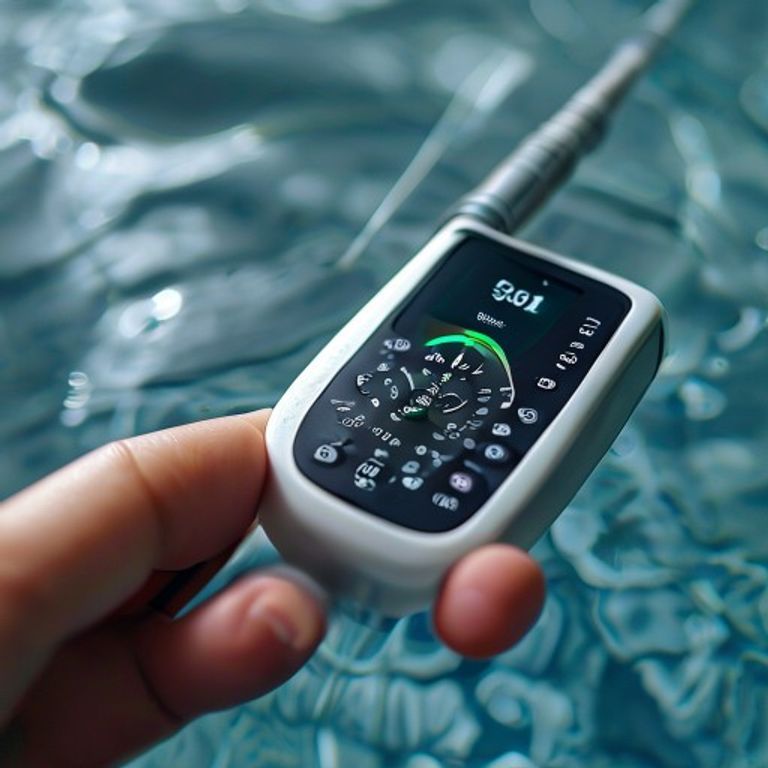
Ces appareils portatifs sont parfaits pour le travail sur le terrain – pensez à l'échantillonnage environnemental, aux contrôles d'irrigation ou aux contrôles rapides d'aquarium. Ils sont légers, actionnés par batterie et sont souvent équipés de capteurs de température intégrés.
2. Compteur de conductivité portatif avec compensation de température
Si vous testez fréquemment de l'eau à des températures variables (p. ex., en serre), un compteur qui compense automatiquement la température vous économise des calculs manuels. L'appareil lit la température, applique un facteur de correction et vous donne une vraie valeur de conductivité.
3. Compteur de conductivité de laboratoire
Les modèles de laboratoire priorisent la précision et la stabilité. Ils se connectent généralement à un ordinateur de banque pour l'analyse de données et soutiennent la haute précision manuel réfractaire- les routines d'étalonnage. Idéal pour les laboratoires de recherche, les stations de traitement de l'eau et les laboratoires de contrôle de la qualité.
4. Compteur de conductivité industrielle pour le contrôle des procédés
Dans la fabrication, la conductivité est un paramètre clé pour des processus tels que la gestion de l'eau de refroidissement ou le dosage chimique. Les compteurs industriels sont robustes, peuvent manipuler des produits chimiques difficiles et s'intègrent souvent aux PLC pour le contrôle en temps réel.
5. Compteur de conductivité bon marché pour les hobbyistes de l'aquarium
Pour les amateurs de budget, un simple compteur qui se branche sur un smartphone ou affiche une lecture de base suffit. Rappelez-vous simplement que les appareils moins chers peuvent dériver au fil du temps, de sorte que l'étalonnage régulier avec une solution standard est un must.
Comment calibrer votre compteur de conductivité
L'étalonnage est l'épine dorsale de données fiables. Suivez ces étapes :
- Rincer la sonde avec de l'eau distillée.
- Immerger dans une solution standard connue (par exemple, 1413 μS/cm à 25 °C).
- Laissez la lecture se stabiliser, puis appuyez sur le bouton "Calibrer".
- Répétez avec une seconde norme si votre compteur supporte l'étalonnage multipoints.
Conservez toujours la sonde humide lorsqu'elle n'est pas utilisée pour empêcher le séchage, ce qui peut causer des lectures inexactes.
Conseils pratiques pour de meilleures mesures
- Gardez la sonde propre – Les dépôts peuvent agir comme des « confitures de trafic » pour les ions.
- Utiliser un mélange approprié – Un mélange doux assure un échantillon homogène.
- Vérifier la température – Même avec la compensation, les températures extrêmes peuvent affecter la durée de vie des capteurs.
- Enregistrer les données régulièrement – Les tendances sont plus précieuses que des instantanés uniques.
FAQ
Quelle est la différence entre la conductivité et le TDS?
La conductivité mesure la manière dont une solution conduit l'électricité, tandis que Total Dissolved Solids (TDS) est une estimation dérivée de la conductivité à l'aide d'un facteur de conversion. Ils sont liés mais pas identiques.
Puis-je utiliser un conductivitémètre pour l'analyse du pH?
C'est pas vrai. La conductivité et le pH mesurent différentes propriétés. Cependant, les deux sont souvent nécessaires ensemble pour une analyse complète de la qualité de l'eau. Pour le pH, vous pouvez vérifier guide papier litmus pour des chèques rapides.
Combien de fois devrais-je étalonner?
Pour les applications critiques (lab ou industrielles), étalonner avant chaque utilisation. Pour les amateurs, un calibrage hebdomadaire est généralement suffisant.
Un compteur bon marché est-il fiable pour les aquariums?
Il peut être, tant que vous étalonnez régulièrement et remplacez la sonde quand elle montre la dérive.
De quel entretien la sonde a-t-elle besoin?
Rincer après chaque utilisation, conserver humide et remplacer la membrane de l'électrode selon le calendrier du fabricant.
Conclusion
Choisir le bon conductivitémètre revient à comprendre votre application, votre budget et l'exactitude requise. Si vous avez besoin d'un compteur portable de conductivité pour les essais d'eau, une unité industrielle robuste, ou un modèle bon marché aquarium-friendly, la clé est le bon calibrage et l'entretien régulier. Avec le bon outil en main, vous aurez un aperçu clair de la qualité de l'eau et pouvez prendre des décisions éclairées—Plus de devinettes, juste des données solides.