La Petite Merveille : découverte de la fonction multifacette d'une plaque en chimie

If you’ve ever stepped into a chemistry lab, chances are you’ve seen an array of fascinating glassware and equipment. From the precise volumetric flasks we use for accurate measurements to the utilisation essentielle de la tige de verre dans chaque laboratoire for stirring, each tool plays a crucial role. But today, I want to talk about a true unsung hero, a humble piece of equipment that might not look like much at first glance: the spot plate. This little wonder, often made of porcelain or ceramic, is far more important than its size suggests. So, what exactly is the function of a spot plate, and why is it indispensable in so many chemistry experiments? Let’s dive in and uncover its secrets!
Qu'est-ce qu'une plaque de spot exactement ?
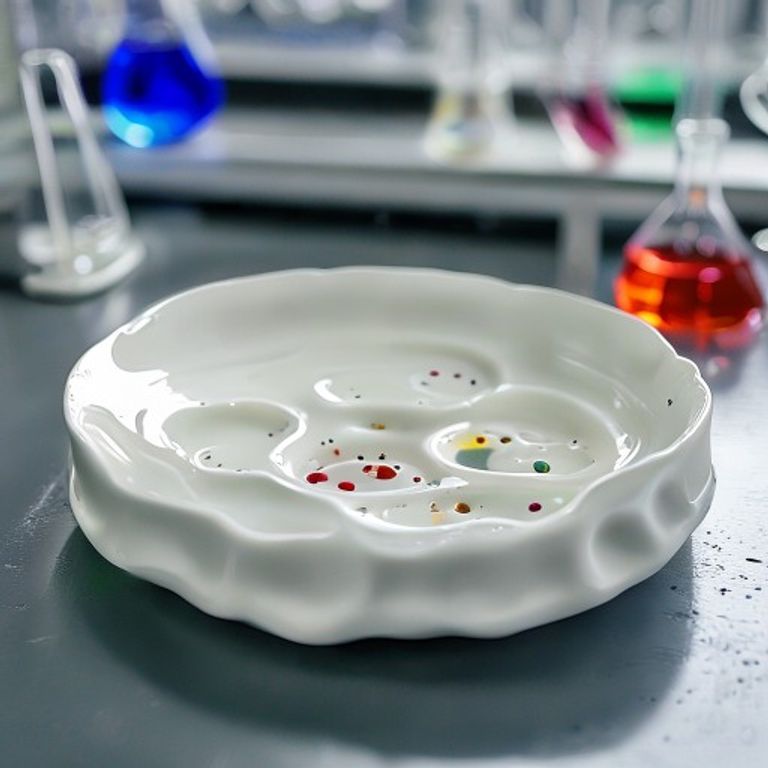
Imagine a small, flat plate, usually white or sometimes black, with several shallow depressions or “wells” carved into its surface. That, my friends, is a spot plate. Most commonly crafted from ceramic or porcelain, its inert nature means it won’t react with the chemicals we place in it. The wells are typically small, designed to hold just a few drops of liquid, making it perfect for reactions where only tiny quantities of reagents are needed. Think of it as a miniature laboratory, allowing us to perform multiple experiments simultaneously in a compact space.
Spot Plate vs. Well Plate: What’s the Difference?
You might be thinking, “Isn’t that just like a well plate?” While similar in concept, there are subtle differences. Well plates, often made of plastic, usually have many more wells (96, 384, or even 1536 wells) and are typically used for high-throughput screening or biological assays. Spot plates, on the other hand, usually have fewer, larger wells (typically 6, 12, or 24) and are predominantly used for traditional chemical qualitative analysis and microscale reactions in educational or analytical chemistry settings. Their robust ceramic build also makes them ideal for reactions involving heat or strong acids that plastic might not withstand.
The Core Function: Why Do We Use Spot Plates?
Now for the main event! The primary function of a spot plate revolves around its ability to facilitate small-scale reactions and observations. It’s truly a marvel for efficiency and safety.
1. Qualitative Analysis: Seeing the Unseen
This is where the spot plate truly shines. What is a spot plate used for in chemistry most often? Qualitative analysis! This branch of chemistry focuses on identifying the components of a sample, rather than measuring their quantity. We use spot plates to observe chemical reactions on a very small scale, looking for tell-tale signs like:
- Color changes: Is there a vivid blue forming, or perhaps a sudden shift from colorless to pink?
- Precipitation: Do two clear solutions suddenly produce a cloudy solid?
- Gas evolution: Though harder to see on this tiny scale, sometimes bubbles are visible.
- Temperature changes: While not directly measurable, sometimes heat is generated, indicating a reaction.
By placing a drop of one reagent into a well and then adding a drop of another, we can quickly see if a reaction occurs and identify unknowns based on predictable outcomes. It’s like being a detective, looking for clues in miniature!
2. Microscale Reactions: Small but Mighty
In modern chemistry education and even some research, there’s a strong push towards microscale chemistry. This approach uses significantly smaller quantities of chemicals, and guess what tool is perfect for it? You guessed it, the spot plate! The purpose of spot plates in microscale reactions is to:
- Reduce waste: Less chemical used means less chemical to dispose of, which is better for the environment and our budgets.
- Enhance safety: Smaller reactions mean less heat generated, fewer fumes, and a reduced risk in case of an accident. It makes complex or potentially hazardous reactions much safer to demonstrate and perform.
- Speed up experiments: Smaller volumes react faster, allowing us to complete experiments more quickly.
This makes the spot plate an excellent tool for introductory labs where students are learning fundamental chemical principles without handling large, potentially dangerous quantities of reagents.
3. Simple Chemical Tests: Quick Checks
Beyond complex qualitative analysis, spot plates are fantastic for quick, routine tests. For example, if you need to check the pH of several solutions using an indicator, you can place a drop of each solution into separate wells, add a drop of indicator, and observe the color changes. This is much more efficient than using separate test tubes for each sample, especially when comparing multiple substances simultaneously.
How to Use a Spot Plate for Qualitative Analysis Effectively
Using a spot plate is straightforward, but a few tips can ensure success:
- La propreté est la clé: Always start with a clean spot plate. Residues from previous experiments can lead to false positives or negatives. Wash it thoroughly with water and a brush, then rinse with distilled water.
- Small Drops Only: Use droppers or pipettes to add just one or two drops of your first solution into a well. Then, add one or two drops of your second reagent. Don’t overfill the wells!
- Observe Carefully: Pay close attention to any changes—color, turbidity, or the formation of a precipitate. Note the time it takes for changes to occur.
- Record Your Observations: Keep a neat record of which reagents were added to which well and what you observed. This is crucial for drawing accurate conclusions.
- Élimination appropriée : After your experiment, dispose of the chemical waste properly according to lab guidelines. Then, clean your spot plate immediately.
Benefits of Ceramic Spot Plates for Chemical Tests
Choosing a ceramic or porcelain spot plate offers several distinct advantages:
- Inerte chimique: They don’t react with most chemicals, ensuring your results are accurate.
- Durabilité: Ceramic is robust and can withstand repeated use, cleaning, and even some gentle heating (though direct heating isn’t its primary use).
- Contrast: White ceramic provides an excellent background for observing color changes, precipitates, and turbidity in clear or lightly colored solutions. Black spot plates are great for observing white precipitates.
- Facile à nettoyer : Their smooth, non-porous surface makes them easy to clean and reuse.
Conclusion
So, there you have it! The humble spot plate, despite its small size, is a powerful and versatile tool in the chemistry laboratory. From enabling precise analyse qualitative to making chimie micrométrique practical and safe, its functions are invaluable. It helps us visualize chemical reactions, conserve precious reagents, and conduct experiments with greater efficiency. Next time you see a spot plate, I hope you’ll appreciate its significant contribution to our understanding of the chemical world. It truly is a small wonder!
Foire aux questions (FAQ)
Q1: Can I heat a spot plate directly?
While ceramic spot plates are heat-resistant, they are generally not designed for direct, strong heating like a crucible. You can gently warm them, but for reactions requiring significant heat, other labware like test tubes or beakers are more appropriate. Always check your lab protocols.
Q2: How do I clean a spot plate effectively?
After use, rinse the spot plate with water, then scrub the wells with a small brush (like a test tube brush) and soap. Rinse thoroughly with tap water, and finally, with distilled water to remove any mineral deposits. Air dry or wipe dry with a lint-free cloth.
Q3: Est-ce que les plaques sont réutilisables?
Absolutely! One of their great advantages is their reusability. With proper cleaning and care, a ceramic spot plate can last for many years, making it a sustainable choice for laboratory work.
Q4: What’s the difference between a white and a black spot plate?
The color simply provides different contrasts for observation. A white spot plate is excellent for observing color changes and precipitates from clear or light-colored solutions. A black spot plate is specifically useful for observing white or very light-colored precipitates or solutions, making them stand out more clearly.
Q5: Can I use a spot plate for quantitative analysis?
Generally, no. Spot plates are primarily designed for qualitative observations where precise measurements of volume or concentration are not the focus. For quantitative analysis, you’ll need calibrated glassware like volumetric flasks or pipettes for accurate volume measurements.