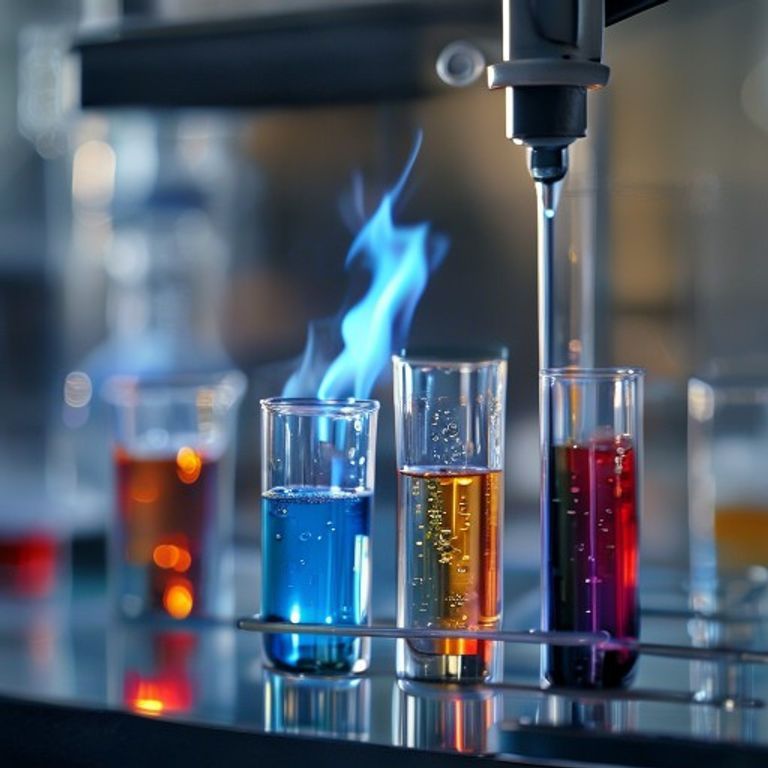
Au-delà du bécher : les tubes d'essai essentiels sont utilisés en chimie

Dans le vaste monde de la chimie, où les réactions complexes et les analyses complexes occupent une place centrale, c'est parfois les outils les plus simples qui sont les plus indispensables. Aujourd'hui, nous plongeons dans un tel héros humble: le tube d'essai. Vous les avez vus dans chaque labo, peut-être même dans les films, mais avez-vous jamais cessé de considérer la gamme complète de utilisation de tubes d'essai en chimie?
De la première expérience d'un débutant à la recherche avancée, ces petits morceaux cylindriques verrerie de laboratoire jouer un rôle crucial. Nous allons explorer ce qui les rend si spéciaux et exactement les tubes d'essai utilisés dans un laboratoire de chimie. Préparez-vous à apprécier cette petite merveille encore plus!
Pourquoi les chimistes utilisent-ils des tubes d'essai? L'objectif principal
À première vue, un tube d'essai peut sembler juste un petit récipient en verre. Mais sa conception est incroyablement fonctionnelle, ce qui en fait un agrafe récipient de réaction. Le primaire Objet d'un tube d'essai en laboratoire tourne autour de sa capacité à manipuler de petits volumes de produits chimiques efficacement et en toute sécurité. Leur forme étroite et allongée minimise l'évaporation et permet une observation facile des réactions. De plus, ils sont relativement peu coûteux, durables (surtout ceux en verre borosilicaté), et faciles à nettoyer, les rendant parfaits pour les fréquents expérimentation chimique.
Utilisations communes de tubes d'essai pour des expériences chimiques
Laissez plonger dans les applications pratiques. La polyvalence des tubes d'essai signifie qu'ils apparaissent dans presque chaque leçon de chimie et projet de recherche. Voici quelques-uns de leurs rôles les plus fréquents :
1. Mélange de produits chimiques
C'est peut-être l'usage le plus fondamental. Besoin de combiner quelques gouttes d'une solution avec une autre? Un tube de test est votre meilleur ami. Son petit volume garantit que vous ne gaspillez pas de précieux réactifs, et son verre transparent vous permet de voir clairement tout changement de couleur, précipitation, ou évolution de gaz. Pour un mélange doux, en particulier dans les petits tubes d'essai, nous utilisons souvent des agitateurs. En parlant de cela, avez-vous exploré la utilisation essentielle de la tige de verre dans chaque laboratoire? Ce sont des outils simples mais incroyablement polyvalents pour tout chimiste.
2. Échantillons et solutions de chauffage
Un des aspects les plus critiques utilisation courante de tubes d'essai pour des expériences chimiques est pour le chauffage. Les tubes d'essai, en particulier ceux en verre borosilicate (comme Pyrex ou Kimax), sont conçus pour résister à des températures élevées. Cela signifie que nous pouvons directement chauffer de petites quantités de liquides ou de solides sur une flamme de brûleur Bunsen ou dans un bain d'eau.
Apprendre comment sont utilisés les tubes d'essai pour les solutions de chauffage efficacement est une compétence de laboratoire de base. Nous nous assurons toujours d'utiliser un support de tube d'essai, pointons la bouche du tube loin de nous et les autres, et chauffez le liquide doucement, souvent en déplaçant le tube dans et hors de la flamme. Cela empêche la surchauffe et l'ébullition violente. Quand il s'agit de échantillons de chauffage, tubes d'essai sont souvent notre aller-à , surtout quand jumelés avec un brûleur Bunsen . Si vous voulez débloquer la puissance des flammes et vraiment comprendre comment utiliser le chauffage efficacement, nous avons un guide détaillé pour vous.
3. Effectuer des essais qualitatifs
De nombreux essais d'analyse qualitative visant à identifier la présence ou l'absence d'une substance sont effectués dans des tubes d'essai. Pensez à des tests pour des ions spécifiques, des indicateurs de pH ou à l'observation de changements de solubilité. La petite échelle est parfaite pour ces observations rapides.
4. Stockage temporaire
Bien qu'il ne soit pas idéal pour le stockage à long terme, les tubes d'essai sont excellents pour retenir temporairement des échantillons, des filtrats ou des intermédiaires de réaction. Avec des bouchons ou des bouchons, ils peuvent protéger les échantillons de la contamination ou de l'évaporation pendant de courtes périodes.
5. Culturation des microorganismes (en biochimie)
Au-delà de la chimie inorganique et organique, les tubes d'essai sont également fondamentaux en microbiologie et en biochimie. Ils fournissent un environnement stérile pour les cultures bactériennes en croissance ou pour les essais enzymatiques.
Conseils pour maximiser votre potentiel de tube d'essai
Pour tirer le meilleur parti de ces outils pratiques, rappelez-vous quelques pratiques exemplaires :
- Utilisez toujours un support de tube d'essai: Cela maintient vos tubes droits, organisés, et empêche les déversements.
- Sécurité d'abord lors du chauffage: Comme mentionné, utiliser un support, pointer loin et chauffer doucement.
- La propreté est la clé: Les résidus d'expériences antérieures peuvent contaminer de nouvelles réactions. Toujours laver et rincer soigneusement.
- Choisissez la bonne taille: Les tubes d'essai sont de différentes dimensions. Choisissez celui qui convient au volume de vos réactifs pour éviter les éclaboussures inutiles ou le mélange inadéquat.
Conclusion
Voilà ! De simple mélange de produits chimiques critiques échantillons de chauffageLes tubes d'essai sont vraiment les héros méconnus du laboratoire de chimie. Leur simplicité délie leur incroyable utilité, en faisant une partie indispensable de presque toutes les explorations chimiques. Comprendre ces éléments essentiels utilisation de tubes d'essai en chimie nous permet de mener des expériences plus efficacement et en toute sécurité. La prochaine fois que vous en verrez un, vous le saurez beaucoup plus qu'un simple tube de verre ; c'est un « navire de réaction » polyvalent crucial pour la découverte scientifique !
FAQ À propos de l'utilisation des tubes d'essai
Q1 : Pourquoi les tubes d'essai sont-ils habituellement en verre?
Les tubes d'essai sont généralement faits de verre (souvent de verre borosilicaté) parce qu'il est chimiquement inerte, ce qui signifie qu'il ne réagit pas avec la plupart des produits chimiques. Il possède également une excellente résistance thermique, lui permettant d'être chauffé sans fissuration. De plus, sa transparence permet une observation facile des réactions.
Q2: Puis-je chauffer n'importe quel liquide dans un tube d'essai directement sur une flamme?
Alors que de nombreux liquides peuvent être chauffés, il est crucial d'être prudent. Les liquides hautement volatils ou inflammables ne devraient être chauffés que dans une hotte et souvent dans un bain d'eau plutôt que directement sur une flamme pour prévenir les dangers. Utilisez toujours un support de tube d'essai et ne pointez jamais le tube vers qui que ce soit.
Q3: Quelle est la principale différence entre un tube d'essai et un bécher?
Les principales différences résident dans leur forme et leur utilisation principale. Les tubes d'essai sont étroits et cylindriques, idéals pour les réactions à petite échelle, les essais qualitatifs et le chauffage direct de petits volumes. Les béchers sont plus larges et ont souvent un bec, principalement utilisé pour contenir de plus grands volumes de liquides, de mélange ou comme récipients de réaction où des mesures précises ne sont pas critiques.