


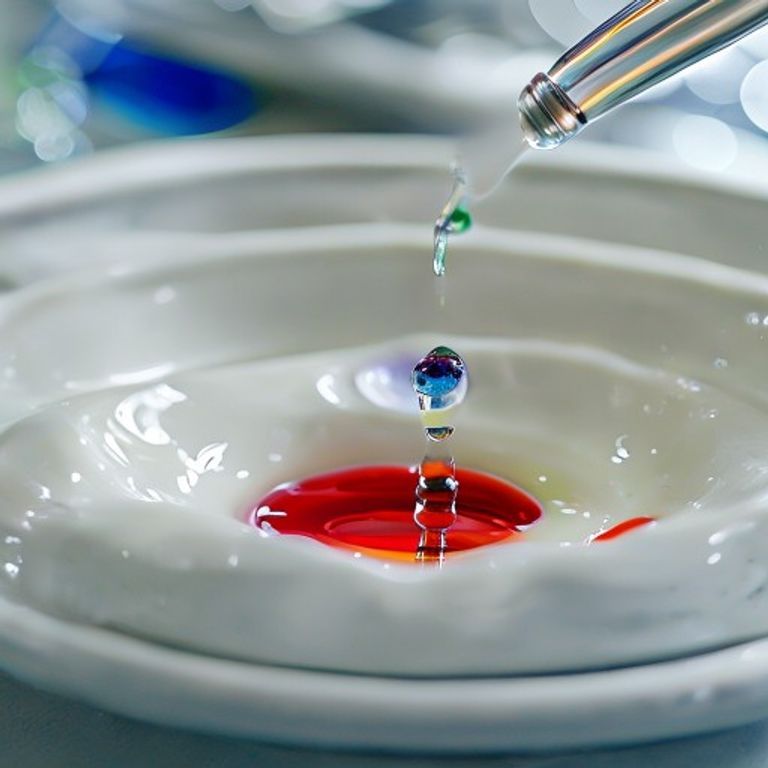
La plaque à taches puissantes : essentielle pour des réactions chimiques rapides et propres

Dans le vaste monde de la chimie, parfois les plus grandes découvertes proviennent des plus petites réactions. Nous imaginons souvent de grandes expériences avec des flacons bouillonnants et des configurations complexes, mais si je vous disais l'un des outils les plus polyvalents et indispensables dans un arsenal de chimistes est remarquablement simple? Je parle des humbles plaque spot pour réactions. Cette pièce sans prétention d'équipement de laboratoire est un vrai changement de jeu, en particulier lorsque nous sommes traitant de la chimie micro-échelle, nous permettant d'effectuer des tests et des observations rapides avec une efficacité inégalée.
Pour moi, le spot n'est pas juste un autre morceau de verre (ou de céramique, ou de plastique!). C'est là que d'innombrables hypothèses initiales sont testées, où un arc-en-ciel de changements d'indicateurs chimiques raconte une histoire, et où nous minimisons les déchets sans compromettre la rigueur scientifique. Laissez plonger dans pourquoi ce vaisseau de réaction compact mérite une place permanente sur chaque banc de laboratoire.
Qu'est-ce qu'une plaque de spot exactement ? Le Micro-Well Marvel
Considérez une plaque spot comme une palette miniature pour les réactions chimiques. C'est typiquement une plaque rectangulaire blanche en porcelaine, en céramique ou en plastique, comportant une série de dépressions peu profondes ou de « puits ». Ces puits sont conçus pour contenir de petits volumes de réactifs liquides ou solides, ce qui permet des réactions multiples et distinctes à proximité immédiate. Cela en fait une plaque de puits fantastique pour l'analyse comparative sans avoir besoin de dizaines de tubes d'essai ou de béchers.
La beauté d'une plaque à taches réside dans sa simplicité et son efficacité. Nous pouvons observer les changements de couleur, la formation précipitée, l'évolution du gaz et d'autres indicateurs d'analyse qualitative clairement sur le fond blanc, rendant nos observations sans ambiguïté.
Pourquoi utiliser une plaque pour les réactions? Avantages Galore !
Lorsque nous optons pour une plaque spot, nous choisissons la chimie intelligente. Voici quelques raisons impérieuses pour lesquelles je pense que c'est un outil essentiel:
- Efficacité micrométrique: Il réduit considérablement la quantité de réactifs nécessaires. Ce n'est pas seulement rentable, ce qui en fait un plaque spot abordable pour le laboratoire scolaire ou des laboratoires soucieux du budget, mais également respectueux de l'environnement. Moins de déchets signifie une planète plus heureuse !
- Vitesse et simplicité: Effectuer de nombreuses réactions parallèles devient une brise. Imaginez tester 12 indicateurs de pH différents ou vérifier la présence de divers ions – tous simultanément sur une seule plaque. Parler de gagner du temps !
- Observation claire : Le fond blanc de la plupart des plaques spot offre un excellent contraste pour observer des changements subtils de couleur, qui sont cruciaux pour l'analyse qualitative.
- Sécurité d'abord: Des volumes de réaction plus faibles signifient moins d'exposition à des produits chimiques potentiellement dangereux. Si un déversement se produit, il est généralement mineur, facilement contenu et nettoyé.
- Valeur éducative : Pour les étudiants, c'est une façon fantastique d'apprendre sur le mélange de réactif et les principes de réaction dans un environnement contrôlé, visuel et non intimidant.
Choisir votre plaque de la tache parfaite: Plastique vs Porcelaine
Lors de l'examen Comment choisir une plaque de puits de réaction pour la chimie à microéchelle, the material is a key factor. The two most common types are porcelain (or ceramic) and plastic, and each has its own advantages:
Plaques de porcelaine/spot céramique
These are the traditional workhorses of the lab. Known for their excellent chemical resistance and durability, porcelain plates are ideal when we need a durable spot plate for frequent chemical testing. They can withstand most acids, bases, and solvents without degrading, making them a top choice for more rigorous experiments, especially those involving heat or strong corrosive agents. If you’re looking for the best ceramic spot plate for acidbase titrations and other demanding reactions, porcelain is usually the way to go. Its inert nature ensures that the plate itself won’t interfere with your reactions.
Plaques de spot en plastique
On the other hand, plastic spot plates offer a lighter, more disposable, and often even more affordable option. They are great for introductory experiments, educational settings, or situations where cross-contamination is a major concern and disposal after a single use is preferred. While they might not be as chemically resistant or durable as porcelain, their low cost and ease of handling make them incredibly popular. When comparing plastic vs porcelain spot plate for chemistry experiments, think about the specific needs of your reaction: will it involve strong acids or high temperatures? If not, plastic might be perfectly adequate.
Remember, when transferring solid reagents to your spot plate, having the perfect laboratory spatula is crucial for precision and preventing contamination. A good spatula ensures you only transfer the exact amount needed for your microscale reactions.
Applications pratiques: Où les plaques de taches brillent vraiment
So, where do we typically put our spot plates to good use? Their applications are incredibly diverse:
- Analyse qualitative : Identifying unknown ions by observing characteristic precipitates or color changes.
- Acid-Base Titrations (Qualitative): Quick pH estimations using various chemical indicator solutions.
- Comparative Studies: Testing the reactivity of different metals with the same acid, or comparing the effectiveness of different catalysts.
- Essais enzymatiques: Observing enzyme activity through color-changing substrates on a small scale.
- Spot Tests: Rapid screening for specific substances in forensics, environmental analysis, or quality control.
Conseils pour maximiser le potentiel de votre plaque de spot
To get the most out of your spot plate, here are some practical tips:
- La propreté est la clé: Always clean your spot plate thoroughly between uses to prevent cross-contamination. For porcelain, a good scrub with detergent and water, followed by rinsing, is usually sufficient.
- Use Proper Tools: For adding liquids, use droppers or Pasteur pipettes. For solids, a micro-spatula is ideal for precise measurements.
- Document Clearly: If you’re running multiple reactions, label the wells (if applicable) or map out your experimental design beforehand to avoid confusion.
- Observe Against a Good Background: The white surface helps, but ensure good lighting for observing subtle changes.
FAQ: Les questions de votre plaquette
Q1: Est-ce que je peux chauffer une plaque ?
A: Porcelain spot plates can generally withstand moderate heating, but direct flame heating should be avoided as it can cause cracking. Plastic spot plates are NOT suitable for heating.
Q2: Combien de puits ont généralement des plaques d'observation?
A: They come in various configurations, commonly with 6, 9, or 12 wells, but larger ones exist too. The number of wells depends on the complexity and scale of the comparative reactions you intend to perform.
Q3: Est-ce que les plaques sont réutilisables?
A: Porcelain and durable plastic spot plates are designed for reuse, provided they are thoroughly cleaned. Cheaper, thin plastic plates might be single-use, especially in high-contamination risk scenarios.
Conclusion : La petite assiette, grand impact
From introductory chemistry classes to advanced research labs, the plaque spot pour réactions proves time and again that you don’t need elaborate equipment to conduct meaningful experiments. Its ability to facilitate microscale reactions efficiently, safely, and economically makes it an invaluable asset for microscale chemistry equipment and qualitative analysis. So, next time you’re in the lab, give a nod to this mighty little plate – it’s often quietly doing some of the most important work!







