

Les utilisations essentielles d'un trépied au laboratoire : soutien, chauffage et sécurité

Présentation
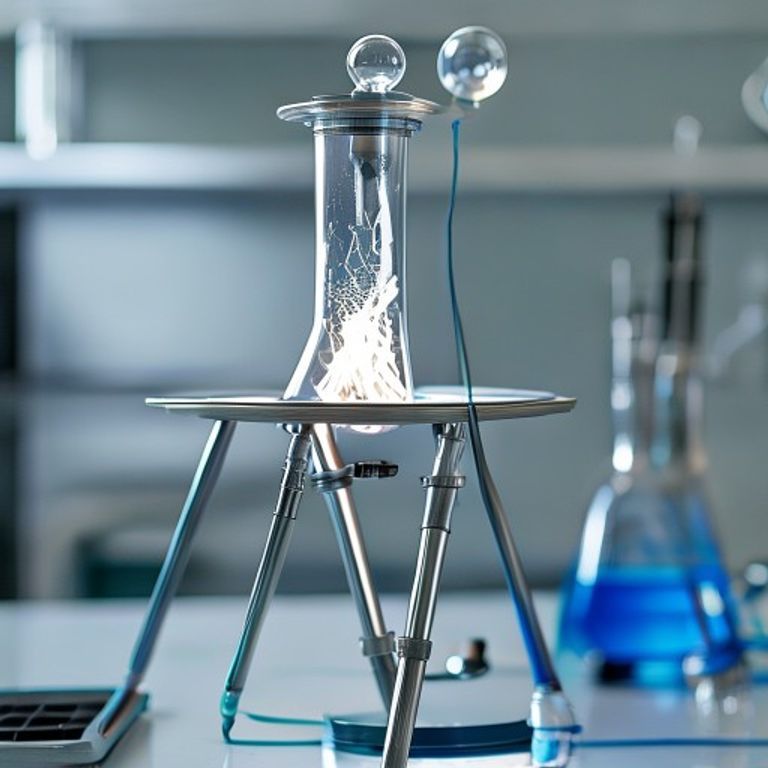
Lorsque l'on entre dans un laboratoire de chimie, la première chose que l'on remarque est le brûleur Bunsen ou les béchers, mais l'humble trépied se tient tranquillement dans le coin. Il peut sembler simple, mais ce cheval à trois pattes est indispensable pour une large gamme d'expériences. Dans cet article, je vais vous guider dans les deux utilisations principales d'un trépied, vous montrer comment le mettre en place pour les tâches de chauffage, et expliquer pourquoi il est un must-have pour soutenir la verrerie en toute sécurité.
Deux utilisations principales d'un trépied dans un laboratoire de chimie
De manière générale, un trépied remplit deux fonctions essentielles :
- Soutien aux appareils de laboratoire – Il contient des objets comme la gaze filaire, les creusets et les flacons à une hauteur de travail confortable.
- Plateforme pour les expériences de chauffage – Associé à un brûleur Bunsen, il crée une base stable pour le chauffage direct ou indirect.
Ces deux rôles sont essentiels au maintien de la précision et de la sécurité pendant les expériences.
Comment utiliser un support de trépied pour les expériences de chauffage
Le chauffage est là où le trépied brille vraiment. Voici un guide étape par étape que j'utilise à chaque fois que je dois réchauffer une solution ou fondre un solide:
- Rassembler le stand: Étalez les trois jambes uniformément sur une surface plane. Assurez-vous que chaque jambe est complètement ouverte pour éviter les oscillations.
- Placer une gaze de fil sur le dessus: La gaze distribue uniformément la chaleur et protège le trépied de la flamme directe. Pour une plongée plus profonde dans pourquoi la gaze de fil est essentielle, consultez le Héro de gaze de fil dans votre labo.
- Réglez votre verrerie: Positionner un bécher, un creuset ou un flacon sur la gaze. Assurez-vous que l'article est stable et que l'ouverture est vers le haut.
- Allumer le brûleur Bunsen: Allumez le brûleur et ajustez la flamme à l'intensité souhaitée. Gardez la flamme sous le centre de la gaze pour un chauffage uniforme.
- Surveiller l'expérience: Ne jamais laisser une installation de chauffage sans surveillance. Régler la hauteur du trépied si nécessaire en faisant glisser les jambes.
Après ces étapes assure un environnement de chauffage contrôlé, réduit le risque de rupture et améliore la reproductibilité.
Support de verre de laboratoire avec un support trépied
Toutes les expériences ne nécessitent pas de chaleur. Souvent, nous avons besoin d'une plate-forme stable pour tenir la verrerie délicate pendant que nous travaillons sur d'autres parties de la configuration. Le trépied à trois pattes répartit le poids uniformément, empêchant les basculements. Voici comment je l'utilise habituellement pour le support:
- Chauffage crucible: Placer un creuset sur un morceau de gaze filaire, puis placer le trépied sur un brûleur Bunsen pour le chauffage indirect.
- Avoir un bécher pendant le titrage: Placez le bécher sur le trépied pour le maintenir au niveau des yeux, libérant vos mains pour la burette.
- Soutien d'un condenseur: Lors d'un simple reflux, le trépied peut tenir le condenseur en place pendant que le manteau chauffant fait le travail.
Si vous êtes curieux des différents types de béchers et de leurs utilisations spécifiques, l'article Qu'est-ce qu'un bécher ? votre guide complet pour les utilisations, les types et les bases de laboratoire offre un aperçu complet.
Fonctions principales d'un trépied dans une salle de cours de sciences
Au-delà du laboratoire de recherche, le trépied est un élément essentiel des classes de sciences du secondaire. Ses principales fonctions sont les suivantes :
- Fournir une hauteur sûre et réglable pour les démonstrations.
- Enseigner aux élèves les bases des protocoles de transfert de chaleur et de sécurité.
- Permettre une configuration rapide et un retrait pour plusieurs expériences en une seule période de classe.
Les étudiants apprennent rapidement qu'une plateforme stable est le fondement de toute expérience réussie, renforçant de bonnes habitudes de laboratoire tôt.
Applications supplémentaires: Soutien et chauffage combinés
Parfois, nous avons besoin de soutien et de chauffage simultanément. Un exemple classique est la préparation d'un précipité où vous chauffez une solution dans un bécher tout en la maintenant stable sur le trépied. En plaçant une gaze de fil entre la flamme et le bécher, vous protégez le trépied de la chaleur directe et assurer une répartition uniforme de la température.
Pour ceux qui souhaitent maîtriser la maîtrise de la flamme, le guide maîtriser la flamme : votre guide essentiel pour une utilisation sûre du brûleur Bunsen dans le laboratoire fournit des conseils essentiels sur le réglage de la flamme et la sécurité.
Conclusion
Le trépied n'est peut-être pas l'appareil le plus flash de laboratoire, mais sa polyvalence en fait un vrai héros méconnu. Que vous souteniez la verrerie, le chauffage des produits chimiques ou l'enseignement des fondamentaux dans une classe, le trépied offre stabilité, sécurité et simplicité. En maîtrisant sa bonne utilisation, vous améliorerez la fiabilité de vos expériences et garderez votre travail de laboratoire en toute sécurité.
FAQ
Q: Puis-je utiliser un trépied sans gaze filaire pour le chauffage?
R: C'est possible, mais pas recommandé. La gaze répand la chaleur uniformément et protège les jambes de trépied de la flamme directe, réduisant ainsi les risques de dommages.
Q: À quelle hauteur le trépied doit-il être réglé pour la plupart des tâches de chauffage?
R: Visez une hauteur qui place la flamme juste au-dessous du fond de la verrerie, généralement de 2 à 3 pouces au-dessus de la gaze. Régler au besoin pour les grands bateaux.
Q: Y a-t-il des matériaux que je devrais éviter de placer sur un trépied?
R: Évitez les conteneurs en métal lourd qui dépassent le poids du trépied, et ne jamais placer de liquides inflammables directement sur le trépied sans support approprié.
Q: Comment puis-je nettoyer un trépied après utilisation?
R: Essuyer les jambes avec un chiffon humide pour éliminer les déversements, et vérifier les articulations pour tout résidu. Conservez-le dans un endroit sec pour éviter la rouille.
Q: Un trépied peut-il être utilisé pour des expériences sans chauffage?
R: Absolument. Il est idéal pour soutenir les béchers pendant les titrations, tenir des creusets pour le refroidissement, ou même comme support pour des modèles de démonstration.