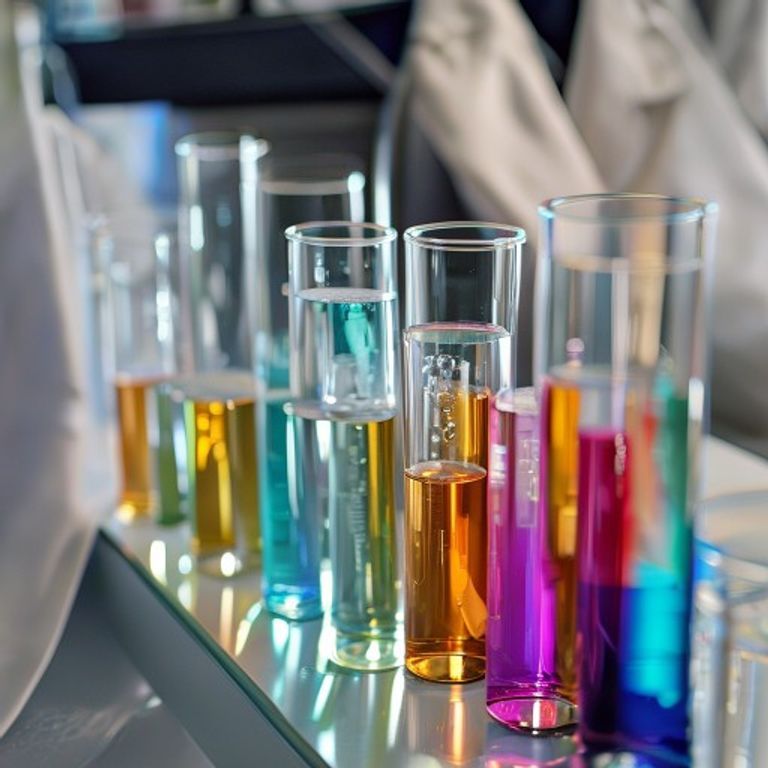
Utilisation des tubes d'essai : fonctions primaires, applications de chimie et de biologie, et comment choisir le bon

Présentation
Lorsque nous entrons dans un laboratoire, la première chose qui attire notre attention est souvent une rangée de cylindres en verre mince – le tube d'essai humble. Malgré sa forme simple, un tube d'essai est un cheval de travail qui soutient d'innombrables expériences, allant d'une démonstration en chimie du secondaire à la recherche biomédicale avancée. Dans cet article, je vais vous guider dans la fonction principale d'un tube d'essai, plonger dans des applications spécifiques en chimie et en biologie, vous montrer comment le manipuler en toute sécurité pour des réactions, et explorer les différents types disponibles. À la fin, vous saurez exactement comment choisir le bon tube de test pour toute expérience.
Quelle est la fonction principale d'un tube d'essai?
Le principal objectif d'un tube d'essai est d'agir comme un réservoir d ' échantillon qui peuvent résister au chauffage, au refroidissement et au mélange tout en offrant un accès facile à l'observation. Pensez-y comme la « tasse » du laboratoire – vous pouvez verser des liquides, les tourner autour, et regarder des changements de couleur ou des précipités se former sans déborder.
Applications spécifiques des tubes d'essai en chimie
En chimie, les tubes d'essai brillent dans plusieurs scénarios:
- Réactions à petite échelle: Idéal pour les réactions qui n'ont besoin que de quelques millilitres de réactifs.
- Analyse qualitative: Les tests de détection des ions ou des gaz sont souvent effectués directement dans un tube.
- Expériences de chauffage: Comme la plupart des tubes d'essai sont en verre borosilicate, ils peuvent être placés sur un brûleur Bunsen ou dans un bain d'eau.
- Stockage des échantillons: Après une réaction, vous pouvez capter le tube et garder le produit pour analyse ultérieure.
Si tu commences juste à te brosser Bases chimiques vous aidera à comprendre pourquoi un tube d'essai est souvent le vaisseau préféré pour ces tâches.
Comment utiliser un tube d'essai pour les réactions chimiques
L'utilisation sécuritaire d'un tube d'essai concerne autant la technique que l'équipement. Voici un guide étape par étape :
- Rassemblez votre matériel : tube d'essai, bouchon en caoutchouc, pipette et tout réactif.
- Étiquette du tube: Écrivez le nom de l'expérience ou l'identifiant de l'échantillon avec un marqueur étanche.
- Ajouter les réactifs: Utilisez une pipette pour ajouter les liquides lentement; évitez les éclaboussures.
- Mélange: Tourner doucement le tube ou utiliser une tige de verre. Si le chauffage est nécessaire, placez le tube dans une grille sur une flamme, en le tournant en continu.
- Observer : Recherchez les changements de couleur, l'évolution des gaz ou la formation de précipités.
- Sceau: Une fois la réaction terminée, sécurisez le bouchon pour prévenir la contamination.
N'oubliez pas de porter des lunettes et des gants de sécurité et de travailler toujours dans une zone bien ventilée ou sous une hotte à fumée.
Objet des tubes d'essai dans les laboratoires de biologie
Les laboratoires de biologie utilisent des tubes d'essai pour des tâches légèrement différentes de la chimie, mais tout aussi vitales :
- Culture microbienne: De petits volumes de bouillon nutritif sont inoculés et incubés dans des tubes.
- Centrifugation de l'échantillon: Après la rotation, le surnageant peut être décanté du tube.
- Essais enzymatiques: Les mélanges de réaction sont conservés dans des tubes pour surveiller l'activité au fil du temps.
- Extraction d'ADN: Les tubes contiennent des réactifs pour la lyse, les précipitations et les étapes de purification.
Différents types de tubes d'essai et leurs fonctions
Tous les tubes d'essai ne sont pas égaux. Choisir le bon peut gagner du temps et améliorer les résultats :
- Tube d'essai en verre standard: Verre clair et borosilicaté; bon pour la plupart des travaux de routine.
- Tube d'essai en plastique (polypropylène): Idéal pour le stockage à basse température et lorsque la résistance chimique aux acides n'est pas requise.
- Tube d'essai à fond conique: Facilite la collecte des granulés après centrifugation.
- Tube d'essai gradué: A des marques de volume pour des mesures approximatives.
- Tubes enduits de spécialité: Par exemple, enduit de silicone pour le travail des protéines à faible liaison.
Lorsque vous avez besoin d'un autre contenant pour les essais à petite échelle, vous pouvez également envisager un éléments essentiels des plaques d'affichage approche, en particulier pour les essais parallèles.
Conclusion
Les tubes d'essai peuvent sembler simples, mais ils sont indispensables dans les laboratoires de chimie et de biologie. Leur fonction principale en tant que conteneur d'échantillons polyvalent permet tout, des tests rapides aux réactions de chauffage contrôlées. En comprenant les applications spécifiques, en maîtrisant les techniques de manipulation sûres et en sélectionnant le type de tube approprié, vous pouvez améliorer la fiabilité et l'efficacité de vos expériences. Donc, la prochaine fois que vous atteignez un tube d'essai, rappelez-vous qu'il n'est pas seulement un morceau de verre – il est un acteur clé dans la découverte scientifique.
FAQ
Q: Puis-je réutiliser un tube d'essai en verre après une réaction?
R: Oui, tant que vous le nettoyez soigneusement avec du détergent, que vous le rinciez avec de l'eau distillée et que vous le séchez avant la prochaine utilisation.
Q: Quand devrais-je choisir un tube d'essai en plastique sur du verre?
R : Utilisez du plastique pour le stockage à basse température, lorsque vous avez besoin d'une option jetable, ou lorsque les réactifs ne sont pas très corrosifs.
Q: Est-il sûr de chauffer un tube d'essai en plastique?
R: Non. Les tubes en plastique peuvent fondre ou libérer des produits chimiques lorsqu'ils sont chauffés. Stick au verre borosilicate pour toute étape de chauffage.
Q: Comment prévenir la contamination entre les échantillons?
R : Coudre toujours le tube lorsqu'il n'est pas utilisé, l'étiqueter clairement et envisager d'utiliser des tubes stériles jetables pour le travail de microbiologie.
Q : Quelle taille de tube d'essai devrais-je utiliser pour une réaction de 5 mL?
R : Un tube de 10 à 15 mL donne suffisamment d'espace pour le mélange et prévient le déversement.