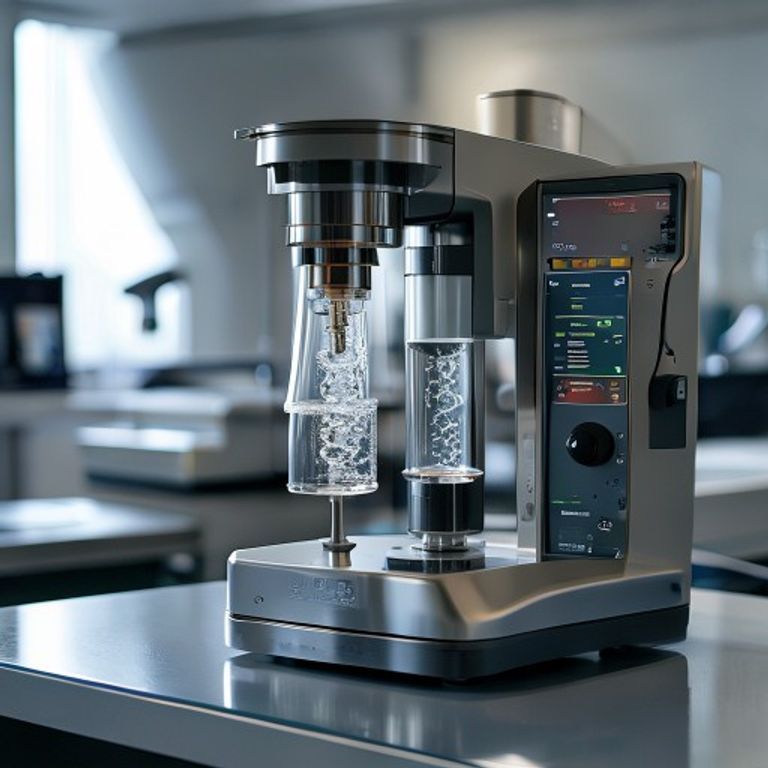
Évaporateur rotatif 101 : Choisir, utiliser et maintenir le système parfait d'évaporation en laboratoire

Présentation
Quand je suis entré dans un laboratoire de chimie organique, l'évaporateur rotatif (ou "rotovap") ressemblait à un shaker futuriste. Aujourd'hui, c'est le cheval de travail qui nous permet de récupérer les solvants rapidement, en toute sécurité et avec un minimum de déchets. Dans cet article, je vais vous guider à travers tout ce que vous devez savoir – de la sélection du bon modèle pour un petit laboratoire à la maîtrise du contrôle de la température et le maintien de l'unité en forme de pointe.
Qu'est-ce qu'un évaporateur rotatif?
Un évaporateur rotatif est un appareil de distillation sous vide qui élimine doucement les solvants d'un mélange de réaction. L'idée clé est simple : faire tourner le flacon, baisser la pression et appliquer une chaleur douce pour que le solvant ébullition à une température plus basse et se condense dans un condenseur froid. Le résultat est un résidu propre et sans solvant prêt pour la prochaine étape.
Choisir le bon modèle
Chaque rotovap ne correspond pas à tous les laboratoires. Voici comment je le rétrécis:
- Évaporateur rotatif pour utilisation en laboratoire: Cherchez une empreinte compacte, des commandes numériques faciles à lire et un design modulaire qui peut se développer en fonction de vos besoins.
- Meilleur évaporateur rotatif pour la chimie organique : Privilégier un moteur robuste (≥ 250 tr/min), une plage de température allant jusqu'à 200 °C et des condenseurs interchangeables (eau ou glycol).
- Évaporateur rotatif abordable pour petits laboratoires: Une unité de table avec un flacon de 250 mL et un contrôle manuel du vide offre souvent le meilleur rapport qualité-prix.
Si vous recherchez également des équipements complémentaires, consultez Vortex Mixer Essentials: Choisir le bon modèle pour le travail de laboratoire. Un bon mélangeur vortex peut accélérer la préparation de l'échantillon avant même de commencer l'évaporation.
Éléments clés à considérer
Flacon d'évaporation rotatif
La taille de la fiole détermine la quantité de matériel que vous pouvez traiter en une seule fois. Les tailles communes sont de 125 mL, 250 mL et 500 mL. Pour les synthèses de routine, une fiole de 250 mL atteint la tache douce – assez grande pour s'adapter à l'échelle, assez petite pour s'adapter confortablement à la plupart des rotovaps.
Types de condenseur
- Condenseur d'eau: Simple, bon marché et fonctionne bien pour les solvants à faible pression.
- Condenseur rempli de glycol: Poigne des points d'ébullition plus élevés et offre une meilleure stabilité de température.
- Condenseur de piège à froid: Idéal lorsque vous devez capturer des solvants volatils pour la réutilisation dans un système de récupération de solvants de laboratoire.
Contrôle de vitesse
La vitesse de rotation affecte la surface du film liquide. Les vitesses plus rapides créent un film plus mince, qui s'évapore plus rapidement mais peut provoquer des éclaboussures. La plupart des unités modernes vous permettent de régler la vitesse en tranches de 10 tr/min – je commence généralement à 100 tr/min et je m'ajuste en fonction de la viscosité du solvant.
Conseils pratiques pour le contrôle de la température
Obtenir la température juste est la moitié de la bataille. Voici mes tours :
- Préchauffer progressivement le bain: Le saut de 20 °C à 80 °C peut causer des bosses au solvant.
- Utilisez une sonde de thermomètre près du flacon: Cela donne une lecture plus précise que le capteur intégré du bain.
- Définir un profil "ramp" : Certaines unités vous permettent de programmer une augmentation de température de 5 °C par minute, ce qui lisse l'évaporation.
Guide d'entretien des évaporateurs rotatifs
Comme n'importe quel équipement de laboratoire, une rotovap a besoin d'un TLC régulier (soins affectueux de tendresse). Suivez ce programme simple:
- Après chaque utilisation: Essuyer le bain d'eau, le condensat vide et vérifier le résidu de solvant sur le support de flacon.
- Par semaine: Inspecter le tuyau d'aspiration pour les fissures, nettoyer le condenseur avec une brosse et vérifier le niveau d'huile du moteur (le cas échéant).
- Mensuel: Étalonner le capteur de température, tester l'aspirateur en fonction d'une norme connue et lubrifier le joint rotatif.
Négligence de ces étapes peut conduire à des fuites, des lectures de température inexactes, et finalement, des expériences ratées.
FAQ
Quel niveau de vide dois-je utiliser pour un solvant à faible pression comme l'éther?
Pour l'éther diéthylique, une pression de 200 à 300 mbar (environ 0,2 à 0,3 atm) est généralement suffisante. Un vide trop fort peut causer des bosses.
Je peux faire fonctionner un évaporateur rotatif sans condenseur ?
Techniquement oui, mais vous allez perdre la plupart du solvant dans l'air de laboratoire, ce qui est dangereux et gaspillage. Attachez toujours un condenseur approprié au solvant.
À quelle fréquence dois-je remplacer le joint rotatif?
La plupart des fabricants recommandent le remplacement tous les 12–18 mois, ou plus tôt si vous remarquez des fuites d'huile ou un bruit de moteur inhabituel.
Un panneau de commande numérique est-il meilleur que les boutons analogiques ?
Les panneaux numériques offrent des paramètres précis de température et de vitesse, plus l'enregistrement des données – un grand plus pour la reproductibilité. Cependant, les boutons analogiques sont plus simples et moins sujets à la défaillance électronique.
Quelle est la meilleure façon de récupérer des solvants pour les réutiliser?
Intégrer la rotovap avec un système de récupération des solvants en laboratoire. Le condensat collecté dans un piège à froid peut être filtré et stocké pour des parcours futurs, réduisant à la fois les coûts et l'impact environnemental.
Conclusion
Choisir le bon évaporateur rotatif ne doit pas être un pari. Concentrez-vous sur la taille du flacon, le type de condenseur, le contrôle de vitesse et la facilité de maintenance. Avec quelques astuces pratiques de contrôle de la température et une routine régulière d'entretien, votre rotovap vous servira de façon fiable pendant des années – transformant des mélanges de solvants désordonnés en produits propres et utilisables avec juste un tour de cadran.