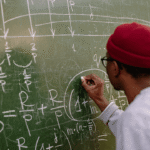
Master Physics Quickly: Stratégies simples pour comprendre facilement la physique

Présentation
Ever felt that physics is a mountain too steep to climb? Trust me, you’re not alone. I used to stare at equations and wonder if I’d ever make sense of them. The good news? Physics can be broken down into bite‑size pieces that anyone can grasp. In this article I’ll share practical, no‑stress methods that helped me turn confusing concepts into clear, “aha!” moments.
Why Physics Feels Hard (And How to Flip the Script)
Before diving into techniques, let’s spot the common roadblocks:
- Memorizing formulas instead of understanding why they work.
- Skipping the “story” behind a problem. Physics is a narrative about how nature behaves.
- Jumping straight into complex math. Without a solid conceptual base, the math just looks like gibberish.
When we shift our focus from pure memorization to building intuition, the subject becomes much more approachable.
1. Start with Real‑World Analogies
Our brain loves stories. Relate abstract ideas to everyday experiences. For example, think of inertia as a shopping cart that resists change when you try to push it. The heavier the cart (mass), the harder it is to start or stop moving. This simple picture sticks far better than the equation F = ma alone.
2. Use Visual Aids and Simple Sketches
Drawing free‑hand diagrams can turn a tangled problem into a clear picture. Even a quick sketch of forces acting on a block helps you see the direction and magnitude before you write any equations. Try color‑coding vectors – red for tension, blue for gravity – to keep things organized.
3. Break Down Problems Step by Step
Complex physics problems are just a series of small questions. Follow this checklist:
- Identify what you know (given data).
- Determine what you need to find.
- Choose the relevant principle (Newton’s law, conservation of energy, etc.).
- Write down the core formula.
- Plug in numbers and solve.
By treating each bullet as a mini‑task, the whole problem feels manageable.
4. Leverage Online Resources That Simplify Formulas
There are many sites that rewrite physics formulas in plain language. One of my favorites is a guide that demystifying physics by showing step‑by‑step derivations with real‑life analogies. It turned the intimidating E = mc2 into a story about energy stored in mass, not just a cryptic equation.
5. Practice with Everyday Experiments
You don’t need a fancy lab to see physics in action. Simple experiments like rolling a ball down a ramp, measuring the time with a stopwatch, and calculating acceleration reinforce concepts. When you unlock lab precision using everyday tools, you develop a feel for measurement errors and uncertainties – a skill that makes advanced topics less scary.
6. Teach What You Learn
Explaining a concept to a friend (or even to yourself out loud) forces you to organize thoughts clearly. If you can describe why a pendulum swings in simple terms, you’ve truly mastered the underlying physics.
7. Adopt a Consistent Study Routine
Short, frequent sessions beat marathon cramming. Spend 20‑30 minutes daily reviewing a single topic, solving a couple of problems, and summarizing the key idea in one sentence. Over weeks, the accumulation of these micro‑wins builds solid knowledge.
Conclusion
Understanding physics doesn’t require a genius IQ; it needs the right mindset and practical tools. By anchoring concepts to real life, visualizing, breaking problems into steps, and using resources that simplify formulas, you can conquer even the toughest topics. Remember, physics is the language of nature – once you learn the basics, the universe starts to speak back.
FAQ
Q: I’m a complete beginner. Where should I start?
A: Begin with everyday phenomena – why objects fall, how bicycles stay upright, or why a ball rolls. Relate these to basic Newtonian principles before moving to formulas.
Q: How much math do I really need?
A: Enough to apply the core equations (e.g., F = ma, v = u + at). Focus on understanding the meaning of each term rather than memorizing complex derivations.
Q: Can I learn physics without a textbook?
A: Absolutely. Videos, interactive simulations, and simplified guides (like the demystifying physics guide) can replace dense textbooks for initial learning.
Q: How do I deal with calculation mistakes?
A: Double‑check each step, keep units consistent, and use estimation to see if the answer makes sense (e.g., a speed of 300 m/s for a walking person is clearly wrong).
Q: What if I still feel stuck?
A: Switch to a different resource, ask a peer, or try a hands‑on experiment. Changing the perspective often unlocks new understanding.