

Comment les flasques volumétriques offrent une exactitude inégalée dans le laboratoire

Présentation
Lorsque nous devons préparer des solutions ponctuelles, le choix de la verrerie peut faire ou briser nos résultats. J'ai tout essayé des béchers aux cylindres de mesure, mais rien ne correspond à la fiabilité d'un fiole jaugéeDans cet article, je vais vous expliquer pourquoi les flacons volumétriques sont plus précis que les béchers, quelles caractéristiques de conception leur donnent ce bord, et des conseils pratiques pour garder leur précision intacte.
Pourquoi les flaques volumétriques battent les béchers à chaque fois
À première vue, un bécher semble tout aussi bon pour verser des liquides, mais la réalité est tout à fait différente. Voici une comparaison rapide:
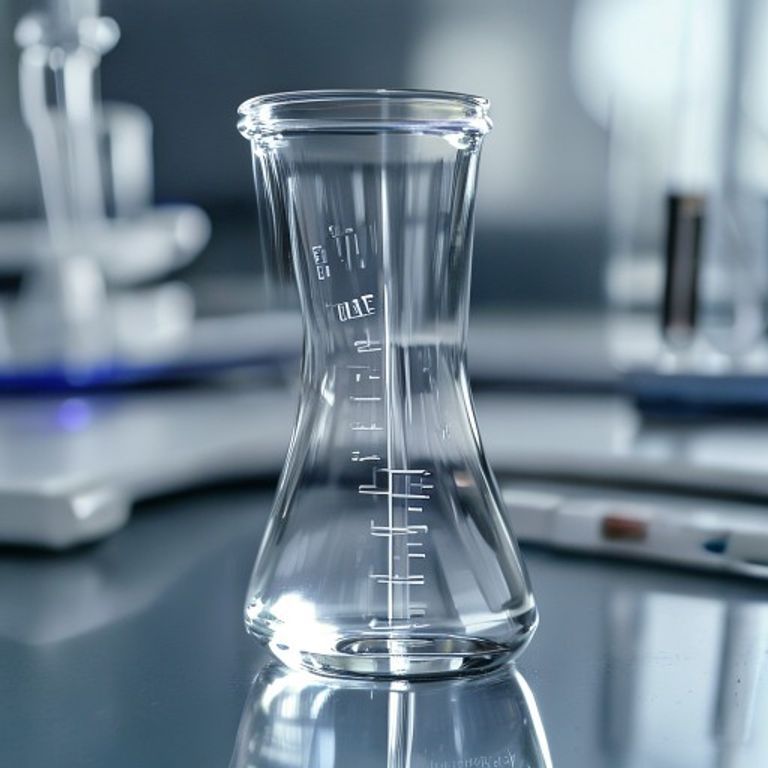
- Marquage de la forme et du volume – Un bécher a une large bouche et une échelle graduée qui s'étend sur l'ensemble du récipient, ce qui introduit une marge d'erreur plus grande. Une fiole volumétrique, par contre, a un cou étroit et une seule marque, calibrée avec précision.
- Meniscus Lecture – Parce que le cou est étroit, le ménisque est plus facile à lire avec précision, réduisant l'erreur de parallaxe.
- Tolérance matérielle – Les flacons volumétriques sont fabriqués à des tolérances plus strictes (souvent ±0,1 % du volume nominal) par rapport aux béchers (±1 % ou plus).
Si vous vous demandez comment ces différences se traduisent en nombres réels, pensez-y comme ceci : la mesure d'une solution de 100 mL avec un bécher pourrait vous donner 98 mL ou 102 mL, alors qu'une bonne fiole volumétrique vous atterrira à 100 mL ± 0,1 mL. Cette petite variance peut être la différence entre une expérience réussie et une expérience ratée.
Qu'est-ce qui rend un flasque volumétrique si précis?
1. Marque d ' étalonnage unique
La fiole n'est étalonnée qu'à un seul volume, habituellement la capacité nominale imprimée sur le cou. Ce point unique est produit selon des normes de laboratoire strictes, garantissant que le volume à l'intérieur du flacon est exactement ce que dit la marque.
2. Conception étroite du cou
Le col étroit réduit la surface où le liquide contacte le verre, minimisant les effets capillaires qui pourraient autrement déformer le ménisque.
3. Verre de haute qualité
La plupart des flacons volumétriques sont fabriqués à partir de verre borosilicaté, qui a une faible expansion thermique. Cela signifie que les fluctuations de température ne changent pas le volume de la fiole de façon spectaculaire, gardant vos mesures stables.
4. Classes de tolérance serrées
Les flacons de la classe A sont classés dans la catégorie A ou B. Les flacons de la classe A respectent des limites de tolérance plus strictes (p. ex. ±0,05 % pour une fiole de 100 mL) et sont le choix pour l'analyse quantitative.
Précision des flasques volumétriques par rapport aux cylindres gradués
Si vous discutez encore entre une fiole volumétrique et un cylindre gradué, considérez ce qui suit :
- Bouteilles graduées ont plusieurs marques, ce qui est pratique pour mesurer différents volumes, mais chaque marque introduit une petite erreur.
- Flasques volumétriques excelle quand vous avez besoin d'un volume unique et très précis—parfait pour préparer des solutions standard ou des étalons d'étalonnage.
Pour une plongée plus profonde dans les avantages et les inconvénients des cylindres gradués, consultez ce guide sur utilisation essentielle du cylindre gradué.
Comment utiliser un flasque volumétrique pour des mesures précises
- Nettoyer le flacon soigneusement et rincer avec le solvant que vous allez utiliser pour éviter la contamination.
- Ajouter le soluté (si la solution est préparée) et la dissoudre complètement.
- Remplir de solvant jusqu'à environ 90 % de la marque, puis tourner pour assurer une dissolution complète.
- Régler le volume final en ajoutant le solvant dans le sens des gouttes jusqu'à ce que le fond du ménisque touche la ligne d'étalonnage.
- Cap et inversement plusieurs fois pour homogénéiser la solution.
Rappelez-vous de lire le ménisque au niveau des yeux et d'éviter l'erreur parallaxe—Comme vous le feriez avec une pipette.
Facteurs pouvant influer sur l'exactitude des flaques volumétriques
- Température – Le volume change d'environ 0,02 % par °C pour le verre borosilicate. Toujours calibrer ou noter la température.
- Tension de surface – Les résidus détergents peuvent modifier le ménisque; bien rincer.
- Dommages physiques – Des fissures ou des copeaux près du cou déforment la marque d'étalonnage.
- Stockage incorrect – Les flacons d'emboutissage peuvent causer des points de contrainte ; conserver debout.
Comparaison rapide : Flacon volumétrique contre Flacon Erlenmeyer
Si vous ne savez toujours pas quelle verrerie choisir, mon article précédent sur Flasque d'Erlenmeyer contre Flasque volumétrique décompose les forces de chacun. Bref, l'Erlenmeyer est idéal pour le mélange, tandis que la fiole volumétrique gagne en précision.
Conclusion
Les flacons volumétriques sont les héros méconnus de l'analyse quantitative. Leur seule marque d'étalonnage, leur col étroit, leur verre de haute qualité et leurs tolérances serrées les rendent beaucoup plus précis que les béchers ou les cylindres gradués pour les tâches à volume fixe. En suivant une manipulation appropriée et en étant conscient des effets de température et de tension de surface, vous pouvez maintenir votre fiole en fournissant des résultats ponctuels à chaque fois.
FAQ
Puis-je utiliser une fiole de classe B pour des travaux de haute précision?
Les flacons de classe B répondent à des tolérances moins strictes, de sorte que pour les travaux analytiques critiques, il est plus sûr de s'en tenir à la classe A.
Combien de fois devrais-je recalibrer ma fiole volumétrique?
La plupart des fabricants certifient les flacons pendant 5 ans. Si vous remarquez des dommages ou utilisez la fiole à des températures extrêmes, envisagez un nouveau calibrage.
Est-il acceptable d'utiliser une fiole volumétrique pour des volumes autres que sa taille nominale ?
Non recommandé. Le flacon n'est précis qu'à son volume étalonné. Utilisez un cylindre gradué ou une pipette pour d'autres volumes.
Quelle est la meilleure façon de stocker des flacons volumétriques?
Conservez-les debout, dans une armoire sans poussière, et évitez d'empiler des objets lourds sur le dessus.
Les variations de température peuvent-elles vraiment affecter mes résultats?
Oui. Même un changement de 5 °C peut déplacer le volume d'environ 0,1 %—assez pour fausser une solution standard.