


Au-delà de la cuisine : Dévoilement des utilisations essentielles du mortier et du laboratoire de pesticides

When we think about a mortar and pestle, our minds might first wander to a rustic kitchen, grinding spices for a delicious curry. But let me tell you, this humble duo is far more than just a culinary tool. In the bustling world of scientific laboratories, the mortar and pestle is an unsung hero, quietly performing crucial tasks that lay the groundwork for countless discoveries. It’s a foundational piece of matériel de laboratoire, proving that sometimes, the simplest tools are the most indispensable.
Today, we’re going to dive deep into the fascinating world of mortar and pestle lab uses. We’ll explore why this ancient tool remains incredibly relevant in modern science, from preparing delicate biological samples to crafting precise pharmaceutical compounds. It’s all about transforming larger, unwieldy materials into finely ground powders or homogeneous pastes, making them ready for further analysis or reaction.
The Enduring Simplicity of a Powerful Tool
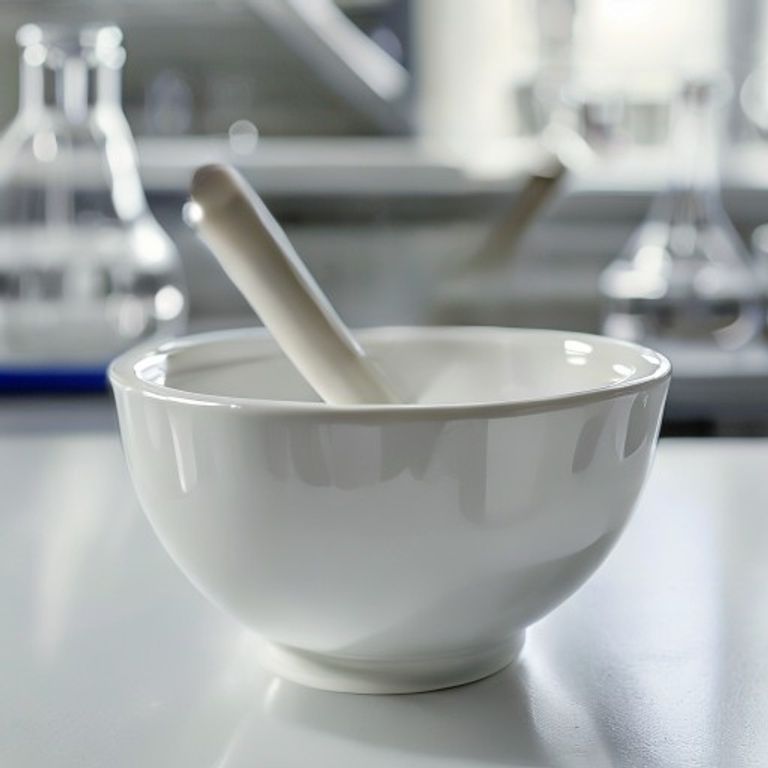
At its core, a mortar and pestle consists of two parts: the mortar, which is a sturdy bowl, and the pestle, a heavy, club-shaped object. Their job is straightforward: to crush, grind, and mix solids into a fine powder or a smooth paste. While the principle is simple, its applications are incredibly diverse. Think of it like a manual mini-mill, giving us precise control over the grinding process – something automated machines sometimes struggle to replicate for small, delicate samples.
Different types are made from various materials, each suited for specific tasks. We have porcelain, ceramic, agate, glass, and even stainless steel versions. For many general lab applications, ceramic is a popular choice due to its hardness and chemical inertness. The benefits of ceramic mortar and pestle for lab work include their smooth, non-porous surface which prevents sample contamination and makes cleaning a breeze.
Core Applications: Where Mortar and Pestle Shine
Let’s get into the nitty-gritty of where this dynamic duo truly makes a difference in the lab.
In the Chemistry Lab: Precision Grinding and Mixing
When we need to ensure a chemical reaction proceeds efficiently, or prepare samples for analysis, particle size matters. This is where the mortar and pestle comes in handy. Learning how to use mortar and pestle in a chemistry lab involves grinding solid reactants into a very fine powder to increase their surface area, which often speeds up reaction rates. It’s also perfect for mixing small quantities of solid compounds thoroughly, ensuring a uniform blend before they are dissolved or reacted. From preparing catalysts to breaking down mineral samples for spectroscopic analysis, its role is pivotal.
Pharmaceutical Research: Compounding and Formulation
The pharmaceutical industry relies heavily on precise measurements and homogeneous mixtures. Many applications of mortar and pestle in pharmaceutical research involve compounding medications in pharmacies, where pharmacists manually grind active pharmaceutical ingredients (APIs) with excipients (inactive ingredients) to create custom dosages or specific formulations like ointments and creams. It’s all about achieving the perfect consistency and ensuring the active ingredients are evenly distributed, which is crucial for drug efficacy and patient safety.
Biological & Botanical Studies: Preparing Samples for Extraction
Imagine trying to extract a specific compound from a tough plant leaf or a piece of animal tissue. It’s like trying to get juice from a whole apple without breaking it down! The mortar and pestle makes this possible. We use it for preparing plant samples for extraction using mortar and pestle, pulverizing leaves, stems, or seeds to break open cell walls and release the intracellular components. This mechanical breakdown dramatically increases the efficiency of subsequent extraction processes, whether it’s for DNA, proteins, or specific phytochemicals. It’s a vital step in Préparation de l'échantillon before techniques like chromatography or spectroscopy.
Material Science and Environmental Analysis: Pulverizing for Purity
From breaking down soil samples for heavy metal analysis to pulverizing polymers for material characterization, the mortar and pestle helps us prepare a wide array of samples. By reducing particle size, we ensure that our subsequent analytical tests are accurate and representative of the entire sample, making it easier for us to conduct further tests using other matériel de laboratoire.
Mastering the Grind: Techniques for Optimal Results
Effective grinding techniques for laboratory samples with mortar and pestle can make all the difference. Here are a few tips we always keep in mind:
- Démarrer Petit : Don’t overload the mortar. Work with small portions of your sample for more efficient grinding.
- Circular Motion with Pressure: Apply downward pressure with the pestle while moving it in a circular motion around the mortar. This crushes and shears the particles simultaneously.
- Pounding and Grinding: For tougher samples, start with a pounding motion to break larger chunks, then switch to a circular grinding motion for finer pulverization.
- Baissez-vous. Periodically scrape down any material clinging to the sides of the mortar or pestle to ensure everything gets processed.
- La propreté est la clé: Always ensure your mortar and pestle are meticulously clean before and after use to prevent cross-contamination.
The goal is often homogénéisation – making the sample uniform throughout, so that any small portion taken for analysis accurately represents the whole. This manual control allows for careful processing of sensitive samples that might be damaged by high-speed mechanical grinders.
Choosing Your Perfect Partner: Material Matters
Selecting the right material for your mortar and pestle is crucial. For very hard materials or those requiring extreme purity, an agate mortar and pestle is ideal, though more expensive. Porcelain is excellent for general grinding and mixing due to its hard, smooth, and non-porous surface. Glass is great for situations where you need to avoid scratching and ensure visibility, but it’s less durable. Stainless steel is good for tough samples that might stain other materials, but it can sometimes react with certain chemicals. Knowing your sample and your analytical needs will guide your choice.
Conclusion
So, the next time you see a mortar and pestle, remember its profound impact beyond the kitchen. From the delicate preparation of biological tissues to the precise formulation of life-saving drugs, its role in the lab is nothing short of critical. It’s a testament to the fact that sometimes, the simplest, most fundamental tools remain the most powerful. It offers unmatched control, cost-effectiveness, and versatility for Préparation de l'échantillon, making it a permanent fixture on our lab benches. We appreciate its enduring utility and the foundational support it provides for scientific progress.
FAQ
What are the main advantages of using a mortar and pestle in the lab?
The main advantages include precise control over particle size, cost-effectiveness, ease of cleaning, suitability for small sample volumes, and the ability to process heat-sensitive or delicate samples without introducing excessive heat or shear that automated grinders might.
Can I use a kitchen mortar and pestle for lab work?
While the principle is the same, we generally don’t recommend using a kitchen mortar and pestle for lab work. Lab-grade equipment is made from specific materials (like high-purity ceramic or agate) designed to be chemically inert, non-porous, and free from contaminants that might be present in kitchenware. Always use dedicated lab equipment for scientific applications to ensure accuracy and prevent contamination.
How do I clean a mortar and pestle after use?
Cleaning typically involves rinsing with water, followed by a suitable solvent (if necessary, depending on the sample processed), and then thoroughly washing with detergent. For stubborn residues, gentle scrubbing with a brush is effective. Always ensure it’s completely dry before storing to prevent microbial growth or sample contamination. Some labs might also sterilize them if working with biological samples.
What type of samples can I process with a mortar and pestle?
A wide variety of samples can be processed, including solid chemicals, pharmaceutical compounds, plant tissues (leaves, roots, seeds), animal tissues, minerals, soil samples, and polymers. The key is that the sample needs to be a solid that can be effectively broken down by crushing and grinding.







