


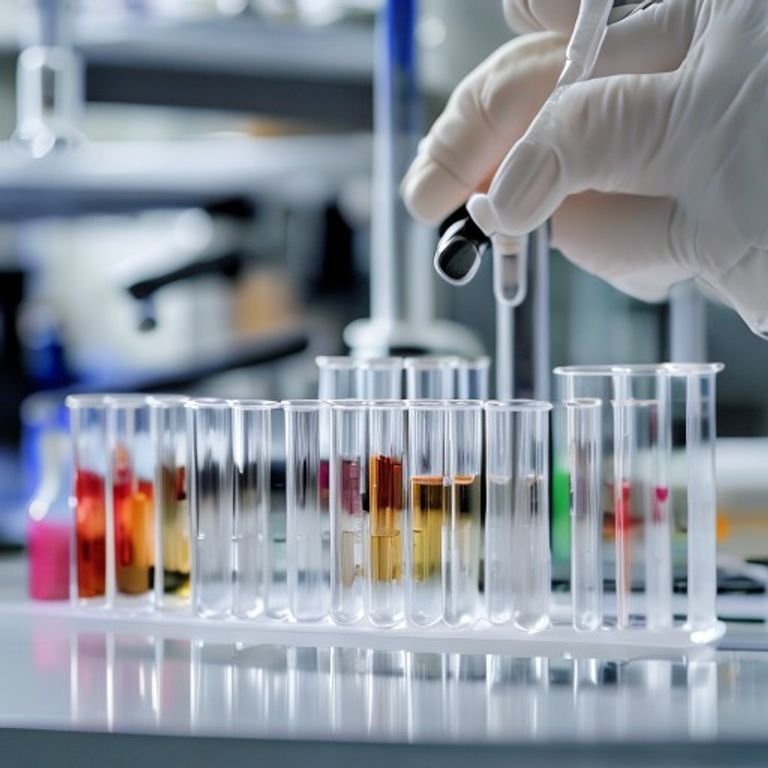
Plus qu'un simple support: Dévoiler les utilisations essentielles du rack de tubes d'essai dans les laboratoires et la vie

When we think about laboratory equipment, our minds often jump to impressive microscopes, complex centrifuges, or bubbling beakers. But amidst all the scientific marvels, there’s a quiet hero that often gets overlooked: the humble test tube rack. It might seem like a simple piece of plastic or metal, yet its role is absolutely fundamental to the smooth, safe, and organized operation of any lab. Today, we’re going to dive deep into all the incredible test tube rack uses, from their primary functions in a chemistry lab to some surprisingly creative applications right in our homes.
I remember my first time in a chemistry lab. Everything felt a bit overwhelming, with glassware everywhere. Then I saw these neat, grid-like holders, perfectly cradling rows of test tubes. It was like a parking garage, but for scientific samples! This seemingly minor detail made a huge difference in keeping things manageable and preventing spills. So, let’s explore why this unsung hero is so indispensable.
The Core Function: What Are Test Tube Racks Used For in Chemistry and Beyond?
At its heart, the primary function of a test tube rack is straightforward: to securely hold multiple test tubes in an upright position. This might sound basic, but its implications are vast. In chemistry, test tubes are crucial for mixing small quantities of reagents, performing reactions, or holding samples. Without a rack, imagine the chaos! Here are some of the main ways we utilize them:
- Secure Holding During Experiments: Whether we’re heating a sample, adding reagents drop by drop, or observing a reaction, the rack keeps the test tube stable, preventing accidental tipping and spillage. This is crucial for safety and accuracy.
- Organized Sample Storage: Racks provide an excellent system for organizing multiple samples. We can label tubes and arrange them systematically, which is vital for experiments involving many different compounds or stages. Think of it as a filing cabinet for your liquid samples.
- Séchage et drainage: After washing, test tubes can be placed inverted in a rack to air dry efficiently. This prevents water spots and ensures they are clean and ready for the next use.
- Incubation and Cooling: For biological and biochemical experiments, samples in test tubes often need to be incubated at specific temperatures or cooled in ice baths. Racks make it easy to immerse multiple tubes simultaneously.
- Transportation: Moving several filled test tubes from one bench to another, or from a lab to a cold room, becomes much safer and easier with a rack. It minimizes the risk of dropping or mixing up samples.
Keeping Things Stable: How to Safely Store Test Tubes in a Rack
Proper storage is key to both safety and maintaining the integrity of our samples. When we use a rack, we’re not just putting tubes in holes; we’re ensuring a stable environment. Here’s how to safely store test tubes in a rack:
- Utilisez la bonne taille: Ensure the test tube diameter fits snugly but not too tightly in the rack’s holes. A loose fit means instability, a too-tight fit can make retrieval difficult and risky.
- Balance the Load: If you’re not filling all the slots, try to distribute the weight evenly, especially if the rack is lightweight. This prevents it from becoming top-heavy and tipping over.
- Évitez le surremplissage : Don’t fill test tubes to the very brim, especially if they contain volatile or reactive substances. Leave some headspace to prevent spills during handling or if the contents expand.
- Étiquette clairement : Always label your test tubes immediately after adding a sample or reagent. This prevents confusion and potential hazards. Placing them in a rack with a consistent labeling system (e.g., left to right, top to bottom) adds another layer of organization.
Maintaining precision in the lab isn’t just about test tube racks. It extends to every piece of equipment, including how we measure liquids. For example, mastering the graduated cylinder is essential for accurate lab measurements, ensuring our experiments start with the right volumes. Without precise measurements, even the best organized test tubes in a rack won’t yield reliable results.
Why a Rack? Primary Functions of Test Tube Holders in a Lab
Beyond simply holding tubes, the test tube rack serves several critical functions that elevate it from a mere accessory to essential laboratory equipment:
- Prevents Contamination: By keeping tubes upright and separate, racks help prevent cross-contamination between samples, which is vital for accurate scientific research.
- Enhances Safety: Minimizing spills of corrosive chemicals, hot liquids, or biological hazards significantly improves lab safety. It also keeps hands free to perform other tasks.
- Optimizes Workspace: Racks consolidate test tubes into a compact footprint, freeing up valuable bench space. This is especially useful when performing multiple experiments simultaneously.
- Facilitates Batch Processing: Whether it’s centrifuging a batch of samples or adding a reagent to 20 different tubes, a rack streamlines these processes, making them quicker and more efficient.
Choosing the right tools for handling liquids, like deciding between different types of pipettes, is another decision that impacts efficiency and accuracy in the lab. Understanding the nuances of a volumetric vs. serological pipette showdown is key when picking your precision partner for transferring liquids into those neatly organized test tubes.
Beyond the Lab Bench: Creative Uses for Test Tube Racks at Home
Who says test tube racks are just for scientists? Their unique design makes them surprisingly versatile for home use. Here are some creative uses I’ve seen or tried:
- Spice Rack Organizer: Those small glass spice tubes fit perfectly, keeping your spice cabinet tidy and making it easy to grab what you need.
- Essential Oil Holder: If you’re into aromatherapy, a test tube rack is ideal for organizing and displaying your collection of essential oil bottles.
- Craft Supply Sorter: Think beads, glitter, small paint pots, or even tiny brushes. It’s fantastic for keeping small craft items separated and upright.
- Desk Organizer: Pen holders, marker stands, or even a mini propagation station for small plant cuttings.
- Drink Shot Holder: For a themed party, fill test tubes with colorful drinks and serve them in a rack for a unique presentation!
Proper Handling of Test Tubes with a Rack
To ensure longevity and safety, proper handling is crucial. Always carry the rack from its base or sturdy handles, not just from the sides, especially if it’s full. When placing tubes, do so gently. After use, make sure to clean the rack according to lab protocols, especially if it has come into contact with chemicals. Regular inspection for cracks or damage is also a good habit.
Conclusion
The test tube rack, while often overlooked, is a cornerstone of laboratory efficiency and safety. From enabling precise experiments in chemistry to offering practical organizational solutions at home, its test tube rack uses are incredibly diverse. Next time you see one, I hope you’ll appreciate this unsung hero for its vital role in keeping our scientific endeavors (and even our homes) organized, safe, and productive.
FAQs About Test Tube Racks
Q1: What materials are test tube racks typically made from?
A: Test tube racks are commonly made from polypropylene (plastic), stainless steel, wood, or epoxy-coated metal. Plastic racks are popular for general lab use due to their affordability and chemical resistance, while stainless steel or epoxy-coated racks offer greater durability and can withstand higher temperatures.
Q2: Can I use any test tube in any rack?
A: No, racks are designed for specific test tube diameters. Always ensure your test tubes fit securely into the rack’s openings without being too loose or too tight. Using mismatched sizes can lead to instability and potential spills.
Q3: How do I clean a test tube rack?
A: Cleaning depends on the material and what it came into contact with. Most plastic racks can be washed with detergent and water, then air-dried or autoclaved if needed. Metal racks may require specific cleaning agents or sterilization methods depending on lab protocols. Always follow your lab’s safety and cleaning guidelines.
Q4: Are there different types of test tube racks?
A: Yes, besides the standard grid-style racks, there are also stacking racks for space-saving, conical tube racks, cryogenic racks for ultra-low temperature storage, and even specialized racks with handles or drain holes.
Q5: Is it safe to heat test tubes directly in a plastic rack?
A: Generally, no. Plastic racks are usually not designed to withstand direct heat from a Bunsen burner or hot plate. If heating is required, the test tube should be removed from the rack and heated using appropriate apparatus like a test tube clamp over a Bunsen burner, or the entire rack might be placed in a water bath if the rack material is suitable for the temperature. Always check the manufacturer’s specifications for heat resistance.







