


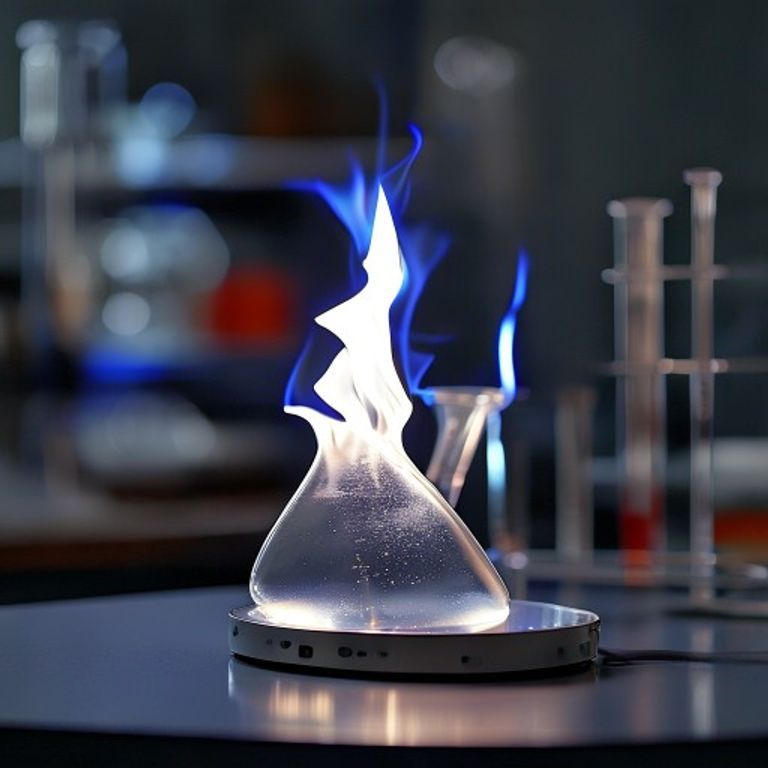
Au-delà de la flamme : explorer les utilisations essentielles du brûleur Bunsen dans votre laboratoire

Dans le monde animé de la découverte scientifique, il y a quelques outils qui se distinguent comme de vrais chevaux de travail, et le brûleur Bunsen est certainement l'un d'entre eux. Vous l'avez probablement vu dans des films, des dessins animés ou peut-être même dans votre propre classe de chimie – cette flamme emblématique, stable et fiable. Mais avez-vous jamais cessé de penser à tout le spectre de utilisations pratiques et conseils de sécurité pour chaque laboratoire que cet appareil apparemment simple offre ? Aujourd'hui, nous allons plonger profondément dans le monde du brûleur Bunsen, découvrant son rôle crucial et diverses applications dans les laboratoires du monde entier. C'est plus qu'une simple source de chaleur ; c'est une pièce fondamentale d'équipement de chauffage de laboratoire qui permet d'innombrables expériences.
Qu'est-ce qu'un Bunsen Burner ?
Avant d'explorer ses différentes applications, laissez-nous rapidement rafraîchir notre mémoire. Un brûleur Bunsen est essentiellement un brûleur à gaz, nommé d'après Robert Bunsen, conçu pour produire une seule flamme à gaz ouvert, qui est utilisé pour le chauffage, la stérilisation et la combustion dans des expériences scientifiques. Pensez à cela comme la cuisinière dans votre cuisine, mais beaucoup plus précis et conçu spécifiquement pour les environnements de laboratoire. Il se connecte à un approvisionnement en gaz (généralement au gaz naturel ou au gaz de pétrole liquéfié) et nous permet de contrôler l'admission d'air, qui à son tour contrôle la température et la couleur de la flamme. C'est joli, non ?
Maîtriser la chaleur : utilisation du brûleur Bunsen dans les laboratoires de chimie
Quand on parle des utilisations du brûleur de bunsen dans un laboratoire de chimie, le chauffage est sans doute la première chose qui vient à l'esprit. C'est l'outil principal pour de nombreuses tâches, des solutions d'ébullition à l'initiation de réactions chimiques.
- Substances de chauffage : C'est sans doute son application la plus courante. Que vous ayez besoin de chauffer un bécher d'eau, un tube d'essai avec un réactif ou évaporer un solvant, le brûleur Bunsen fournit une source de chaleur contrôlée et efficace. Nous l'utilisons souvent avec un trépied et un tapis de gaze pour assurer le chauffage et le soutien de nos techniques de chauffage en verre.
- Moulage des solides: Pour les substances ayant des points de fusion relativement bas, un brûleur Bunsen peut rapidement les amener à l'état liquide, facilitant les réactions ou les analyses.
- Tuyau en verre pliant: Vous êtes-vous déjà demandé comment ces appareils en verre complexes sont fabriqués ? Avec un contrôle attentif et une technique appropriée, un brûleur Bunsen peut adoucir les tubes en verre, ce qui nous permet de les plier dans les formes souhaitées pour des configurations personnalisées.
- Évaporation: Si vous devez concentrer une solution en évaporant le solvant, une flamme douce du brûleur Bunsen peut accélérer le processus.
Ce ne sont là que quelques applications communes du brûleur Bunsen dans les expériences scientifiques, montrant sa polyvalence en tant que pièce maîtresse d'équipement de chauffage de laboratoire.
Stérilisation des flammes : une application critique
Au-delà du simple chauffage, l'un des brûleurs de bunsen les plus essentiels, en particulier dans les laboratoires de microbiologie et de biologie, est la stérilisation à la flamme. Ce processus est crucial pour prévenir la contamination et assurer des conditions aseptiques pendant les expériences. Imaginez essayer de cultiver une bactérie spécifique, seulement pour les microbes indésirables pour se faufiler et ruiner vos résultats. C'est là qu'intervient la stérilisation !
- Stérilisation des boucles et aiguilles : Before transferring microbial cultures, we often pass our metal inoculating loops and needles through the Bunsen burner flame until they glow red. This intense heat quickly kills any microorganisms present, ensuring that only the desired microbes are transferred.
- Sterilizing Glassware Mouths: When opening a sterile bottle or test tube, we might briefly pass the mouth of the container through the flame. This creates an upward convection current, pushing airborne contaminants away and sterilizing the immediate area, thus maintaining the sterility of the contents.
- Flaming the Work Area: In some highly sensitive procedures, the Bunsen burner is kept lit in the work area to create a sterile “zone” around it. The heat and rising air currents help to minimize airborne microbial contamination. This highlights the important purpose of Bunsen burner in laboratory apparatus beyond just direct contact heating.
Comment utiliser un brûleur Bunsen en toute sécurité et efficacement
Operating a Bunsen burner isn’t rocket science, but it does require attention to detail and adherence to laboratory safety procedures. We always prioritize safety when handling any gas burner operation. Here’s a quick overview of how to use a bunsen burner for heating and other tasks:
- Connection: Ensure the rubber tubing is securely attached to both the gas tap and the burner’s gas inlet.
- Air Hole Adjustment: Close the air hole completely initially.
- Ignition: Turn on the gas tap and immediately bring a lit striker or lighter to the top of the burner. You should see a large, luminous, yellow flame.
- Réglage de la flamme: Slowly open the air hole. The flame will get smaller, less luminous (more blue), and hotter. The ideal flame for most heating and sterilization tasks is a non-luminous blue flame with a distinct inner cone. This is the hottest part!
- Sécurité d'abord: Always keep flammable materials away from the burner. Never leave a lit burner unattended. Turn off the gas completely when done.
Understanding these steps is crucial, as improper gas burner operation can be hazardous. Remember, a responsible scientist is a safe scientist!
Beyond Basic Heating: Quelles sont les différentes utilisations de Bunsen Burner?
While heating and sterilization cover a broad range, there are other specialized what are the different uses of Bunsen burner in specific contexts:
- Annealing: In metallurgy or materials science, a Bunsen burner can be used for annealing small metal samples, a process of heating and cooling to alter their microstructure and properties.
- Flaming for Evacuation: In vacuum systems, sometimes glassware is “flamed” to drive off adsorbed water molecules from the surface before evacuation, ensuring a better vacuum.
- Creating a “Clean” Work Area: As mentioned, the updraft of heat can create a localized clean zone, particularly useful in sensitive procedures where contamination must be minimized.
Conclusion
So there you have it – the humble Bunsen burner is far more versatile than it often gets credit for. From providing a controlled heat source for reactions and sample preparation to being an indispensable tool for flame sterilization, its bunsen burner uses are truly extensive. We’ve seen its importance in uses of bunsen burner in a chemistry lab, its role in ensuring sterile conditions, and even its more niche applications. Mastering its operation and understanding its capabilities, all while strictly adhering to laboratory safety procedures, is a skill every aspiring scientist should cultivate. It’s a tool that truly helps us unlock the mysteries of the scientific world, one flame at a time.
Foire aux questions (FAQ)
Q1: Quelle est la partie la plus chaude d'une flamme de brûleur Bunsen?
The hottest part of a Bunsen burner flame is at the tip of the inner blue cone. This is where the gas is completely combusting with the most oxygen, producing the highest temperature.
Q2: Pourquoi la flamme est-elle parfois jaune plutôt que bleue?
A yellow, luminous flame indicates incomplete combustion, usually due to insufficient air (oxygen) supply. This happens when the air hole at the base of the burner is closed too much. Yellow flames are cooler and deposit soot, so for most lab work, we aim for a non-luminous blue flame.
Q3: Puis-je utiliser un brûleur Bunsen pour stériliser tous les types d'équipement?
No, a Bunsen burner is primarily used for sterilizing metal instruments like inoculating loops and needles, or the mouths of glass containers. It should not be used for heat-sensitive materials (like plastics) or items that could shatter (some types of glass if heated too quickly or unevenly).
Q4: Quel gaz un brûleur Bunsen utilise-t-il?
Bunsen burners typically use natural gas (methane) or liquefied petroleum gas (LPG), such as propane or butane, depending on the lab’s gas supply. The burner itself is designed to mix this gas with air to create the flame.
Q5: Un brûleur Bunsen est-il dangereux?
Like any equipment that uses an open flame, a Bunsen burner can be dangerous if not handled properly. Hazards include burns, fires, and potential gas leaks. However, by following strict laboratory safety procedures and proper gas burner operation, it is a safe and highly effective tool.







