


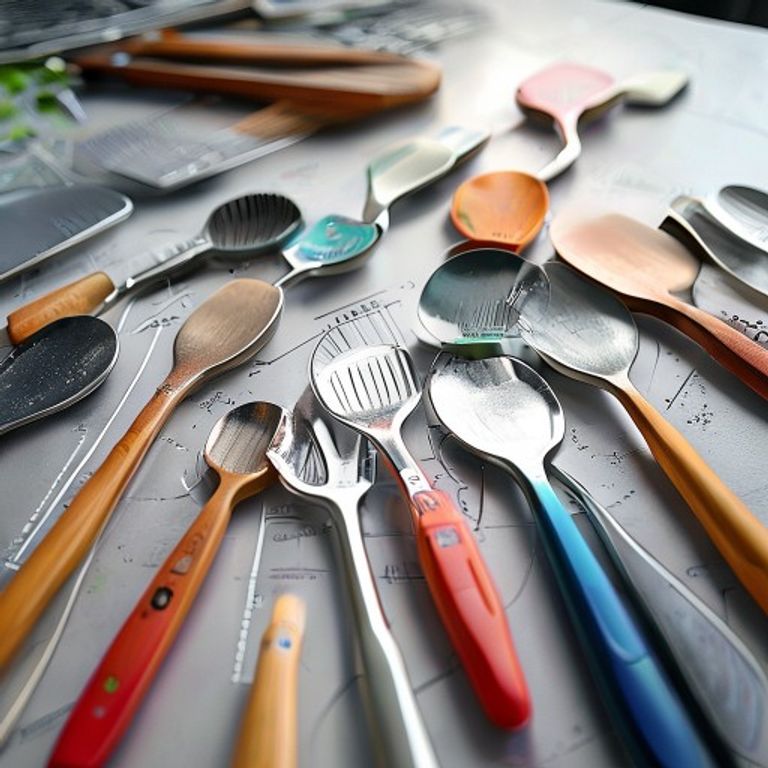
Beyond the Flip: The Fascinating Science of Spatulas

Ever paused to think about the humble spatula in your kitchen drawer? It’s more than just a flat tool for flipping pancakes or stirring sauce. Believe it or not, there’s a whole universe of spatula science at play every time you use it. From the materials it’s made from to the way it feels in your hand, and even the physics involved in a perfect flip, a lot of thought (and science!) goes into making this essential kitchen utensil.
For most of us, a spatula is just a spatula. But as a content writer who loves to explore the hidden ‘whys’ and ‘hows’ behind everyday objects, I find it truly fascinating. Let’s peel back the layers and discover the engineering and science that makes our spatulas indispensable.
The Physics of Flipping: How Spatulas Work
Have you ever wondered about the mechanics of flipping with a spatula? It’s all about leverage and friction! When you slide a spatula under a pancake, you’re using it as a lever. The handle is where you apply force, the edge under the pancake is the fulcrum (or pivot point), and the pancake itself is the load you’re trying to lift.
A good spatula needs to be thin enough to easily slide under food without mashing it, but sturdy enough not to bend under the weight. The angle of the blade also matters. A slight curve or bevel can help reduce friction as you slide it under, making that perfect flip much easier. Think about it: a stiff, flat board would be terrible for flipping, right? We need flexibility and a good angle to get the job done effectively.
Material Matters: Choosing the Best Spatula Material Science
The material of your spatula isn’t just about aesthetics; it’s crucial for performance, durability, and safety. This is where best spatula material science really shines! We encounter several common types:
- Silicone Spatulas: These are champions of versatility. Silicone has excellent heat resistance kitchen spatulas need, often tolerating temperatures up to 500°F (260°C). It’s also non-abrasive, meaning it won’t scratch your non-stick pans. Plus, its flexibility makes it perfect for scraping bowls clean.
- Metal Spatulas: Think stainless steel. These are incredibly durable and great for high-heat tasks, like searing or grilling, where you need stiffness. However, they can scratch non-stick surfaces, so we usually reserve them for cast iron or stainless steel cookware.
- Wooden Spatulas: Timeless and beautiful, wooden spatulas are gentle on all types of cookware. They don’t conduct heat well, so their handles stay cool. The downside? They can absorb odors and colors, and aren’t typically dishwasher safe.
- Nylon Spatulas: A more budget-friendly plastic option, nylon spatulas offer decent heat resistance and are safe for non-stick pans. However, their heat tolerance is generally lower than silicone, so they might melt if left on a hot pan for too long.
Each material has its pros and cons, tailored for specific tasks and kitchen environments. It’s about finding the right tool for the job!
Ergonomics in the Kitchen: The Ergonomic Design of Spatulas
Ever used a spatula that just felt “off”? Perhaps the handle was too thin, too slippery, or unbalanced. That’s where the ergonomic design of spatulas comes into play. Ergonomics is all about designing tools that are comfortable and efficient for human use. For a spatula, this means:
- Handle Shape and Grip: A well-designed handle should fit comfortably in your hand, providing a secure grip even when wet or greasy. Textures, contours, and a good diameter all contribute to this.
- Weight Distribution: The balance of the spatula can make a huge difference. A well-balanced spatula feels lighter and requires less effort to maneuver, reducing strain on your wrist and hand during prolonged cooking sessions.
- Length: The length of the handle and blade needs to be appropriate for the task. Too short, and you risk burning your hand; too long, and it might feel unwieldy.
Good ergonomic design isn’t just a luxury; it’s a practical consideration that makes cooking more enjoyable and safer. We want tools that work with us, not against us!
Spatulas & Food Preparation: More Than Just Flipping
When we talk about cooking tools, spatulas are incredibly diverse. Beyond flipping, they are indispensable for so many aspects of food preparation. Think about it:
- Scraping down the sides of a mixing bowl for a perfectly combined batter.
- Spreading frosting smoothly over a cake.
- Serving delicate pieces of fish without breaking them.
- Stirring sauces and curries evenly.
- Lifting cookies off a baking sheet.
The variety of kitchen utensils in the spatula family — from offset spatulas to fish spatulas, turners, and scrapers — highlights how specialized and essential this single category has become in modern kitchens. Each design subtly optimizes for specific tasks, demonstrating the clever kitchen innovation often found in simple items.
Conclusion
So, the next time you reach for that everyday spatula, I hope you’ll see it in a new light. It’s a testament to clever design, material science, and an understanding of basic physics, all working together to make our lives in the kitchen easier and more enjoyable. From the perfect flip to scraping every last bit of batter, the science of spatulas truly makes a difference. Who knew such a simple tool had so much depth?
FAQ
Q: What is the best material for a spatula?
A: It depends on the task! Silicone is great for non-stick pans and high heat, metal for durability and high-temperature searing on compatible cookware, and wood for gentle stirring and scraping.
Q: How does the “flexibility” of a spatula affect its use?
A: A flexible blade, like those found on some silicone or fish spatulas, allows you to slide under delicate foods more easily without damaging them. Stiffer spatulas are better for heavier items or when you need more force.
Q: Can I use any spatula on a non-stick pan?
A: It’s best to use silicone, nylon, or wooden spatulas on non-stick pans to avoid scratching the delicate coating. Metal spatulas can damage non-stick surfaces.
Q: Why are some spatulas angled?
A: Angled spatulas, often called offset spatulas, are designed to make it easier to lift and flip items, especially those that are flat like pancakes or cookies, by providing a better leverage point and clearance from the pan’s edge.