


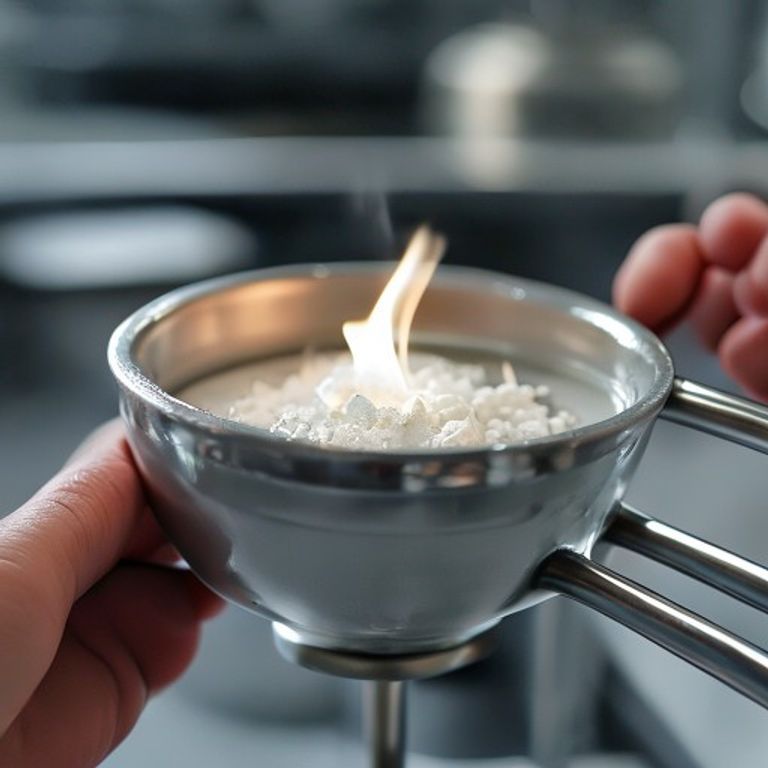
The Ultimate Grip: Unveiling the Essential Crucible Tong Function in Every Lab

Ever found yourself in a chemistry lab, staring at a scorching hot crucible straight out of a furnace? The thought of touching it, even with gloves, sends shivers down your spine. This is exactly where our unsung hero, the crucible tong, steps in! Often overlooked but incredibly vital, these specialized tools are a must-have in any high-temperature laboratory setting. Today, we’re going to dive deep into the world of crucible tongs, exploring their core purpose, how to use them safely, and why they’re indispensable for accurate and secure lab work.
Simply put, what is the purpose of a crucible tong? It’s all about providing a safe and secure way to handle extremely hot objects, primarily crucibles, their lids, and other small items that have been subjected to high heat. Without them, laboratory safety would be severely compromised, and many experiments would be impossible to conduct.
The Core Crucible Tong Function: A Firm Grip on Extreme Heat
The primary crucible tong function revolves around one critical task: safely gripping, lifting, and transferring items that are too hot to touch directly. Imagine trying to pick up a pan directly from a blazing stovetop with your bare hands – impossible, right? Crucible tongs are essentially the laboratory’s version of specialized heat-resistant oven mitts, but designed for precision with much smaller and often more delicate items. Made from robust materials like stainless steel or nickel-plated steel, they are engineered to withstand the intense temperatures typically found in muffle furnaces or over Bunsen burners, ensuring they don’t deform or transfer heat excessively to your hands.
So, why are crucible tongs used in experiments where other tools might suffice? The answer lies in their design and material. Unlike general-purpose pliers or even regular tongs, crucible tongs feature jaws specifically shaped to securely hold the rounded or slightly tapered body of a crucible or its lid. This precise fit prevents slippage, which is paramount when handling delicate samples or expensive laboratory apparatus. They are quintessential chemistry tools, ensuring stability and control in environments where precision is everything.
Safety First: How to Use Crucible Tongs Safely in a Lab
Handling hot materials always comes with risks, and proper technique is crucial to prevent burns or damage to your experiments. Knowing how to use crucible tongs safely in a lab isn’t just a recommendation; it’s a non-negotiable rule. Here are some practical tips that we always follow:
- Inspect Before Use: Always give your tongs a quick check. Look for any bends, cracks, or loose rivets that might compromise their grip or integrity. A damaged tong is a dangerous tong!
- Ensure a Firm, Even Grip: When picking up a crucible, position the tongs around its widest part, ensuring both jaws make full contact. Apply steady, firm pressure – enough to secure the item, but not so much that you risk cracking a fragile crucible.
- Keep at Arm’s Length: Whenever possible, maintain a safe distance. This minimizes your exposure to residual heat and potential spills if the item were to drop.
- Move Deliberately, Not Hastily: Don’t rush! Rapid movements can cause the crucible to swing or slip. Lift and transfer slowly and smoothly to your desired location, such as a cooling rack, desiccator, or a piece of why laboratory gauze is crucial for safe and effective lab work.
- Wear Proper PPE: Always don your safety goggles and heat-resistant gloves. Even with tongs, accidents can happen, and protecting your eyes and hands is paramount for laboratory safety.
Think of it like driving: you wouldn’t drive without checking your mirrors or wearing a seatbelt. Similarly, you wouldn’t handle hot lab apparatus without inspecting your tools and wearing the right protective gear.
Mastering the Grip: Proper Technique for Handling Crucibles with Tongs
While the concept seems simple, mastering the proper technique for handling crucibles with tongs can make a huge difference in your experimental success and safety. It’s an art born from practice and attention to detail. Here’s how we approach it:
- Preparation is Key: Ensure your receiving surface (e.g., a desiccator, ceramic triangle on a tripod, or a heat-resistant mat) is clean and ready *before* you even touch the hot crucible.
- Approach with Confidence: Extend the tongs, aiming for a stable grip point on the crucible. For most standard crucibles, this means grasping just below the rim or around the main body.
- Engage and Lift: Gently close the tongs, feeling the crucible become secure. Once you have a firm, balanced grip, lift straight up. Avoid any twisting or jerking motions.
- Smooth Transfer: Carry the crucible steadily to its destination. Lower it gently, ensuring it lands squarely without tipping. Once it’s stable, release the tongs.
This careful approach is similar to how one might delicately handle a very hot, fragile cookie fresh out of the oven – precision and care are key! This focus on careful handling isn’t exclusive to crucibles; it’s a principle that extends to other small, hot lab items. For example, understanding the essential role of a test tube holder can teach us similar gripping and handling strategies for smaller, elongated items.
Beyond Basic Handling: The Importance of Crucible Tongs in High Temperature Work
The importance of crucible tongs in high temperature work cannot be overstated. They are more than just a convenience; they are an absolute necessity for accurate results and operator safety. In procedures like gravimetric analysis, where precise weighing of a residue after intense heating is critical, using tongs ensures that no oils or contaminants from human hands transfer to the crucible, altering the mass. Similarly, when ashing samples or conducting ignition procedures, the tongs allow us to safely retrieve items from muffle furnaces operating at hundreds of degrees Celsius, preventing burns and maintaining the integrity of the experiment. Without these heat resistant tongs, many fundamental chemical and material science experiments would be impractical or exceedingly dangerous to perform.
Kesimpulan
From preventing burns to ensuring the accuracy of delicate experiments, the crucible tong function is undeniably central to safe and effective laboratory practice. These specialized lab apparatus provide the secure grip and thermal isolation we need to interact with items subjected to extreme heat. We’ve seen that understanding their proper use, adhering to safety protocols, and mastering the right technique transforms a simple tool into an indispensable asset. So, the next time you step into the lab, remember the humble but mighty crucible tongs – they’re always there, ready to give you the ultimate grip when the heat is on!
FAQ
Q1: Can I use regular kitchen tongs for crucibles?
A1: No, absolutely not. Regular kitchen tongs are typically not designed to withstand the extremely high temperatures encountered in a laboratory setting, nor do they often provide the precise and secure grip needed for delicate crucibles. They could melt, deform, or lead to dangerous slips, compromising both your safety and your experiment.
Q2: How do I clean crucible tongs?
A2: Crucible tongs should be cleaned regularly to remove any chemical residues or contaminants. A simple wash with laboratory detergent and water, followed by thorough rinsing with deionized water and drying, is usually sufficient. For persistent stains or residues, you might need to use specific lab cleaning agents or consult your lab’s cleaning protocols.
Q3: What material are crucible tongs usually made of?
A3: Crucible tongs are typically made from sturdy, heat-resistant metals such as stainless steel or nickel-plated steel. These materials are chosen for their high melting points, resistance to corrosion, and ability to maintain structural integrity at elevated temperatures, making them ideal for gripping hot materials.
Q4: Are there different sizes of crucible tongs?
A4: Yes, crucible tongs come in various lengths and jaw designs to accommodate different sizes of crucibles and other lab apparatus. Longer tongs offer greater reach and distance from the heat source, while different jaw shapes might be better suited for specific types of crucibles or dishes. Always choose tongs that are appropriate for the item you intend to handle.