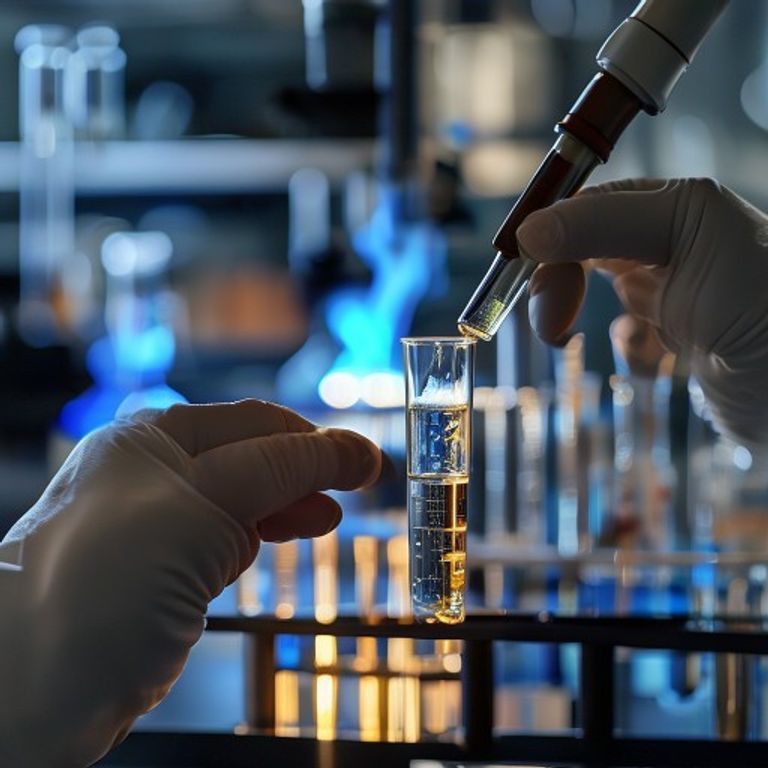
The Unsung Hero: Unraveling the Versatile Uses of Test Tubes in Every Lab

When we picture a science lab, what often comes to mind? Perhaps bubbling beakers, complex microscopes, or even a mad scientist with wild hair. But there’s one piece of laboratory equipment that’s incredibly simple yet utterly indispensable: the test tube. These small, cylindrical glass (or plastic) vessels are everywhere, from high school science classes to cutting-edge research facilities. If you’ve ever wondered about the myriad uses of test tubes, you’re in the right place. Let’s dive in and explore why these humble tubes are so vital to scientific discovery.
For me, a test tube is like the Swiss Army knife of the lab bench – compact, versatile, and ready for almost anything. It might not look fancy, but its design is perfectly suited for a wide range of scientific experiments, making it a cornerstone of both academic and industrial research.
What Makes a Test Tube So Special?
Before we explore their applications, let’s briefly touch upon why test tubes are designed the way they are. Their narrow, cylindrical shape and rounded bottom maximize surface area for heating and cooling, while minimizing evaporation. Most are made from borosilicate glass, which is incredibly resistant to thermal shock and chemical corrosion – perfect for handling various substances and temperatures. This robust construction is key to many of the common applications of test tubes in labs.
The Core of Chemical Reactions: What Are Test Tubes Used For in Chemistry?
In the world of chemistry, test tubes are workhorses. They are fundamentally designed for small-scale operations, which is incredibly useful when you’re dealing with precious or hazardous reagents. So, what are test tubes used for in chemistry specifically?
Mixing and Observing Reactions: Their transparent nature allows chemists to easily observe chemical reactions taking place. From color changes to precipitate formation, a test tube gives you a front-row seat to the molecular dance.
Heating Liquids: Due to their uniform thickness and heat-resistant glass, test tubes are excellent for heating small quantities of liquids. We often use them with a Bunsen burner, gently heating the solution while ensuring it boils smoothly without sputtering. Remember, when heating, it’s crucial to point the open end away from yourself and others, and to use a proper holder! This brings us to a vital accessory: understanding the essential role of a test tube holder for safety and ease of use.
Qualitative Analysis: Many simple tests to identify the presence of specific ions or compounds are performed in test tubes because they only require small sample volumes.
Tiny Worlds, Big Discoveries: Specific Uses of Test Tubes in Biology Labs
Biologists also heavily rely on test tubes, though often for different purposes than chemists. The specific uses of test tubes in biology labs are typically centered around biological samples.
Sample Preparation and Storage: From blood samples to DNA extractions, test tubes are ideal for preparing and temporarily storing biological samples. Their small size makes them perfect for creating aliquots (smaller, divided portions) for multiple tests.
Culturing Microorganisms: Many microbiology experiments involve growing bacteria or other microorganisms. Test tubes provide a sterile environment for liquid cultures, allowing scientists to observe growth patterns or test the effects of different substances.
Centrifugation: Test tubes, especially those with conical bottoms, are used in centrifuges to separate components of a mixture based on density. For example, separating blood plasma from red blood cells.
Beyond the Beaker: Common Applications of Test Tubes in Labs
Beyond their specific roles in chemistry and biology, test tubes have several other common applications that make them indispensable laboratory glassware.
Dilution Series: Creating a series of progressively more dilute solutions is often done in a row of test tubes, making it easy to track concentrations.
Transporting Samples: Their secure fit in racks makes test tubes convenient for safely moving multiple samples around the lab.
Spot Tests: For quick, preliminary tests that require only a few drops of reagent, test tubes are perfect.
Handling the Heat: How to Use Test Tubes for Heating Liquids Safely
As we briefly touched upon, heating liquids is one of the primary uses of test tubes. But safety is paramount! Here’s how to use test tubes for heating liquids safely:
Use a Test Tube Holder: Never hold a hot test tube with your bare hands. A test tube holder is designed for this exact purpose, providing a secure grip.
Heat Gently and Evenly: Move the test tube in and out of the flame, rotating it to distribute the heat. Don’t focus the flame on one spot, as this can cause the glass to crack.
Don’t Fill Too Full: Only fill the test tube about one-third full when heating to prevent boiling over.
Point Away: Always point the open end of the test tube away from yourself and others. If the liquid boils vigorously, it could eject out of the tube.
Why Are Test Tubes Important in Scientific Research?
So, why are test tubes important in scientific research? It boils down to efficiency, safety, and precision. Their small volume means less reagent is used, saving costs and minimizing waste. Their robust construction allows for safe handling of various substances and conditions. Their transparency enables clear observation. In essence, they simplify complex processes and make fundamental scientific inquiry accessible and manageable. They are the unsung heroes facilitating countless discoveries.
Conclusion
From simple mixing to complex biological assays, the uses of test tubes are vast and varied. These modest pieces of laboratory equipment are more than just glass tubes; they are essential tools that enable scientists to conduct experiments, analyze samples, and make groundbreaking discoveries every single day. Next time you see one, I hope you’ll appreciate the silent but significant role it plays in advancing our understanding of the world.
Frequently Asked Questions (FAQ)
Q: Can I use plastic test tubes for heating?
A: Generally, no. Most plastic test tubes are not designed to withstand high temperatures and can melt or deform. Always use borosilicate glass test tubes for heating applications.
Q: What is the typical volume of a standard test tube?
A: Standard test tubes come in various sizes, but common capacities range from 5 mL to 20 mL, with 10 mL and 15 mL being very popular.
Q: How do I clean test tubes effectively?
A: After use, test tubes should be thoroughly rinsed, often scrubbed with a test tube brush and appropriate cleaning solution (detergent or acid wash depending on contaminants), and then rinsed with distilled water before being dried, typically in an oven or drying rack.
Q: Are test tubes reusable?
A: Yes, glass test tubes are designed for multiple uses after proper cleaning and sterilization. Plastic test tubes, especially those used for sensitive biological samples, are often single-use to prevent contamination.